Home · Sights · Haight-Ashbury
Haight-Ashbury
Some climbing
- 1Haight and AshburyThe street corner that gave the district its name, and its best-known photograph.
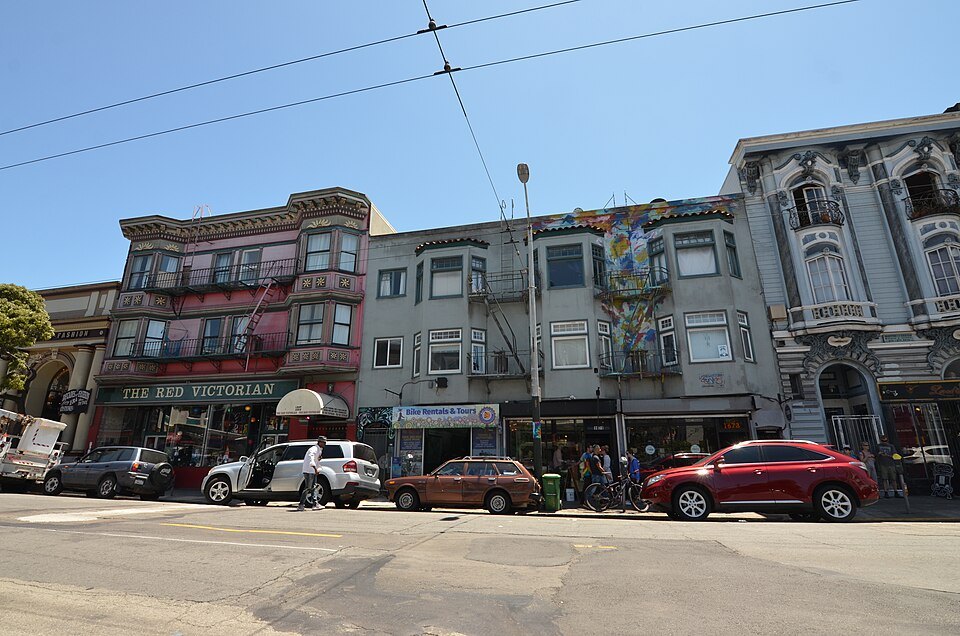
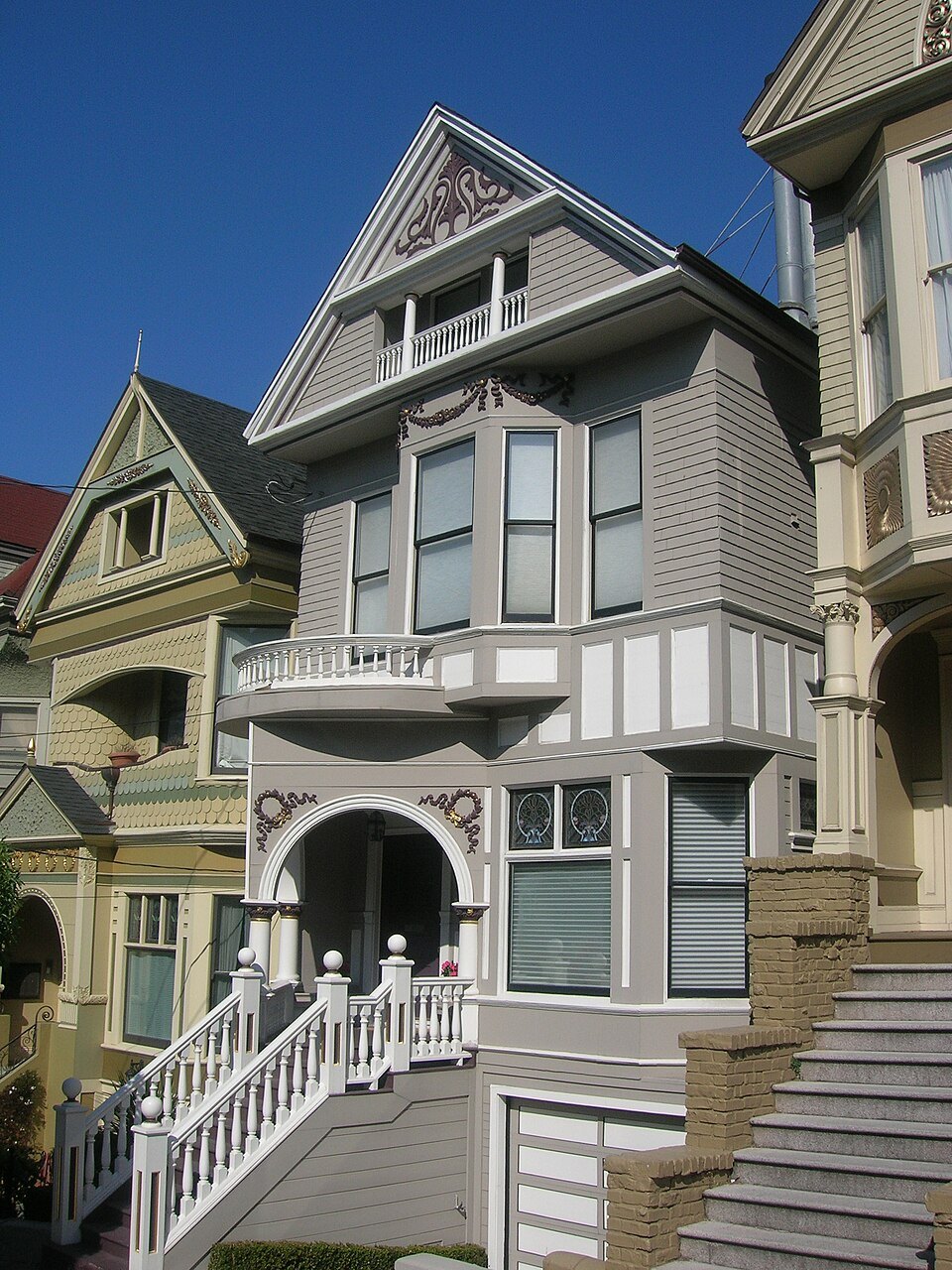
- 2The housesRows of elaborately detailed, multi-story wooden houses from the late nineteenth and early twentieth centuries.
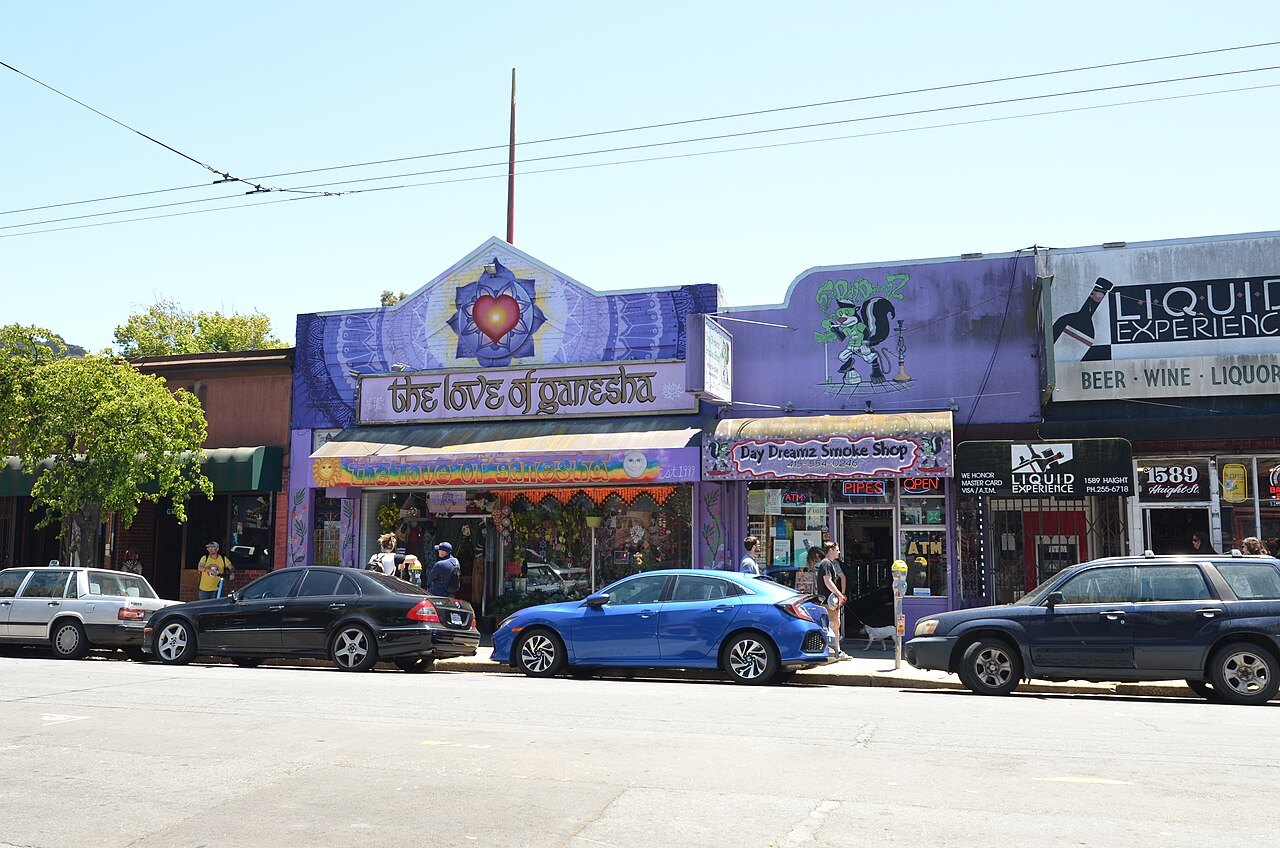
- 3Haight StreetThe shopping street running west toward the park, with bookstores, record shops, boutiques and cafés.
- 4The PanhandleThe long, narrow strip of Golden Gate Park along the district's northern edge.
- 5Buena Vista ParkA wooded hill park at the east end of the district, where the hippies held a mock funeral in 1967.
- 6Golden Gate ParkThe great park itself begins where Haight Street ends, at Stanyan Street.
Reading the place
Why it matters
Haight-Ashbury, called simply the Haight by most San Franciscans, takes its name from the intersection of Haight and Ashbury streets, and it is one of the few neighborhood names known around the world. In the 1960s it was one of the main centers of the counterculture, and in 1967 it was the heart of the Summer of Love, when as many as 100,000 young people converged on the district and on Golden Gate Park next door. The streets are still full of the look and the memory of that time.
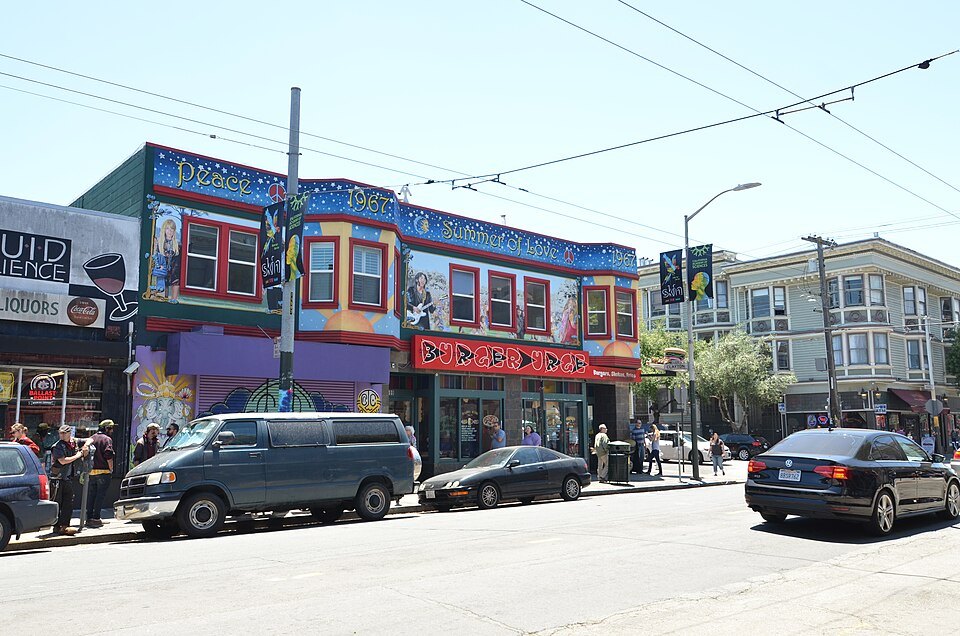
Beyond the legend, it is simply one of the most handsome residential districts in the city, and a natural stop on the way to or from Golden Gate Park.
From sand dunes to streetcar suburb
The street names honor two early San Francisco leaders: Henry Haight, a pioneer and exchange banker, and Munroe Ashbury, a member of the Board of Supervisors from 1864 to 1870. Both had a hand in planning the neighborhood and the nearby park. Until the Haight Street Cable Railroad was completed in 1883, the area was a collection of isolated farms and acres of sand dunes; the cable line joined the east end of the new park to Market Street and downtown.
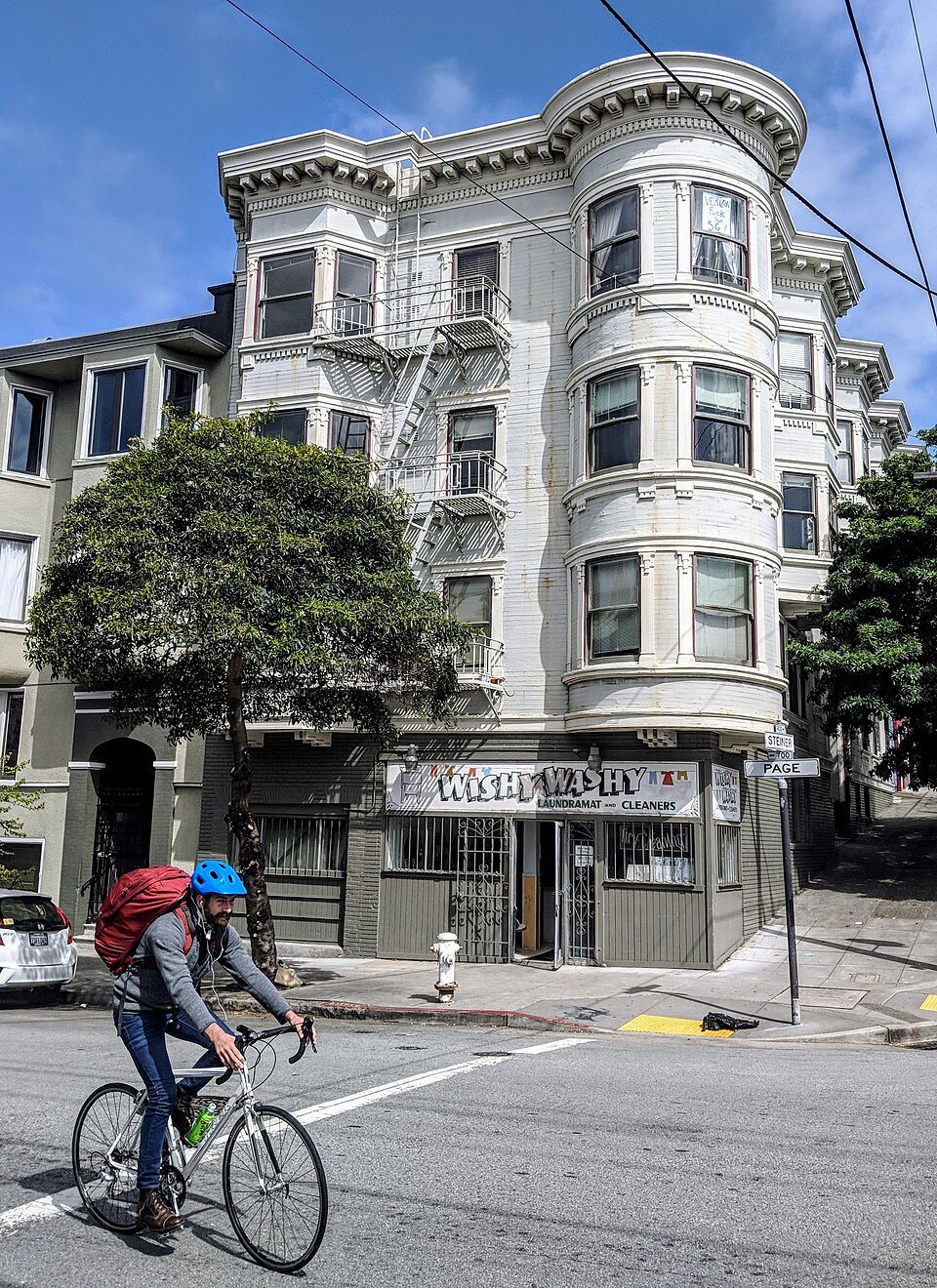
As the main gateway to the park, the Haight became a place for weekend outings, with a baseball ground from 1887 and an amusement park called the Chutes on Haight Street between Cole and Clayton from 1895 to 1902. Middle-class families built the ornate wooden houses that line its streets today. The district was one of the few neighborhoods spared by the fires that followed the earthquake of 1906, which is why so many of its houses survive.
Decline, and the hippies
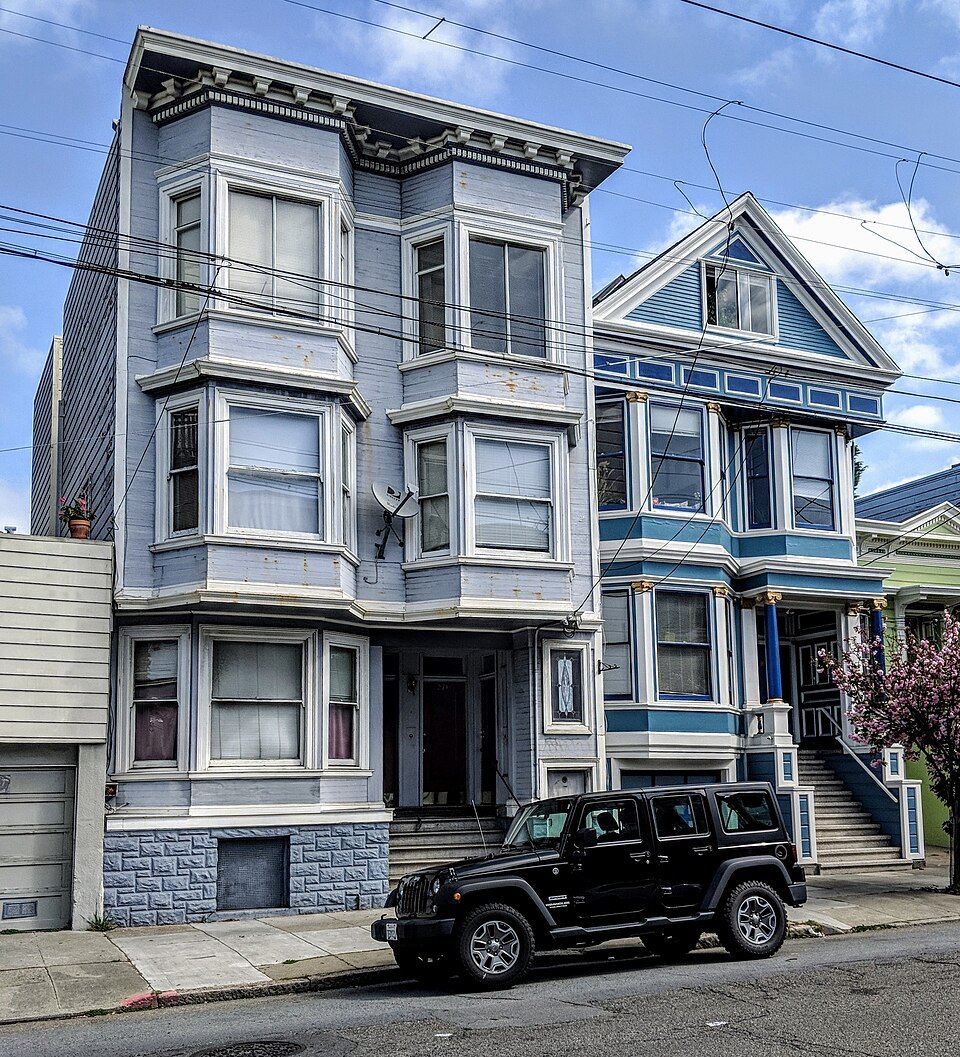
The Depression hit the Haight hard. During the Second World War many of its big houses were divided into apartments for war workers, and by the 1950s it was a neighborhood in decline, with vacant buildings and deferred maintenance. A proposed freeway through the Panhandle depressed property values further until a citizens' revolt killed it in a series of battles lasting until 1966.
Cheap rooms in grand old houses drew the Beats who could not find space in North Beach, and then the hippies. The first head shop, Ron and Jay Thelin's Psychedelic Shop, opened on Haight Street on January 3, 1966. The Diggers, a local group known for its street theater, ran a free store and gave away meals daily, and the Haight Ashbury Free Clinic was founded here. Bands including the Grateful Dead, Jefferson Airplane, and Big Brother and the Holding Company lived close to the famous corner.
The Summer of Love
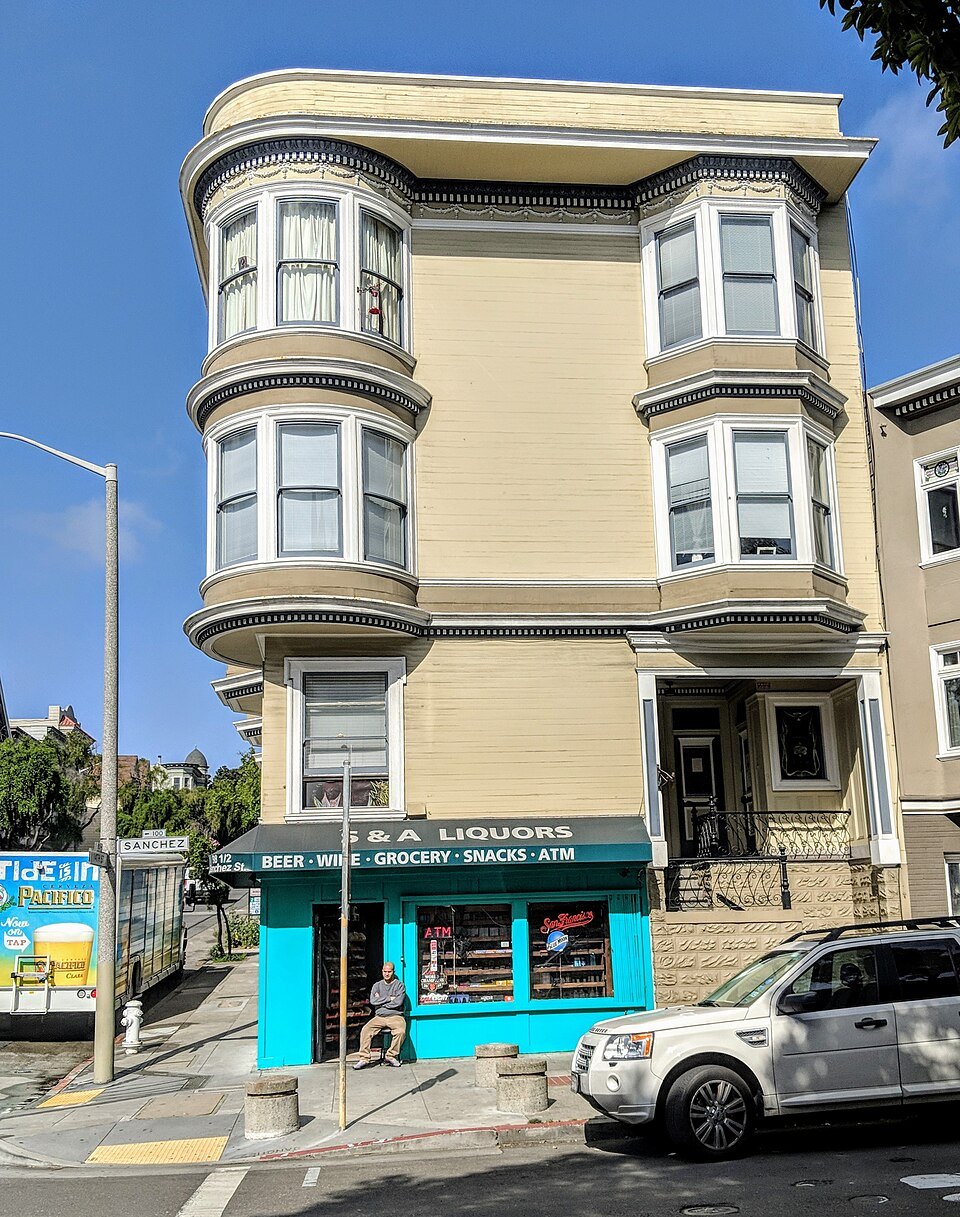
The prelude was the Human Be-In, a gathering of about 30,000 people in Golden Gate Park on January 14, 1967. That June, the Monterey Pop Festival carried the district's bands to national fame, and Scott McKenzie's song San Francisco (Be Sure to Wear Flowers in Your Hair) became a hit. Newspapers and magazines reported on the Haight almost daily, and young people arrived from all over the country.
The neighborhood could not absorb them. Overcrowding, homelessness, hunger and drug problems followed, and many visitors went home in the autumn. On October 6, 1967, those who remained staged a mock funeral in Buena Vista Park, "The Death of the Hippie," to signal that the moment was over and to tell others not to come.
The Haight today
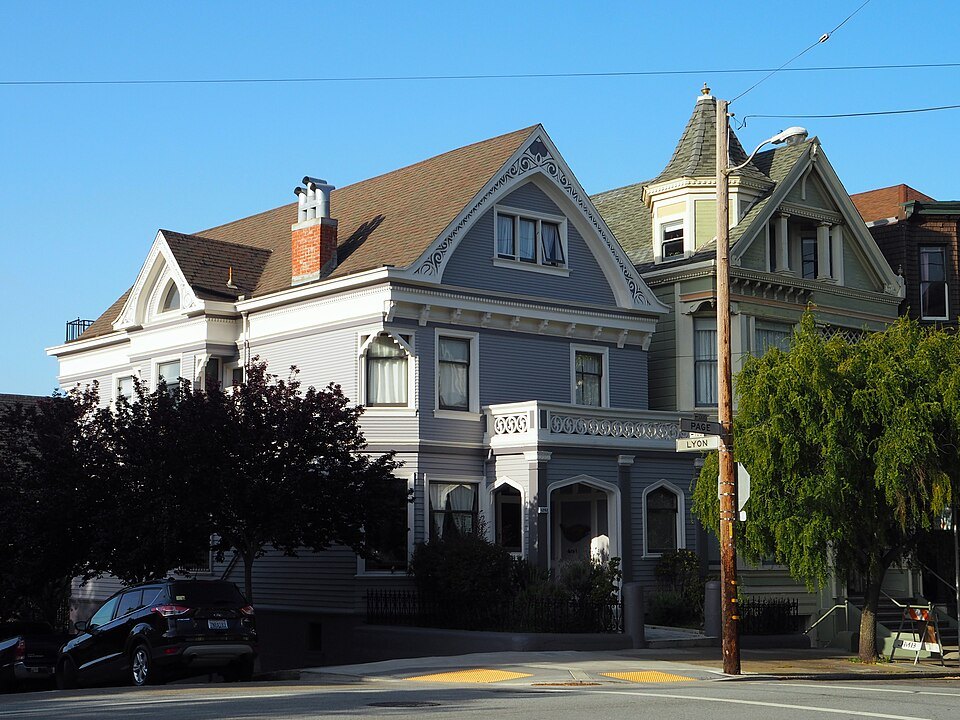
In the decades since, middle-class families moved back and restored the houses, and the neighborhood council fought to protect its Queen Anne architecture and to keep chains off Haight Street. Bookstores, record shops, vintage clothing boutiques and cafés trade on the sixties, and walking tours trace the addresses of the era. The Doolan-Larson Building at the corner of Haight and Ashbury, built in 1903, was added to the National Register of Historic Places in 2011.
Some institutions of the sixties outlasted the crowds. The Haight Ashbury Free Clinic stayed open through the lean years that followed, and in the 1980s, when the AIDS epidemic took many of the neighborhood's gay residents, its needle exchange helped slow the spread of HIV. Gentrification has since raised rents sharply, and the district now mixes long-time residents, young families and a steady flow of visitors walking between the park and the famous corner.
The Haight-Ashbury Street Fair, held each year since 1978, closes Haight Street to traffic between Stanyan and Masonic, with a sound stage at each end.
How to visit
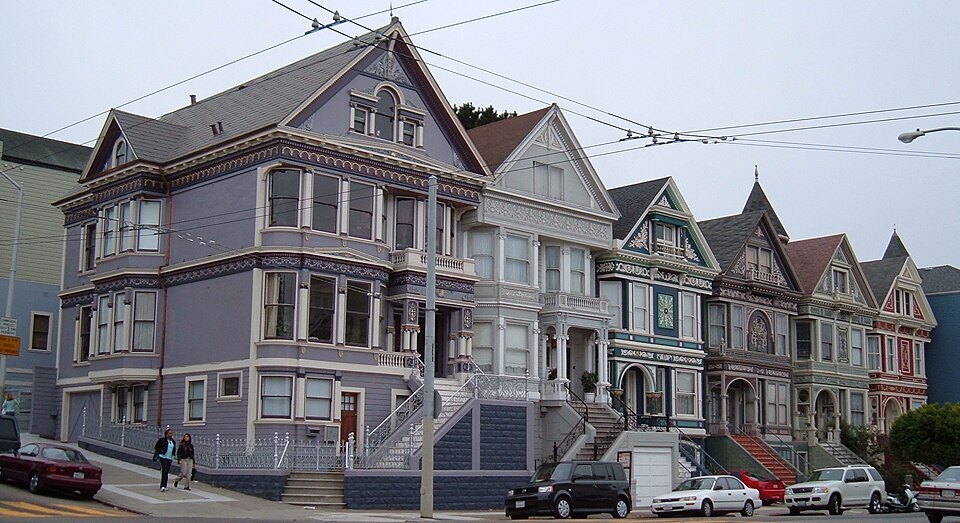
Haight Street itself is a pleasant, fairly gentle walk from Masonic Avenue west to Stanyan Street and the edge of Golden Gate Park, and several Muni bus lines serve it; see getting around. The cross streets climb south toward Ashbury Heights and Cole Valley, and Buena Vista Park, at the east end, is a hill with steep paths and steps; see the hills.
Allow an hour or two for the street and the houses, then continue into the park. The Painted Ladies at Alamo Square are a short walk east, and the two make a natural pair for anyone who has come to see the city's Victorian houses.
Myths and facts
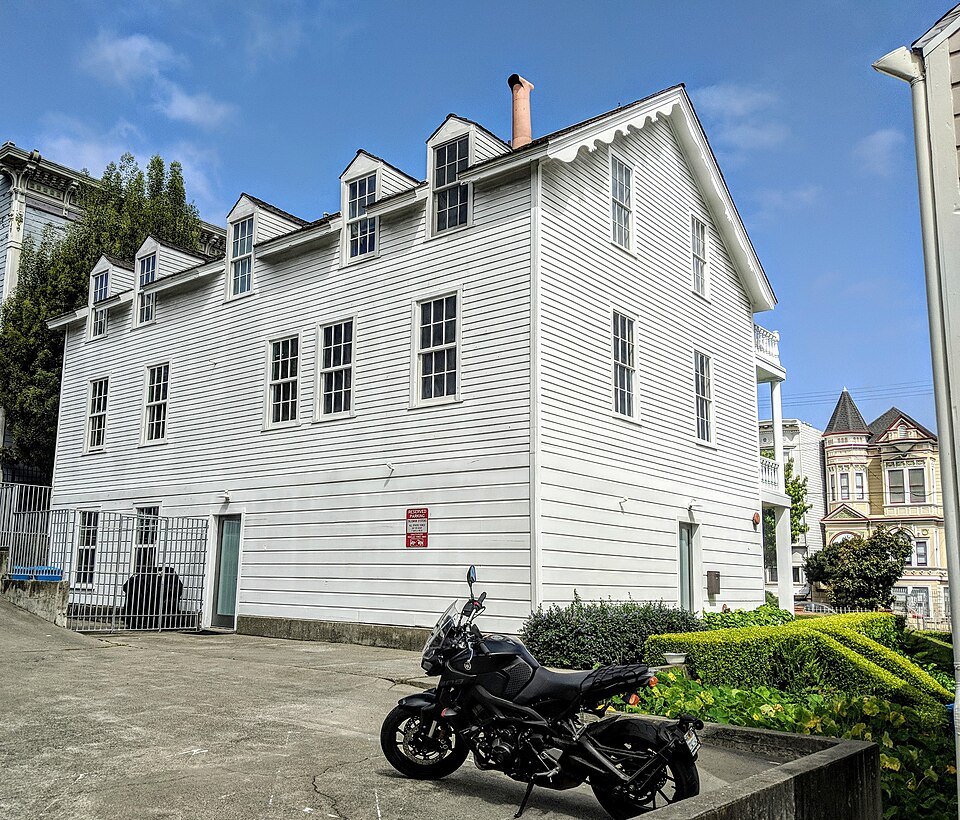
The Summer of Love was not a single event, and it was never confined to the Haight: the gatherings spread through Golden Gate Park next door, and the crowds reached well beyond this one district. And the hippies were not the district's first bohemians; the Beats had begun moving here in the late 1950s, drawn by the cheap rooms in its old houses.
Nearby
- NearbyGolden Gate ParkMore than three miles of woods, lakes, gardens and museums laid out from the 1870s over the sand dunes of the Outside Lands, from the Victorian Conservatory of Flowers in the east to the windmills by the ocean.Read the page
- NearbyAlamo Square and the Painted LadiesA row of Victorian houses built in the 1890s on Steiner Street, facing a hilltop park that looks straight over them to downtown: San Francisco's most photographed houses, and a story of how the city put the color back on its Victorians.Read the page
- NearbyTwin PeaksTwo bare hills of about 925 feet near the middle of San Francisco, where the whole city, Market Street and the Bay spread out below, and where the summer fog stops or spills over.Read the page