Home · Sights · Alamo Square and the Painted Ladies
Alamo Square and the Painted Ladies
Some climbing
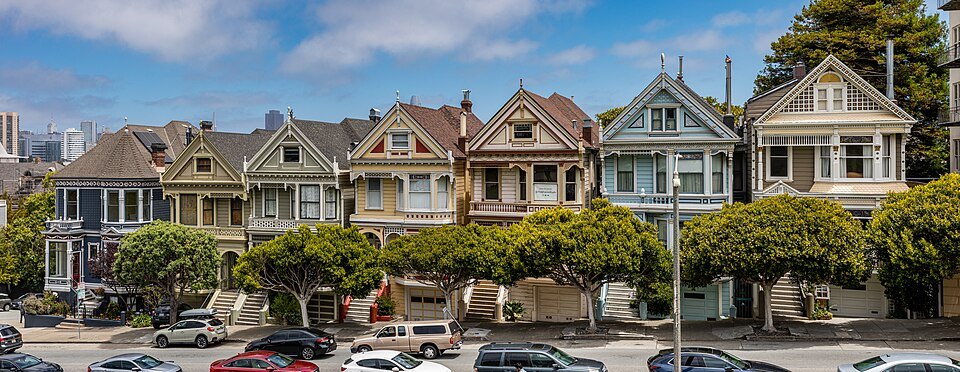
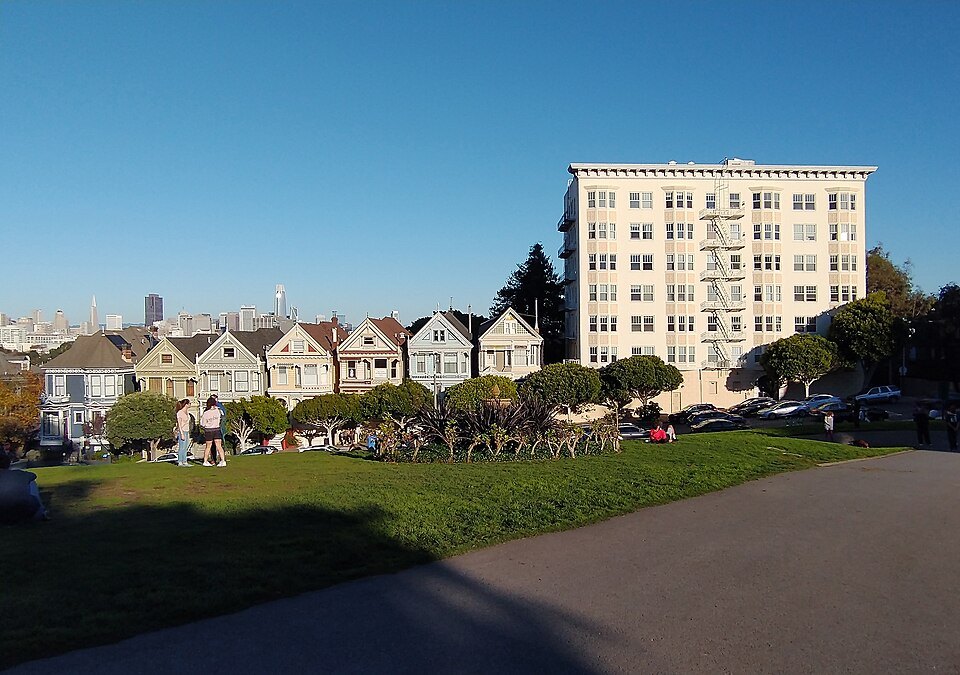
- 1Postcard Row710 to 720 Steiner Street, the row of houses built between 1892 and 1896, facing the park.
- 2The builder's houseThe larger 1892 mansion at 722 Steiner Street, where the developer Matthew Kavanaugh lived.
- 3Alamo Square ParkA hilltop park of about thirteen and a half acres, with lawns sloping down toward the row.
- 4The view downtownOver the rooftops to the Transamerica Pyramid, the towers of downtown and the Bay Bridge.
- 5The mansionsGrand houses around the park, among them the Westerfeld House and the Archbishop's Mansion.
- 6City Hall down Fulton StreetThe Civic Center's dome, framed at the end of the street from the park.
Reading the place
Why it matters
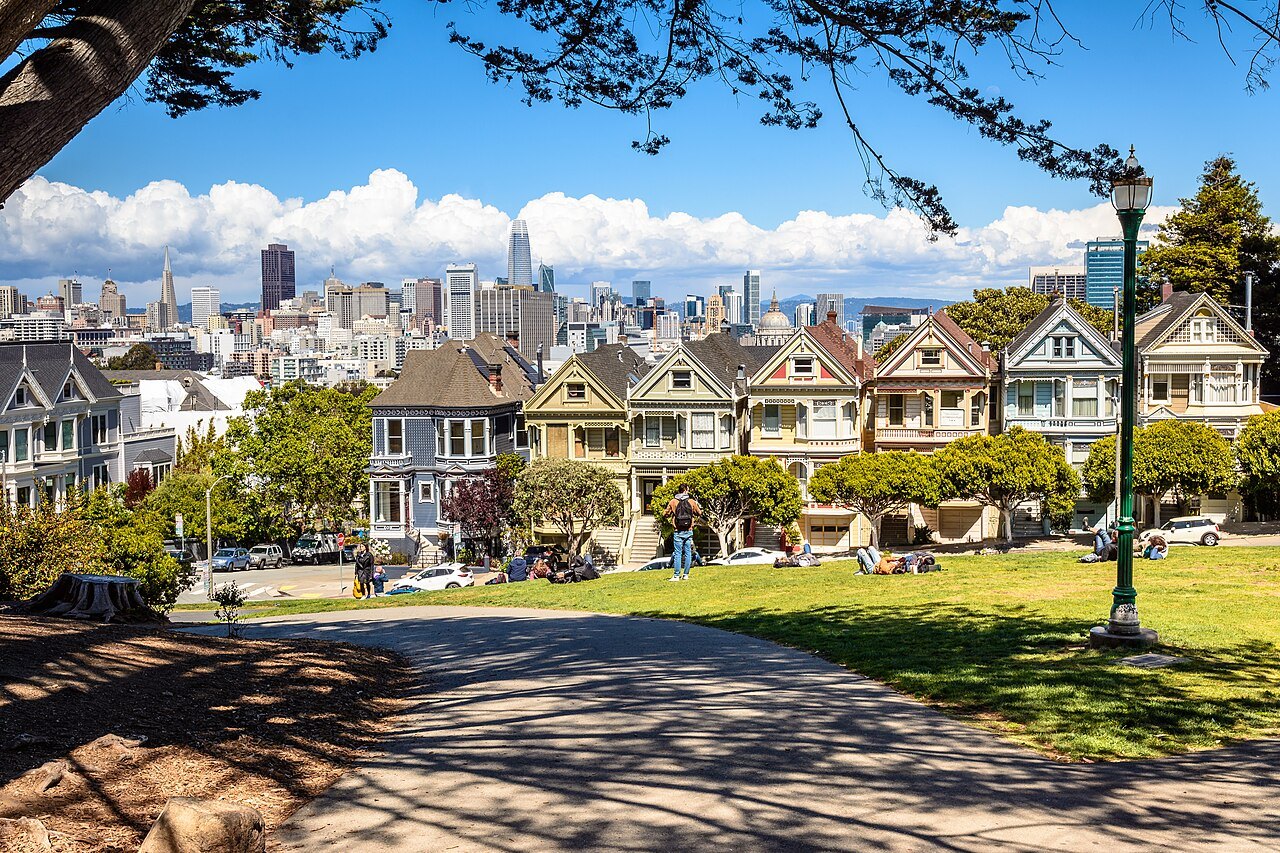
The Painted Ladies are the row of Victorian houses at 710 to 720 Steiner Street, across from Alamo Square, and they are probably the most photographed houses in San Francisco. Seen from the slope of the park, with the towers of downtown rising behind their gables, they make the picture that stands for the city on countless postcards, and they have appeared in an estimated seventy films, television programs and advertisements, most famously in the opening credits of the sitcom Full House.
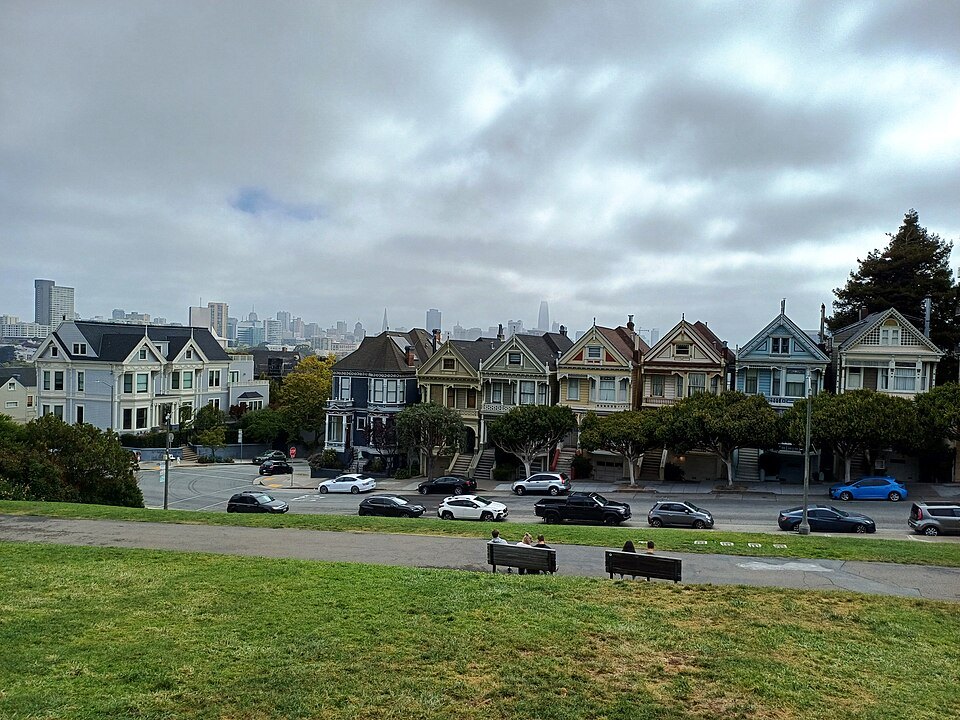
They also stand for something larger: the thousands of wooden Victorian and Edwardian houses that survived in San Francisco, and the movement that painted them back into color.
The houses
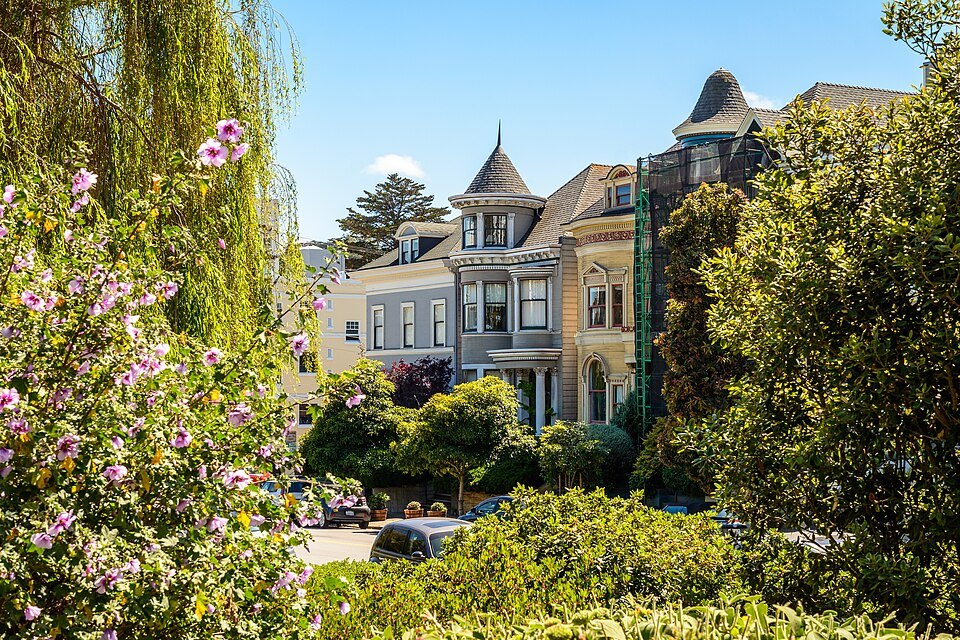
The row, sometimes called Postcard Row or the Seven Sisters, was built between 1892 and 1896 by the developer Matthew Kavanaugh, who lived next door in the larger mansion he built in 1892 at 722 Steiner Street. They are late Victorian houses with steep gables, bay windows, decorative shingles and wooden ornament, the kind of houses built by the tens of thousands as the city spread west in the late nineteenth century.
Between 1849 and 1915 some 48,000 houses in the Victorian and Edwardian styles went up in San Francisco. Many of them were brightly painted from the start; a newspaper critic complained in 1885 that everything loud was in fashion, red, yellow, chocolate and orange. The fire of 1906 destroyed many in the old downtown, but whole neighborhoods to the west survived, including the streets around Alamo Square.
Painted back into color
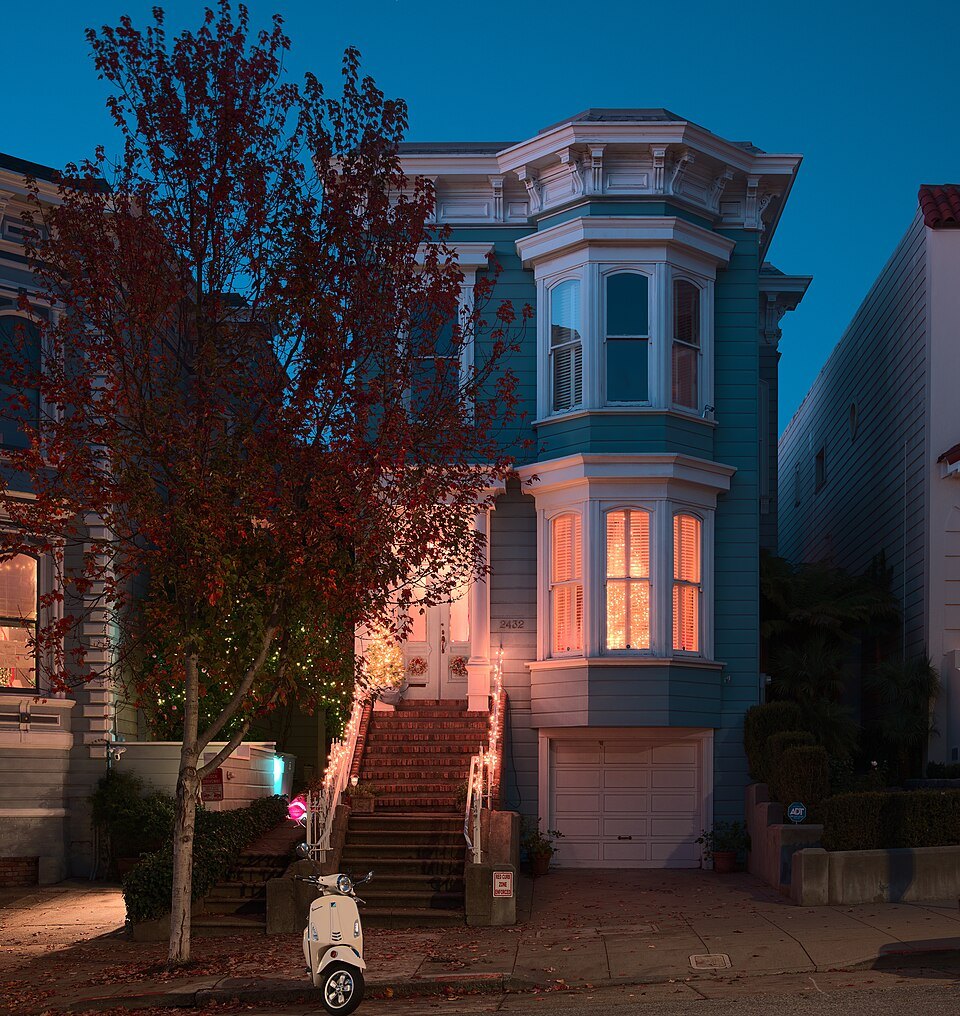
During both world wars, many of the city's Victorians were painted battleship gray with surplus Navy paint, and some 16,000 were demolished outright, while many more had their ornament stripped off or hidden under tarpaper, stucco, brick or aluminum siding. The revival began in 1963, when the artist Butch Kardum painted his Italianate Victorian in intense blues and greens. Neighbors criticized it and then copied it, and colorists such as Kardum, Tony Canaletich, Bob Buckter and Jazon Wonders went on to repaint dozens of gray houses. By the 1970s the colorist movement had changed entire streets.
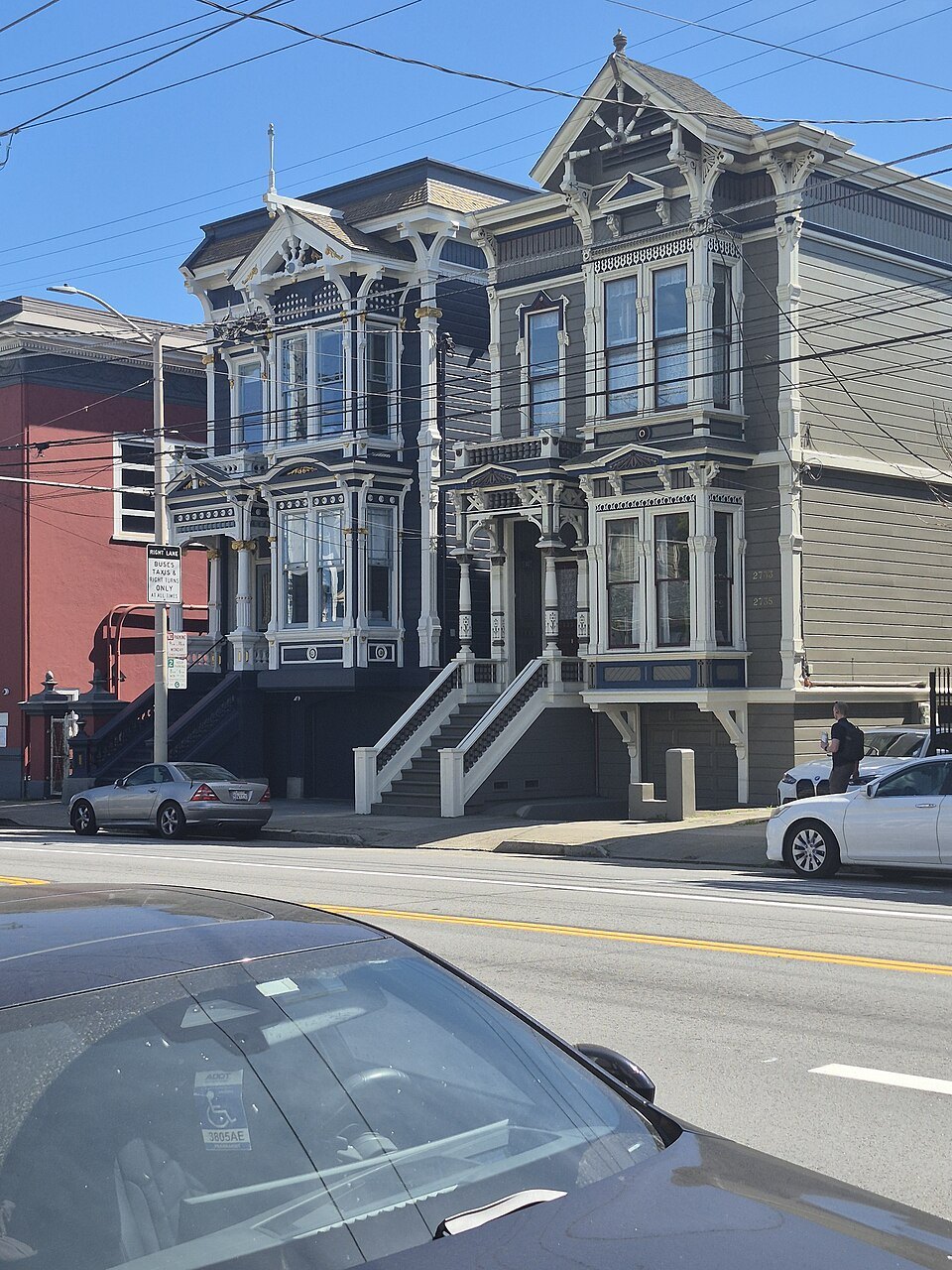
The name came in 1978, when the book Painted Ladies: San Francisco's Resplendent Victorians, by Morley Baer, Elizabeth Pomada and Michael Larsen, gave these houses a label that has since spread to colorful Victorians across the United States. The colors are a modern style rather than a restoration of what the Victorians used.
Alamo Square
The park across the street sits on top of a hill in the Western Addition and takes its name from a lone cottonwood, álamo in Spanish, that stood on Alamo Hill, a watering place on the horseback trail between Mission Dolores and the Presidio. From the center of the park, on a clear day, you can see the Transamerica Pyramid and the tops of both the Golden Gate Bridge and the Bay Bridge, and City Hall's dome stands directly at the end of Fulton Street.
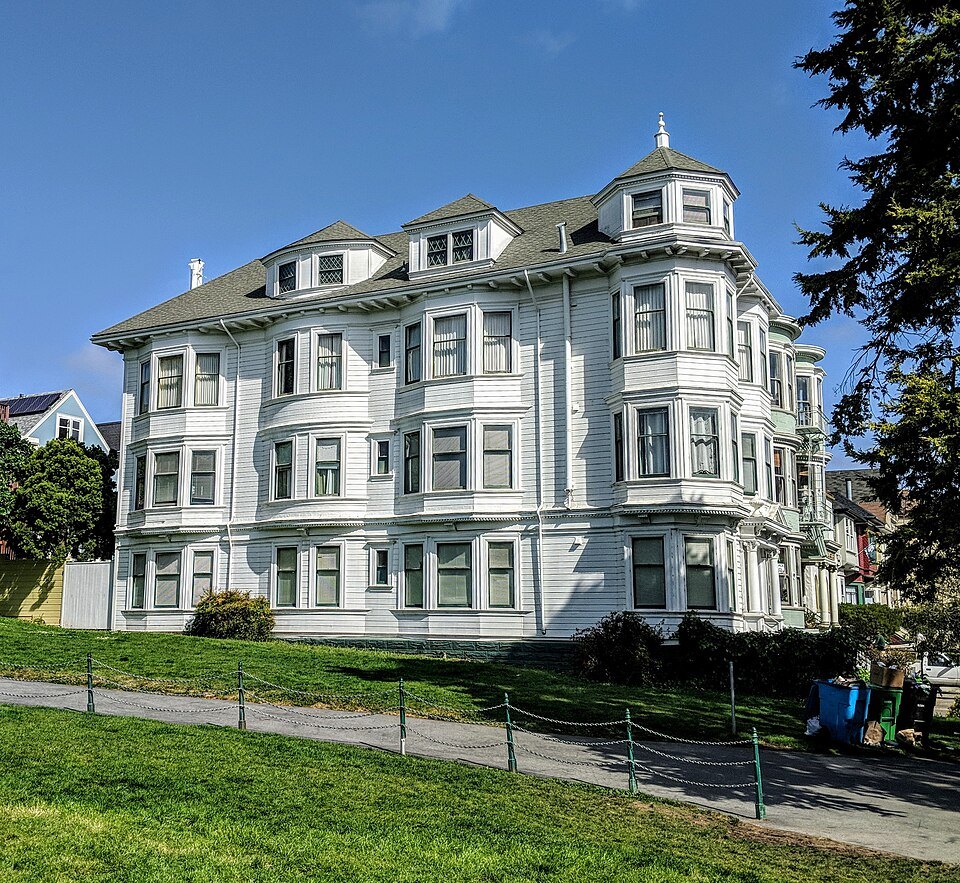
The streets around it were largely spared the urban renewal that cleared other parts of the Western Addition, and the square is ringed by grand houses, among them the William Westerfeld House, the Archbishop's Mansion and the one-time residences of the Russian and German imperial consuls. The Alamo Square Historic District was created in 1984, and the neighborhood has the second largest concentration of very large houses in the city after Pacific Heights. The square has its own screen career beyond the sitcom: it features heavily in the 1978 version of Invasion of the Body Snatchers and in the 2012 comedy The Five-Year Engagement.
What you see
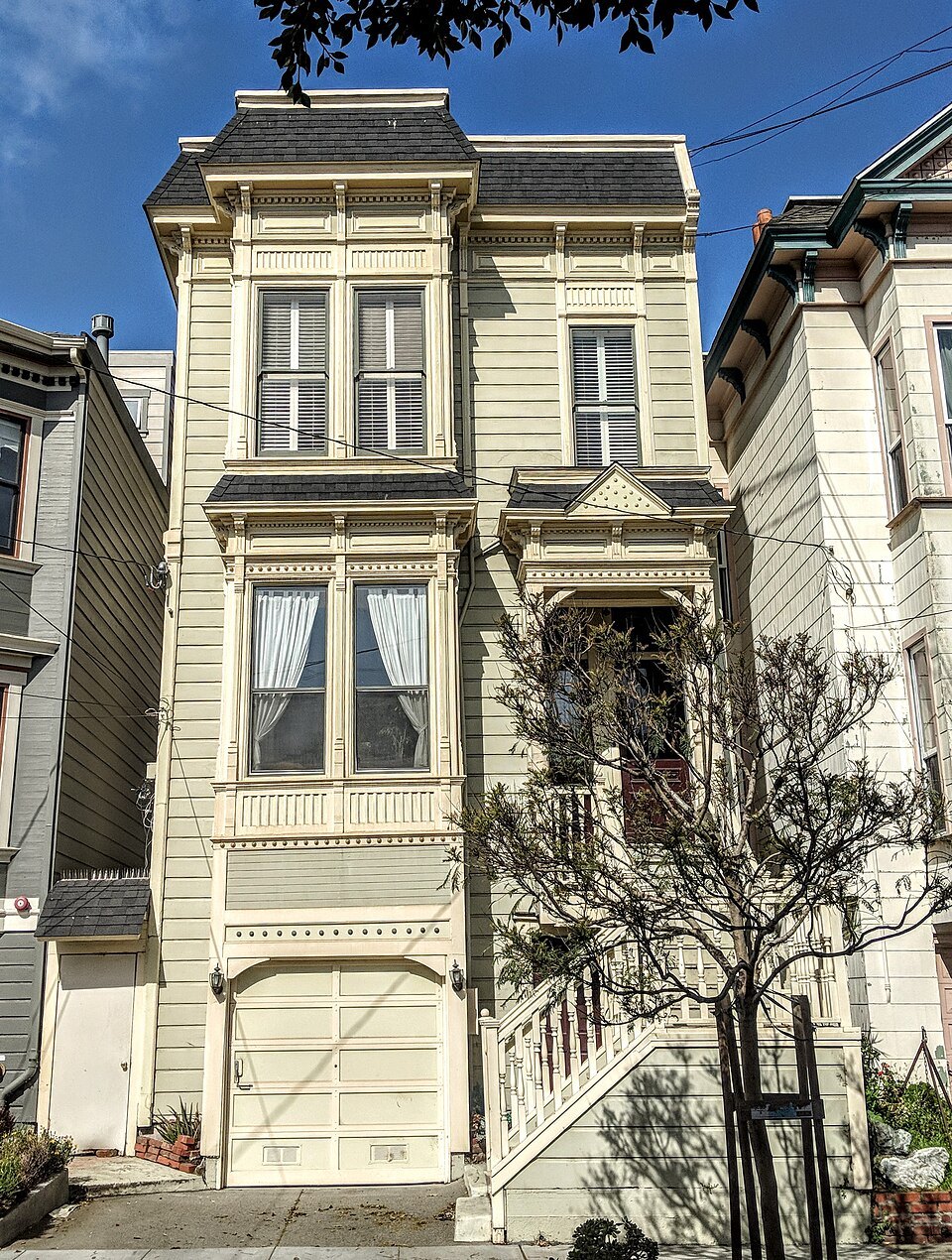
Most people climb the park's eastern slope and look back down across the lawn at the row: seven narrow houses in a stepped line down Steiner Street, each with its own paint scheme of three or more colors picking out the trim, the brackets and the shingles, and the downtown skyline behind them. The view is best in the afternoon, when the sun is behind you and lights the fronts of the houses. Around the park the houses are almost all of the same period, so the whole walk is a lesson in the styles of the 1880s and 1890s. Walk the streets around the square too; the mansions on the block diagonally across from the row and along Hayes and Fulton streets are as fine as the famous seven.
How to visit
Alamo Square is a hilltop, so there is some climbing from any side; see the hills. Muni buses along Hayes and Fulton streets stop close by; getting around has the details. Half an hour covers the view; an hour lets you walk around the square. Nothing needs booking: it is a public city park, and the view of the row is from its open lawn.
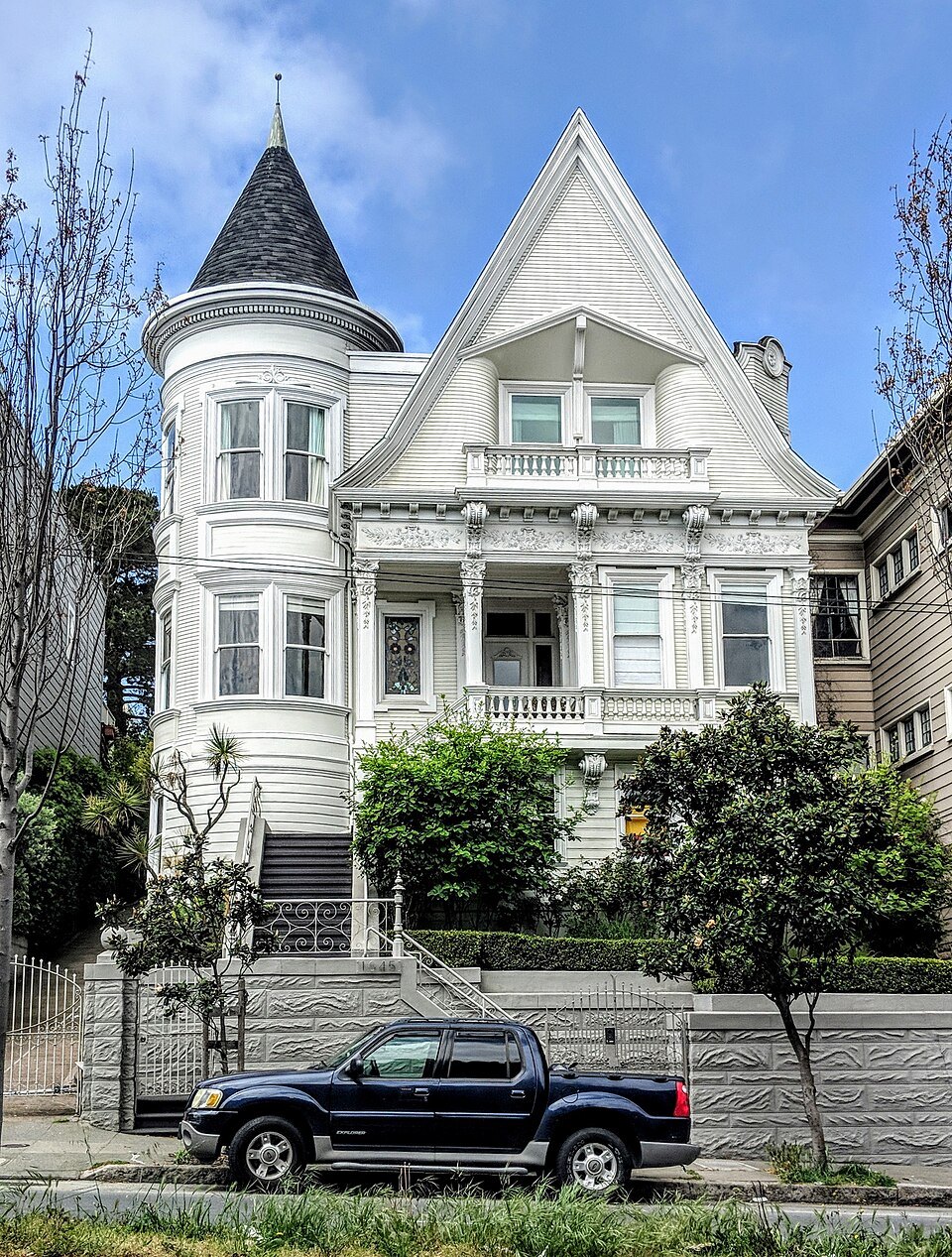
The Painted Ladies are private homes, and people live in them: look and photograph from the park or the sidewalk, and do not climb the front steps or block the doors. The park is a neighborhood park as much as a sight, with a playground, a tennis court and dog walkers. Haight-Ashbury and its own Victorian streets are a short walk to the southwest.
Myths and facts
The Painted Ladies are not the only painted ladies: the term covers colorful Victorian and Edwardian houses in many American cities, and San Francisco has hundreds. And the bright colors are not the original Victorian scheme but a revival that began in the 1960s.
Nearby
- NearbyHaight-AshburyA district of tall, ornate wooden Victorian and Edwardian houses at the east end of Golden Gate Park, named for a street corner and remembered as one of the centers of the 1960s counterculture.Read the page
- NearbyCity Hall and the Civic CenterArthur Brown Jr.'s domed City Hall of 1915, taller than the dome of the US Capitol, at the center of a Civic Center of classical buildings raised after the 1906 fire, where the United Nations Charter was signed.Read the page
- NearbyGolden Gate ParkMore than three miles of woods, lakes, gardens and museums laid out from the 1870s over the sand dunes of the Outside Lands, from the Victorian Conservatory of Flowers in the east to the windmills by the ocean.Read the page