Home · When to Come
Month by month
- JanuaryThe coolest month on average and the heart of the rainy season; clear, crisp air between storms.
- FebruaryRainy season; the Chinese New Year Parade through downtown and Chinatown.
- MarchRainy season, with the storms growing fewer toward April.
- AprilThe end of the rainy season; mild, fresher days.
- MayThe dry season begins; Bay to Breakers footrace and Carnaval on Mission Street late in the month.
- JuneSummer fog starts in earnest; the Pride parade and celebrations.
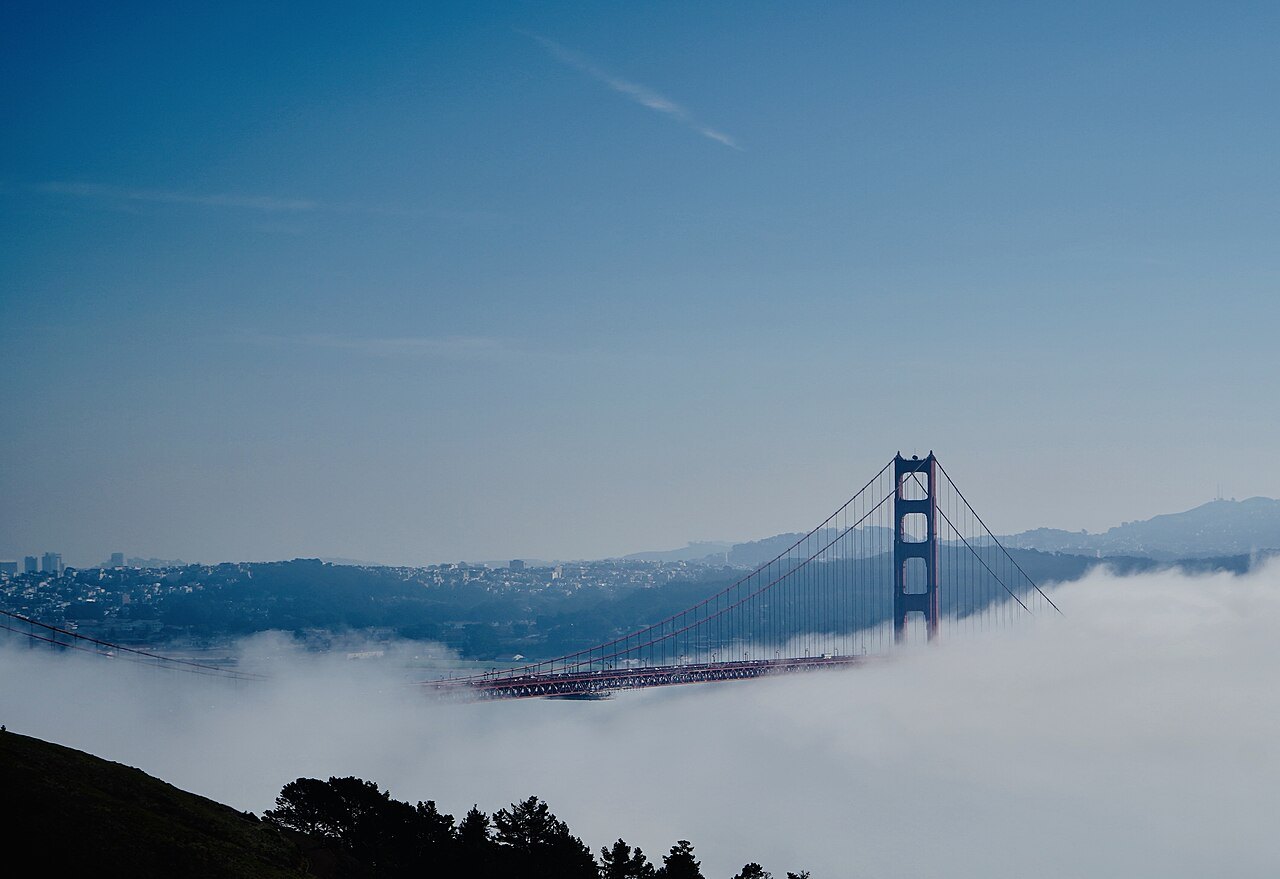
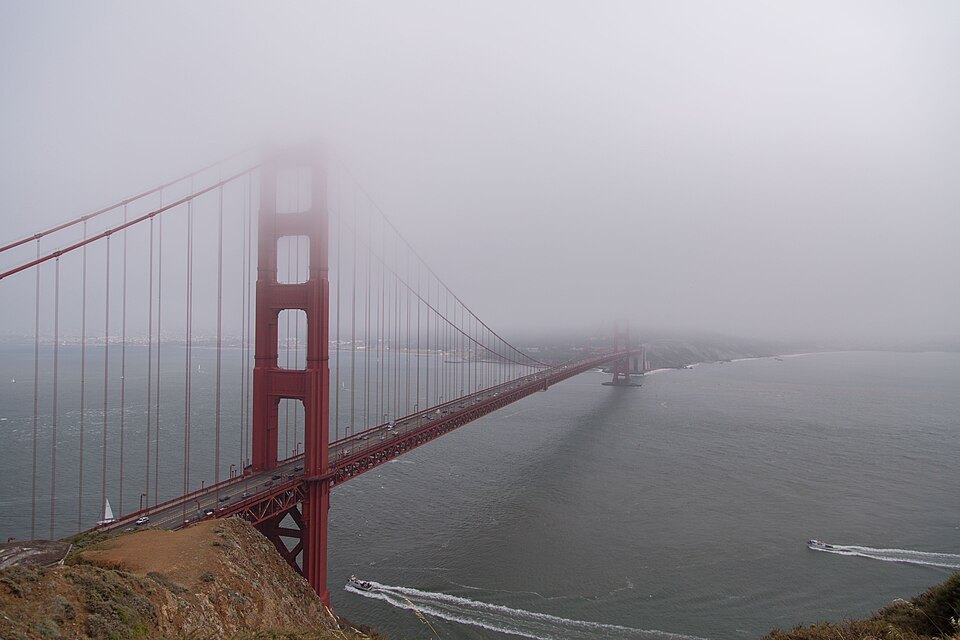
- JulyAmong the coolest summers of any major US city; fog and wind on the west side and the bridge.
- AugustStill foggy on the ocean side; Outside Lands fills Golden Gate Park's Polo Field.
- SeptemberOn average the warmest month; the fog thins, especially in the east of the city.
- OctoberOften warmer than July; Hardly Strictly Bluegrass in the park and Litquake.
- NovemberThe rains begin; quieter streets and a good month for the museums.
- DecemberRainy season, with cool, short days and quieter sights outside the holiday weeks.
When to Come
The short answer
If you can choose, come in September or October. On average September is the warmest month of the year, October is warmer than July, and the summer fog thins in late summer and early fall. The city is busy, but the weather is at its best, and the long views from the hills and the bridge are more likely to be clear.
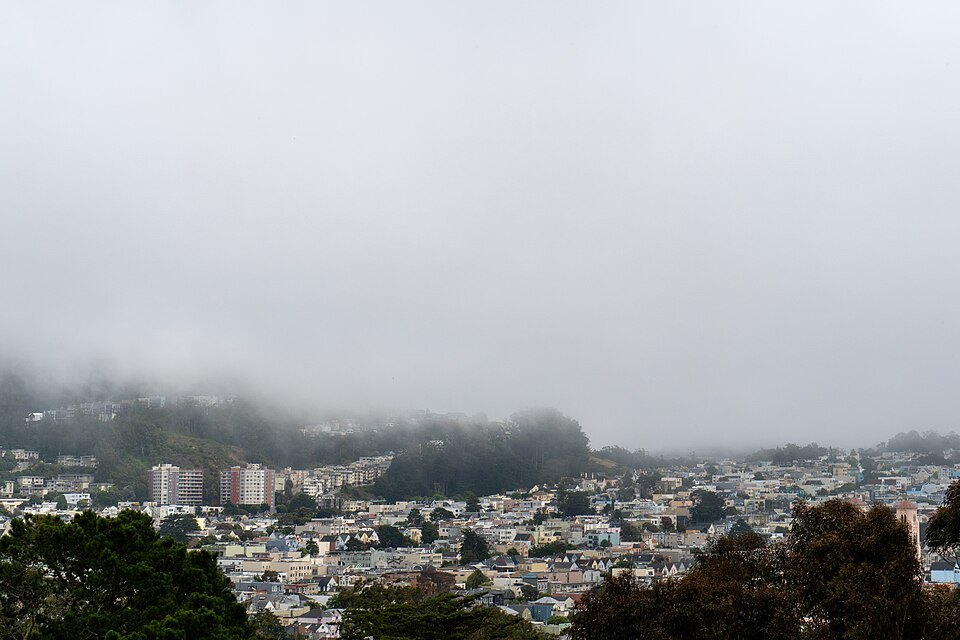
Any month works, though. San Francisco's climate is remarkably mild all year, with little difference between the seasons. What changes is the fog, the rain and the crowds, and each has its own mechanics.
A backward summer
San Francisco has a Mediterranean climate, with cool, moist winters and mild, dry summers, strongly shaped by the cold currents of the Pacific to the west and the waters of the bay to the north and east. Among major US cities it has the coolest average temperatures for June, July and August. Visitors who arrive in shorts in July are often surprised: in summer, rising hot air over California's inland valleys draws wind from the ocean through the Golden Gate, and with it the city's famous fog.
The pattern repeats most summer days. The marine layer usually clears back toward the coast by midday, then the wind rises and the fog rolls in again later in the afternoon, streaming through the Golden Gate and over the western neighborhoods. The eastern side of the city, sheltered by Twin Peaks and the ridge behind it, gets more sun; see the hills.
The rainy season
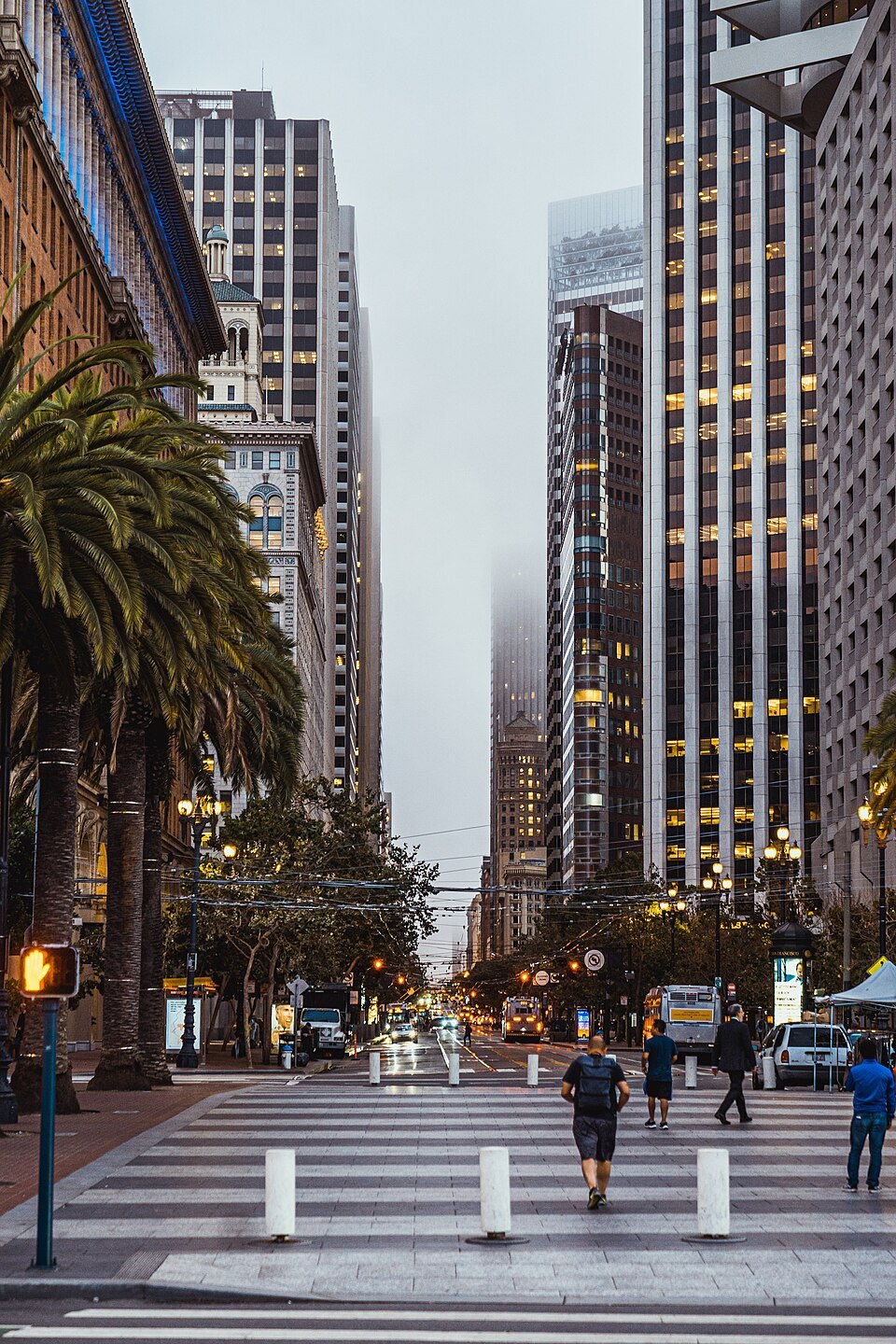
The rain falls mainly from November to April; the dry period runs from May to October. The city averages 73 rainy days a year, but the total varies widely from year to year: El Niño years in the Pacific tend to be wet, La Niña years dry, and in 2013, a La Niña year, downtown recorded its lowest rainfall since records began in 1849. Snow is so rare that only ten measurable falls have been recorded since 1852, the last in 1976, when a few inches lay on Twin Peaks.
Winter visits have real advantages: the air after a storm is often clear, the hills turn green, the crowds at the big sights are thinner, and the museums, SFMOMA, the de Young and the Legion of Honor among them, are made for a wet afternoon. Pack a rain jacket and shoes with grip for the hills.
Weather by neighborhood
San Francisco's microclimates mean that each neighborhood can have different weather at the same moment, although the differences are smaller in winter. As a rule, the ocean side of the city, the Richmond and the Sunset, Golden Gate Park's western end and Lands End, is the first to fog over and the last to clear. The eastern neighborhoods, sheltered by the ridge of Twin Peaks, stay brighter.
The Mission, in its valley east of the peaks, is often warmer and sunnier than other parts of the city, which is one reason Mission Dolores Park can draw thousands of people on a sunny weekend day. If the morning is gray where you are staying, it may well be bright a few miles east: plan outdoor sights on that side, such as Mission Dolores and the park beside it, for foggy summer days.
What to wear
Whatever the month, dress in layers. The difference between a sunny, sheltered street in the Mission and the wind on the Golden Gate Bridge or at Lands End on the same afternoon can feel like a change of season, and the temperature often falls quickly when the fog comes in. A warm jacket or fleece belongs in your bag even on a bright summer morning. Hot spells do happen, most often in September and October, when the city can reach eighty degrees or more; the highest temperature ever recorded downtown came on September 1, 2017.
Festivals and events
The city's calendar is full, and several of its big events are worth planning around, or around avoiding. The Chinese New Year Parade, in February, runs through downtown and one of the largest Chinese communities outside Asia; see Chinatown. In May comes Bay to Breakers, a footrace run every year since 1912 and best known for its costumes, and Carnaval, inspired by Rio de Janeiro's, which marches down Mission Street late in the month to take advantage of the better weather.
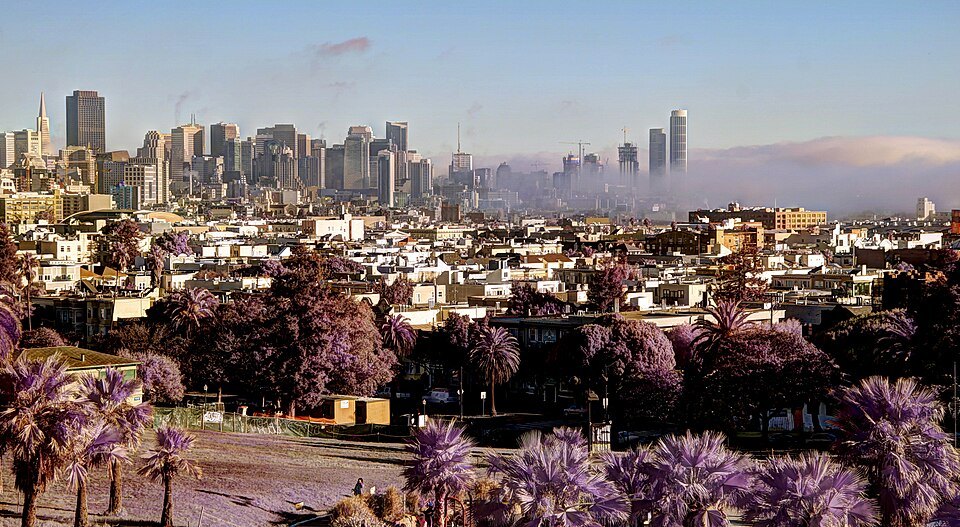
June brings San Francisco Pride, held every year since 1972, and in July the San Francisco Symphony plays at the Stern Grove Festival. Outside Lands, the largest independently owned music festival in the United States, fills Golden Gate Park in August, and Hardly Strictly Bluegrass returns to the park in October, along with the Litquake literary festival. Neighborhood street fairs, among them the Haight-Ashbury, North Beach, Union Street and Castro Street fairs, are held every year, and the Folsom Street Fair comes in September. Check each event's own dates before you book, since they move from year to year.
Crowds and booking
Summer and the early fall are the busiest seasons, and the big weekends of the festivals fill hotels quickly. Whenever you come, the booking to make first is Alcatraz: its ferries sell out well ahead in every season, and more so in summer; see booking ahead. Popular exhibitions at the big museums and dinner reservations at the best-known restaurants come next.
Weekdays are quieter than weekends at almost every sight, and early mornings are quieter than afternoons at Lombard Street, the Painted Ladies and the cable car turntable at Powell and Market. Winter, apart from the holiday weeks, is the quietest time of all.
Making the most of the fog
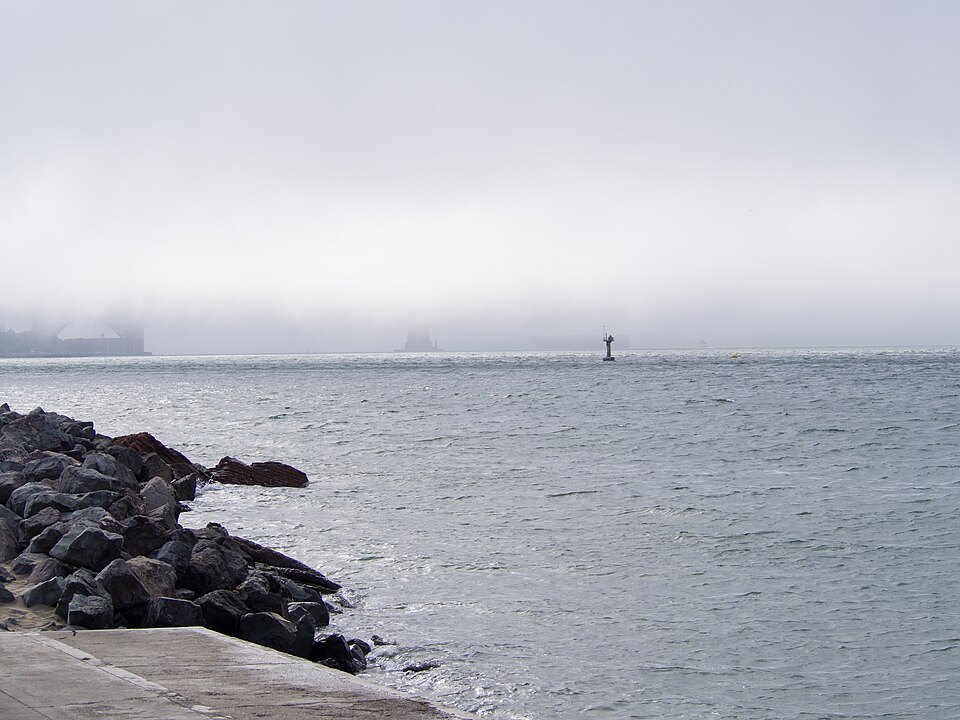
The fog is not only an inconvenience. Watching it pour through the Golden Gate and over the bridge's towers from the Marin Headlands, or seeing it lie over the western neighborhoods from the summit of Twin Peaks while downtown is in sun, is one of the great sights of the city. Plan the views that matter most to you for the clearer part of the day, keep a flexible afternoon for museums and neighborhoods, and look up the itineraries for days that fit the weather.
More photographs
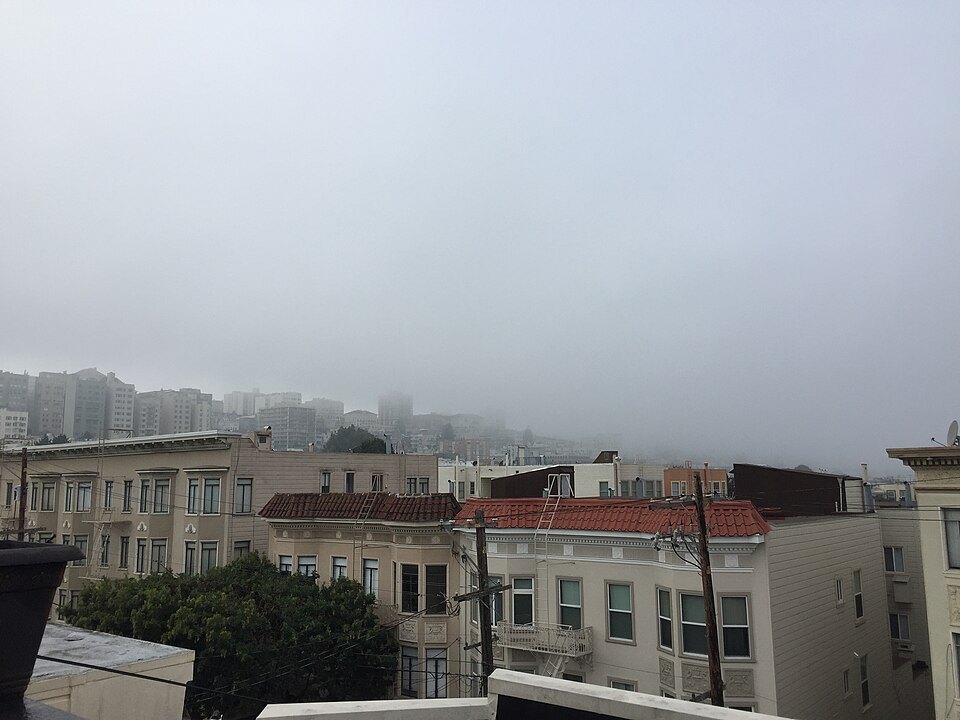
Rooftops under a blanket of early morning fogBlank61, Wikimedia Commons, CC BY-SA 4.0 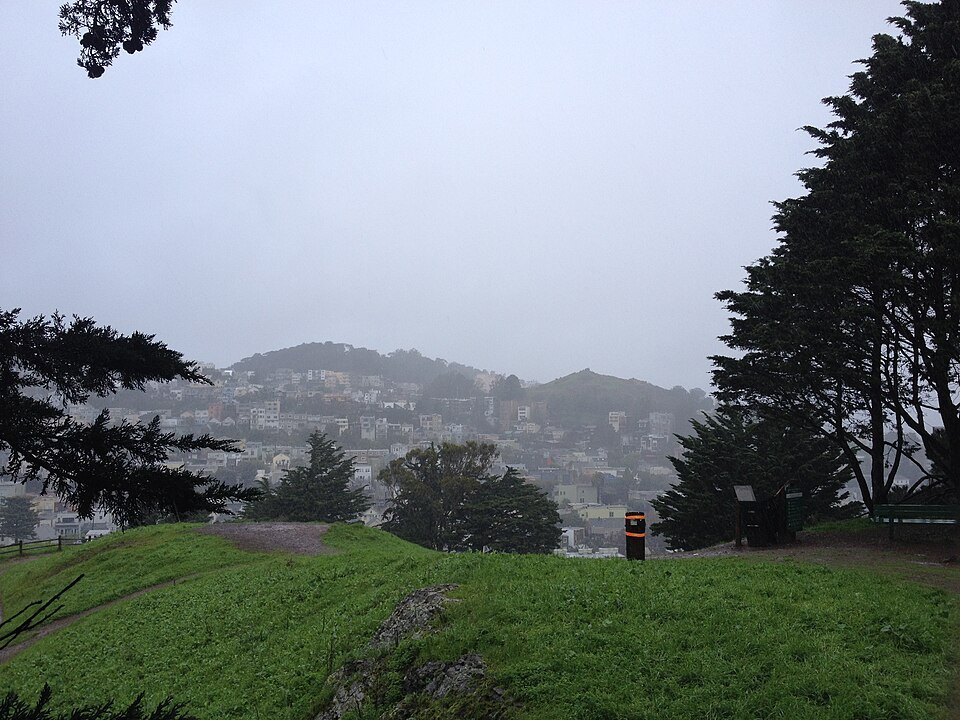
Kite Hill in the fog, its cypress trees dark against the graySemiautonomous, Wikimedia Commons, CC BY-SA 4.0 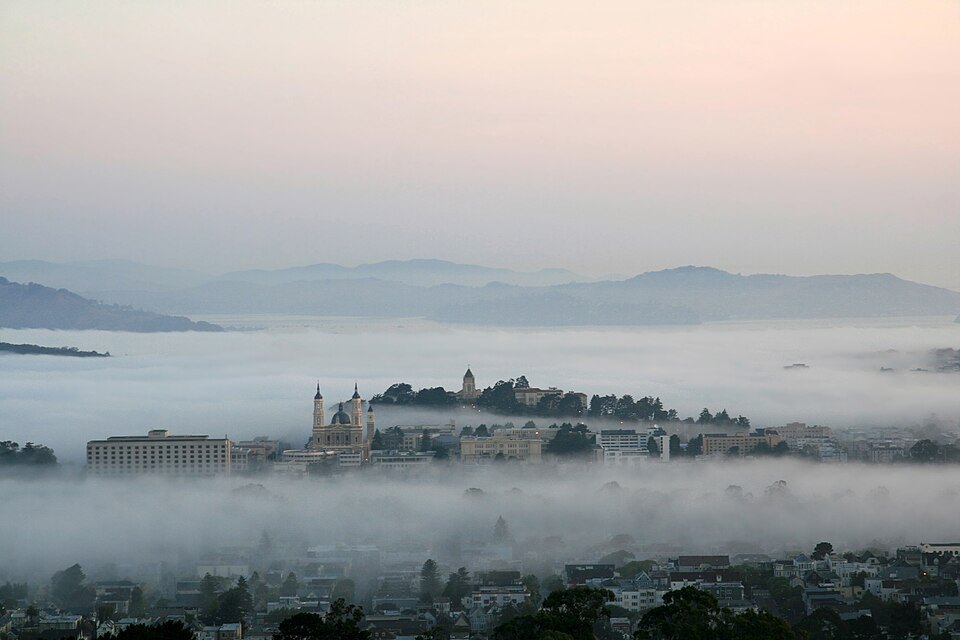
Fog filling the valleys below Twin Peaks at dawn, hilltops above itTwo+two=4, Wikimedia Commons, Public domain