Home · Sights · Lands End and the Sutro Baths
Lands End and the Sutro Baths
Steep or many steps
- 1The Coastal TrailThe main path along the cliffs, on the old railbed of the Cliff House railway.
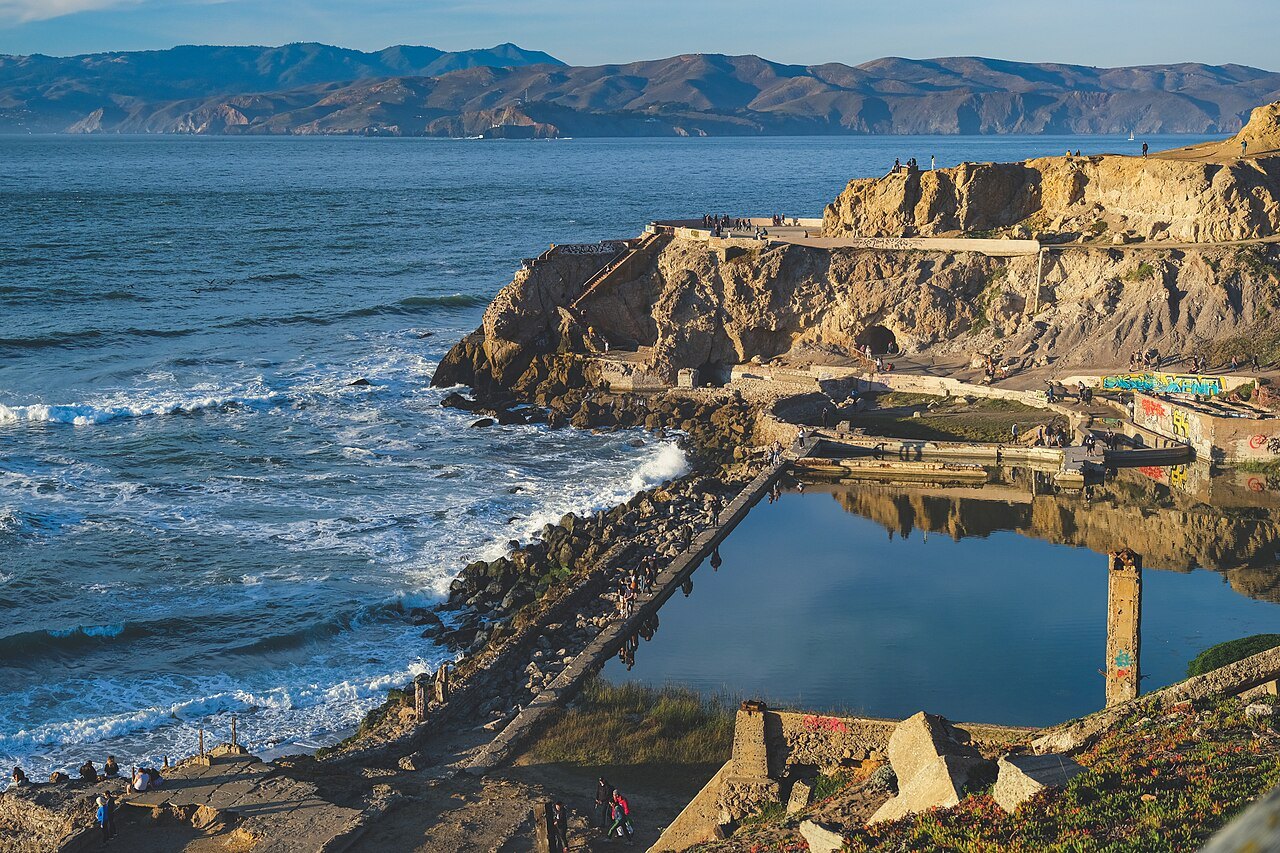
- 2The Sutro Baths ruinsThe concrete walls and pools of a vast bathhouse of 1896 that burned in 1966.
- 3The Cliff HouseA neoclassical building on the headland above the ruins, with the old Camera Obscura on its deck.
- 4Point LobosThe headland above the baths, cut through by tunnels that once brought sea water in.
- 5Mile Rock BeachA cove below the trail with views out through the Golden Gate to the bridge.
- 6The Legion of HonorA fine arts museum in a replica of a Paris palace, in Lincoln Park beside the trail.
Reading the place
Why it matters
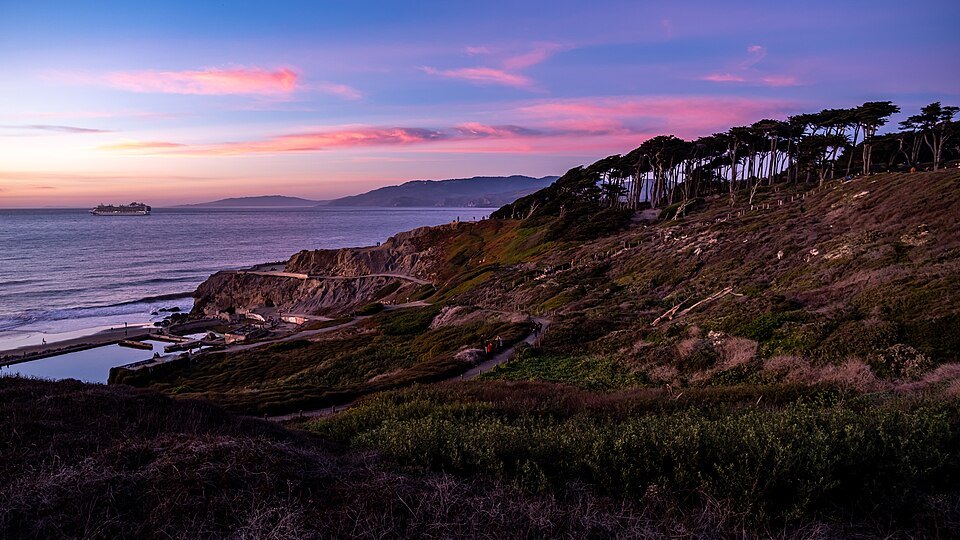
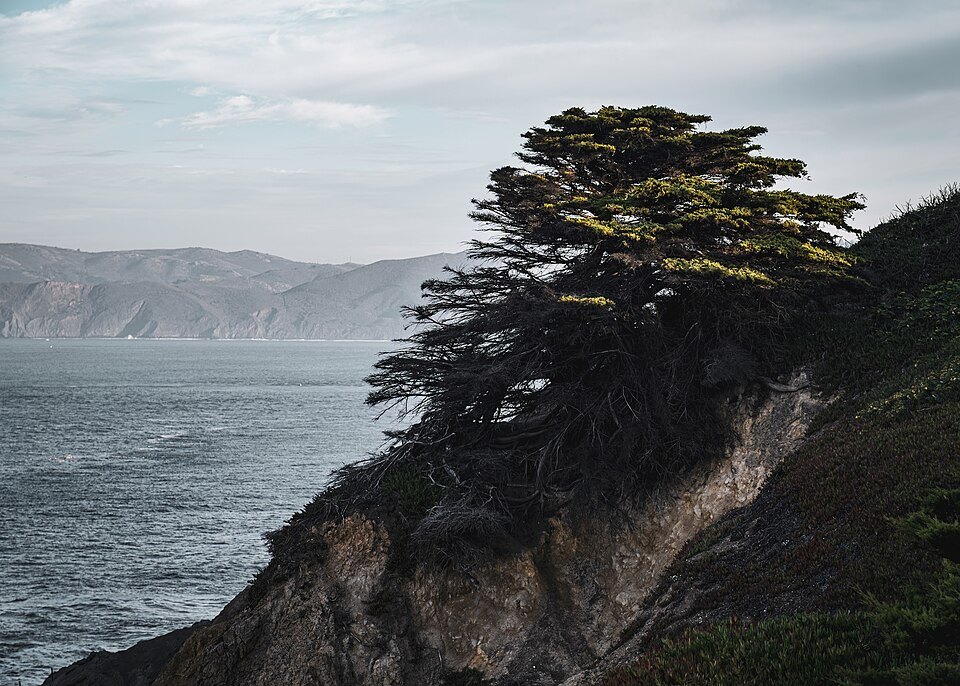
Lands End is the rocky, windswept northwest corner of San Francisco, where the Golden Gate opens to the Pacific. It is part of the Golden Gate National Recreation Area: a strip of cliffs, cypress and headlands between the Sutro district and Lincoln Park, with trails that look across the strait to the headlands of the far shore and down on wrecks and surf. Of all the places in the city, it is the one that feels least like a city.
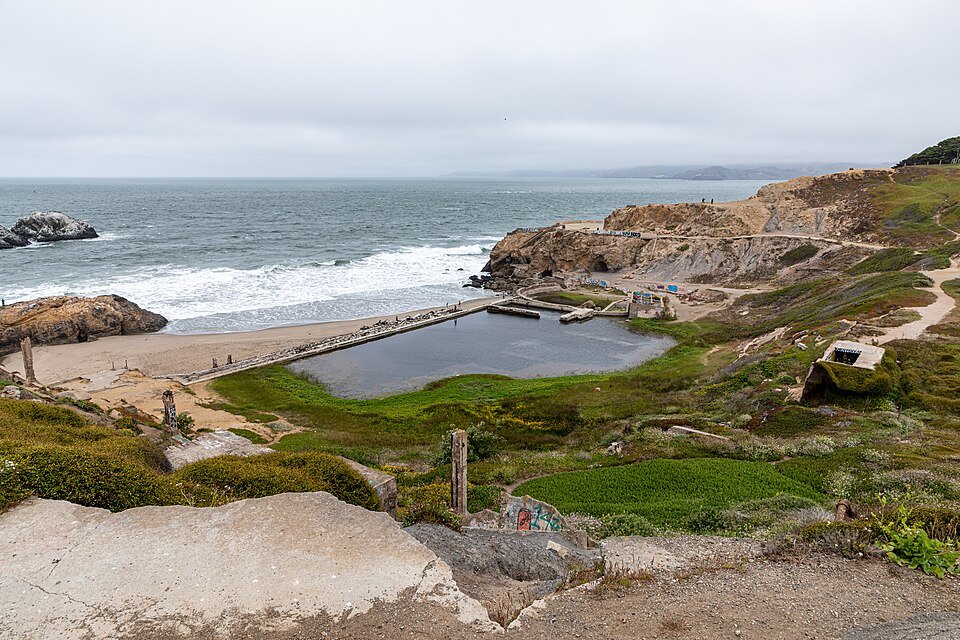
It also holds some of San Francisco's most atmospheric ruins, the remains of the Sutro Baths, and it has been a place of pleasure outings for San Franciscans since the 1860s.
A resort at the end of the land
The Yelamu Ohlone lived here before the Spanish came in 1776. After the Gold Rush, entrepreneurs built the first Cliff House on the headland as a resort for the wealthy, and by the 1860s a stagecoach ran out from downtown every Sunday along the new Point Lobos toll road. In the 1880s the millionaire Adolph Sutro, later mayor of the city, built a steam railway from downtown to bring ordinary people out to the ocean; the main trail through Lands End today follows its old railbed.
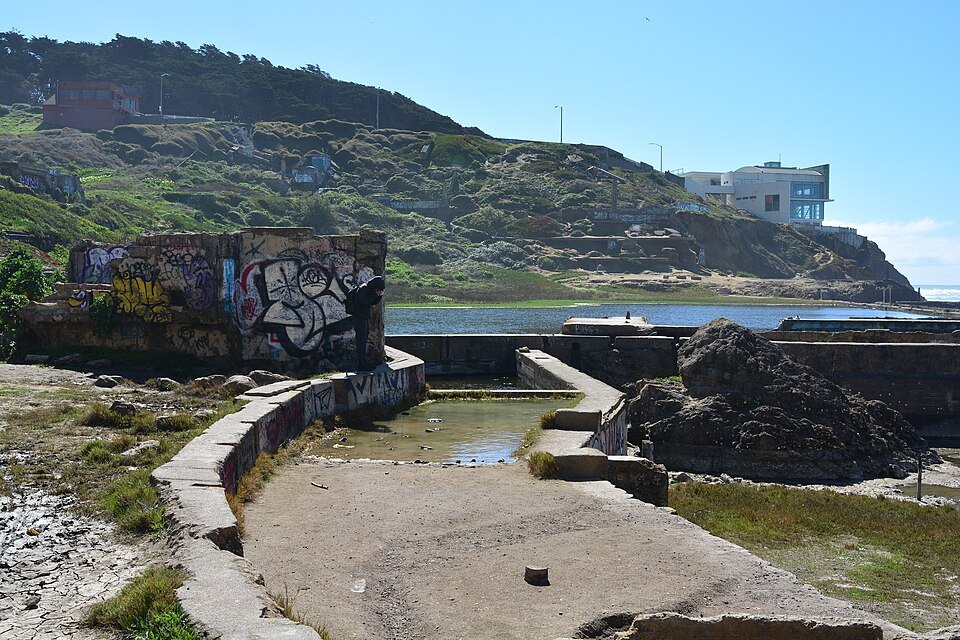
Sutro's great project was the baths. The Sutro Baths opened on March 14, 1896, as the world's largest indoor swimming pool establishment, a glass palace of saltwater pools filled by the tides through tunnels cut in the headland. In 1897 a Black man, John Harris, sued Sutro after being refused entry because of his race and won, a landmark case against segregation in public facilities. But the baths were expensive to run. They became part skating rink; a new owner closed the pools in the 1950s and ran an aerial tram from the Cliff House to Point Lobos from 1955 to 1966 to draw visitors; the baths were sold for apartments in 1964, and burned down in 1966 while being demolished; the fire was found to be arson.
What you see
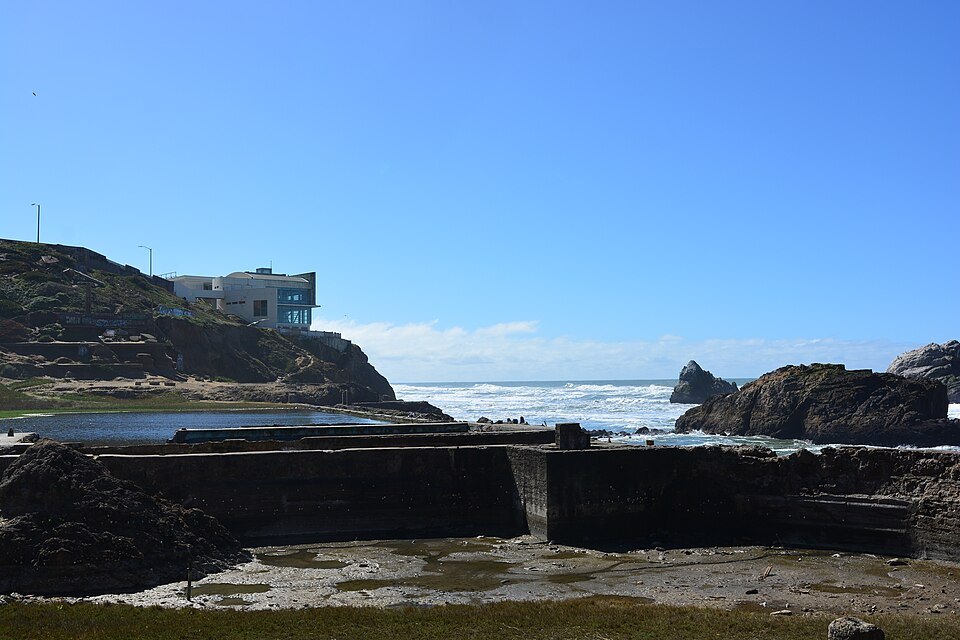
From the parking area above Point Lobos a path drops to the ruins: the concrete outlines of the old pools, now filled with rainwater and seawater, broken walls, blocked stairs and a tunnel through the rock with a deep crevice in its middle. Waves break over the seaward edge. Above, on the headland, stands the Cliff House, rebuilt several times since 1863, with the old Camera Obscura on its deck projecting a live image of the ocean onto a table in a darkened room. Offshore stand Seal Rocks, the stacks that every generation of visitors to the Cliff House has looked out on.
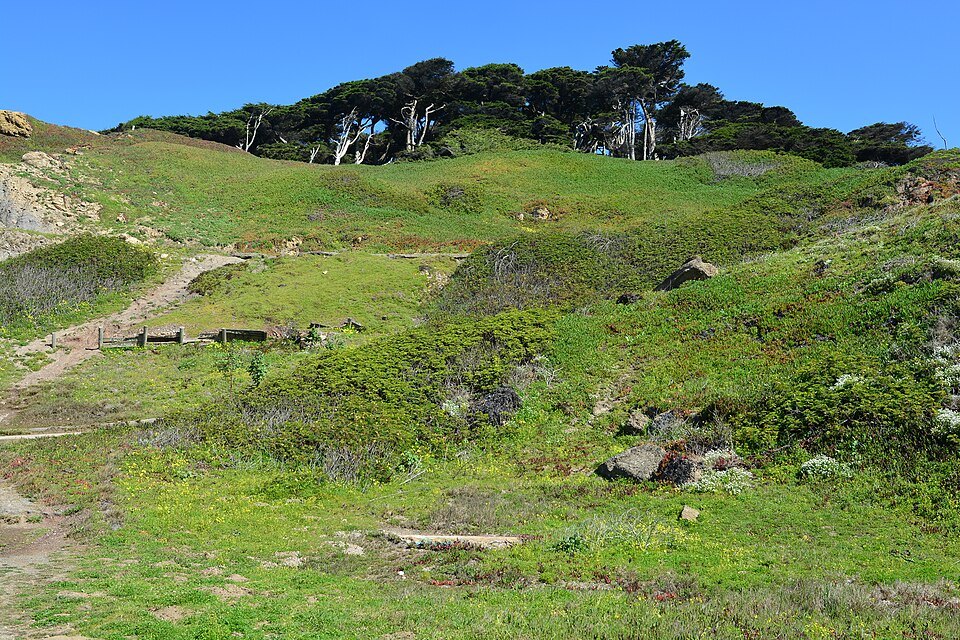
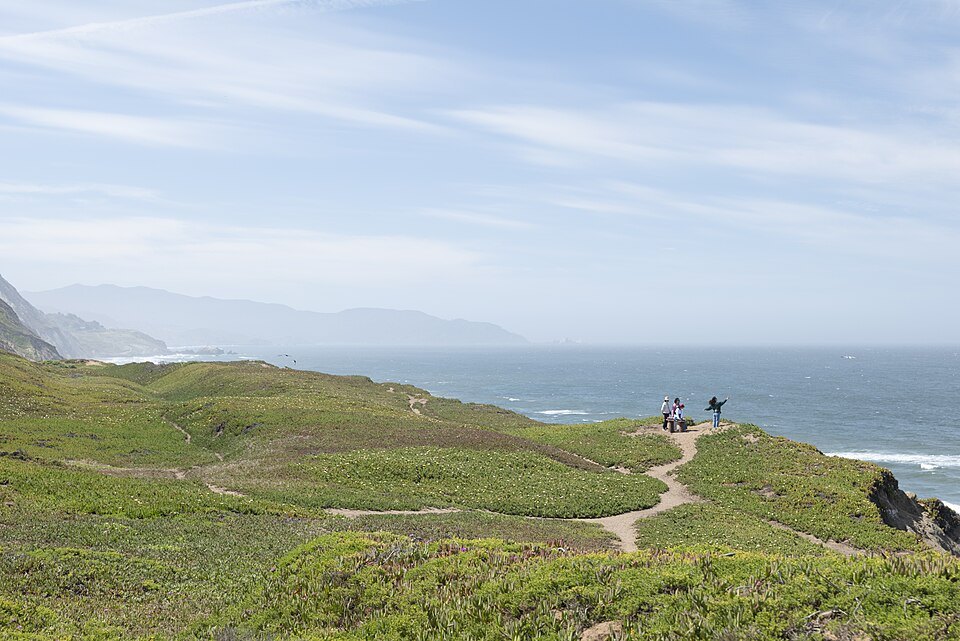
North of the ruins, the Coastal Trail runs along the cliffs through cypress and scrub, with the Golden Gate Bridge appearing between the trees. A spur leads down to Mile Rock Point and Mile Rock Beach, and at low tide you can see the remains of some of the many ships that ran aground on this shore. At the southern end of the trail a memorial to the cruiser USS San Francisco remembers the cruiser and its crew.
The Legion of Honor
In Lincoln Park, just inland from the trail, stands the Legion of Honor, one of the city's two fine arts museums along with the de Young. Its building is a full-scale replica of the French Pavilion at the 1915 exposition, itself a three-quarter-scale version of the Palais de la Légion d'Honneur in Paris. Alma de Bretteville Spreckels gave it to the city as a memorial to California soldiers killed in the First World War, and it opened on Armistice Day, November 11, 1924. The land it stands on was once the city's Golden Gate Cemetery, which held some 29,000 graves before it was closed.
How to visit
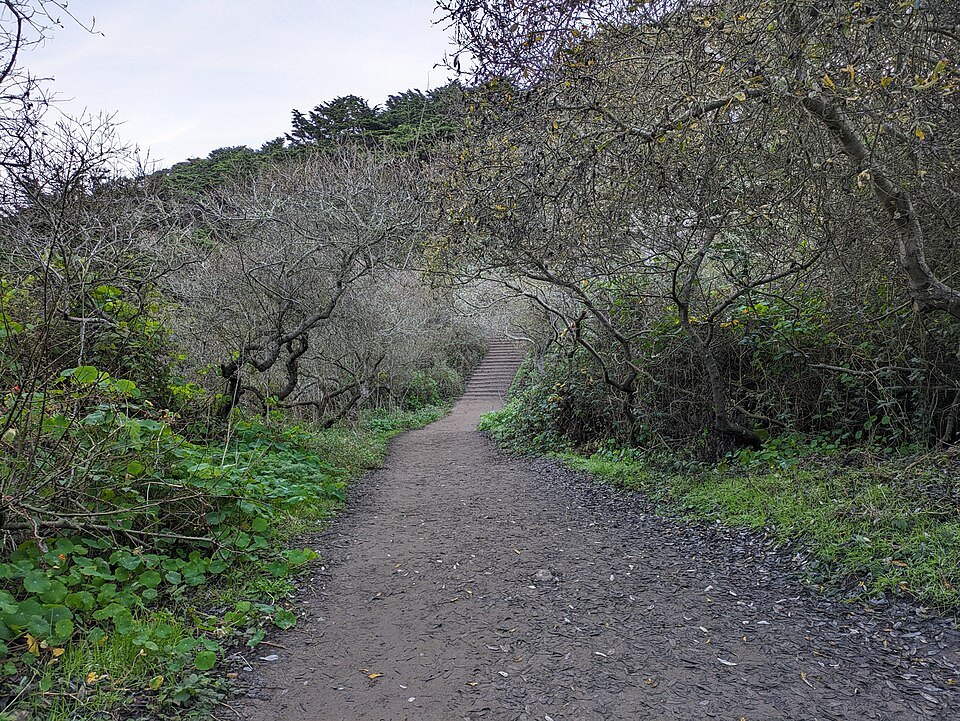
Start at the Lands End Lookout visitor center, which opened in 2012 above the baths, or at the Legion of Honor. The Coastal Trail is step-free and wheelchair-accessible as far as the Mile Rock Overlook, and open to bikes as far as the Eagles Point steps; beyond, the trail and the paths down to the ruins and the beach involve steep stairs and uneven ground. See the hills. Walking the Coastal Trail from the ruins to Eagles Point and back takes about an hour, longer with the Legion.
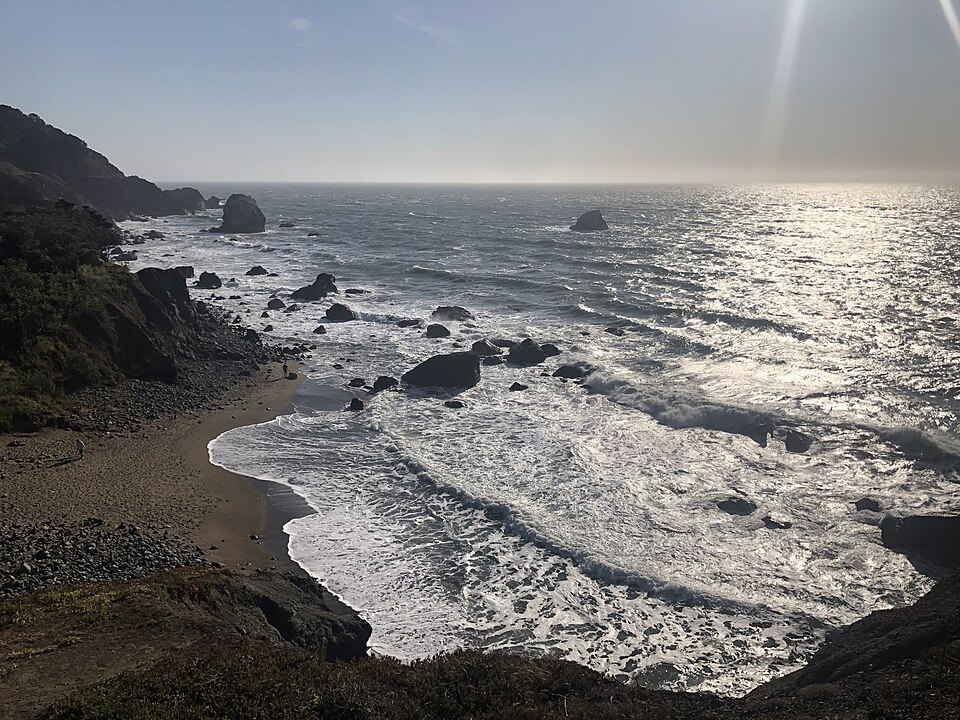
This is the foggiest, windiest corner of the city, so bring a warm layer even in summer. Stay on the marked trails: the cliffs are unstable and the surf here is powerful, so keep off the rocks at the water's edge and out of the sea. Muni buses reach the Legion and the Cliff House area; see getting around. Golden Gate Park and Ocean Beach begin just to the south.
Myths and facts
The Sutro Baths did not fall into ruin slowly: they were being demolished for apartments when they burned in 1966, and the developers then abandoned the site. The Cliff House you see is not the original; in 1896 Sutro replaced the first building with a seven-story Victorian chateau, nicknamed the Gingerbread Palace, which survived the 1906 earthquake only to burn to the ground in September 1907; the present building is a later, plainer replacement. The story that the first Cliff House was built from a wrecked ship's lumber in 1858 has no historical evidence behind it. And the tunnels in Point Lobos are not caves but the channels that carried the ocean into the pools.
Nearby
- NearbyGolden Gate ParkMore than three miles of woods, lakes, gardens and museums laid out from the 1870s over the sand dunes of the Outside Lands, from the Victorian Conservatory of Flowers in the east to the windmills by the ocean.Read the page
- NearbyThe Presidio and Crissy FieldThe Spanish fort of 1776 at the Golden Gate became an American army post and then, in 1994, a national park of forests, parade grounds and old barracks, with a restored marsh and beach at Crissy Field.Read the page
- NearbyThe Golden Gate Bridge and Fort PointA suspension bridge of 1937 across the mile-wide mouth of the Bay, painted International Orange, with an 1861 brick fort tucked under its southern arch.Read the page