Home · Sights · The Presidio and Crissy Field
The Presidio and Crissy Field
Some climbing
- 1The Main PostThe old heart of the post, around a parade ground lined with brick barracks and the Officers' Club.
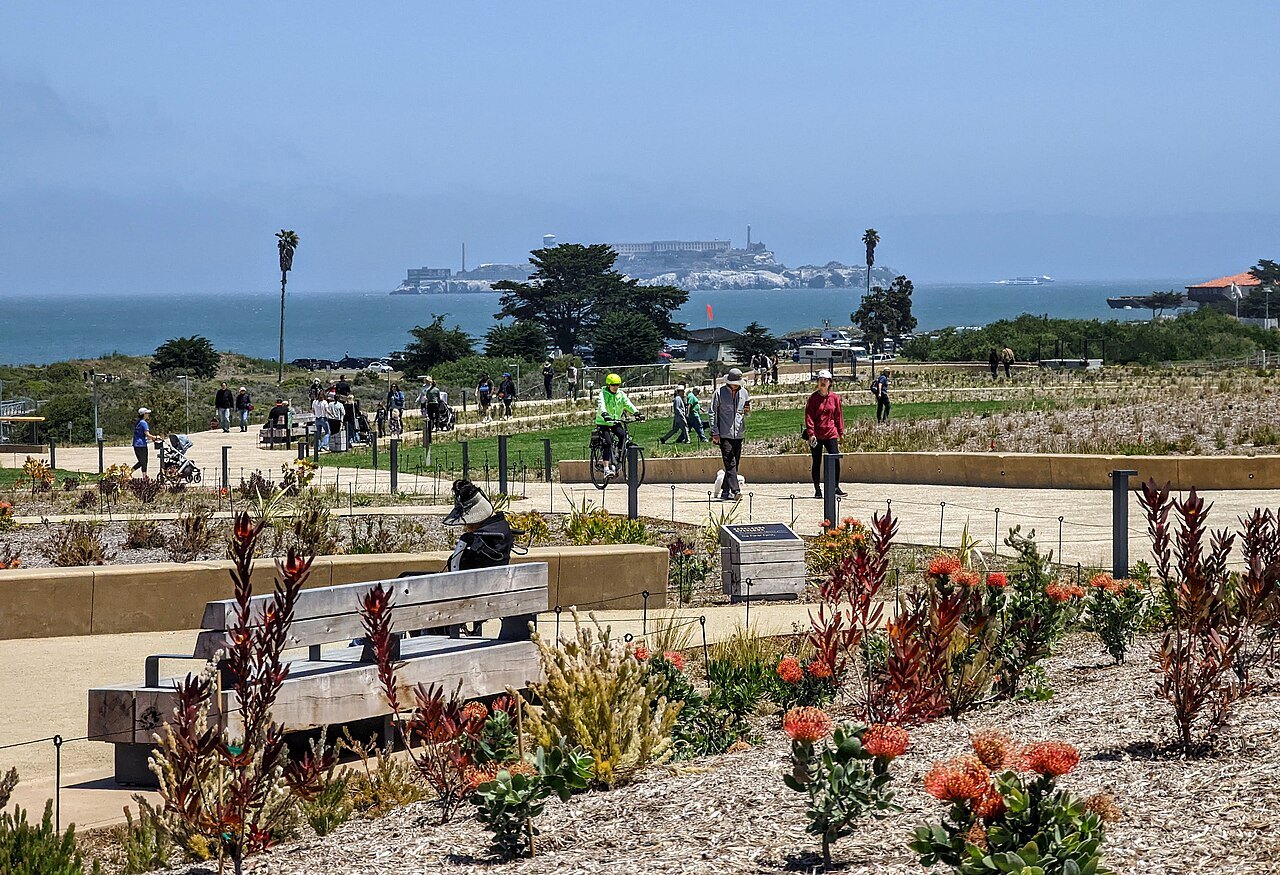
- 2Presidio Tunnel TopsA 14-acre park of meadows and paths built over the highway tunnels, looking out to the bridge.
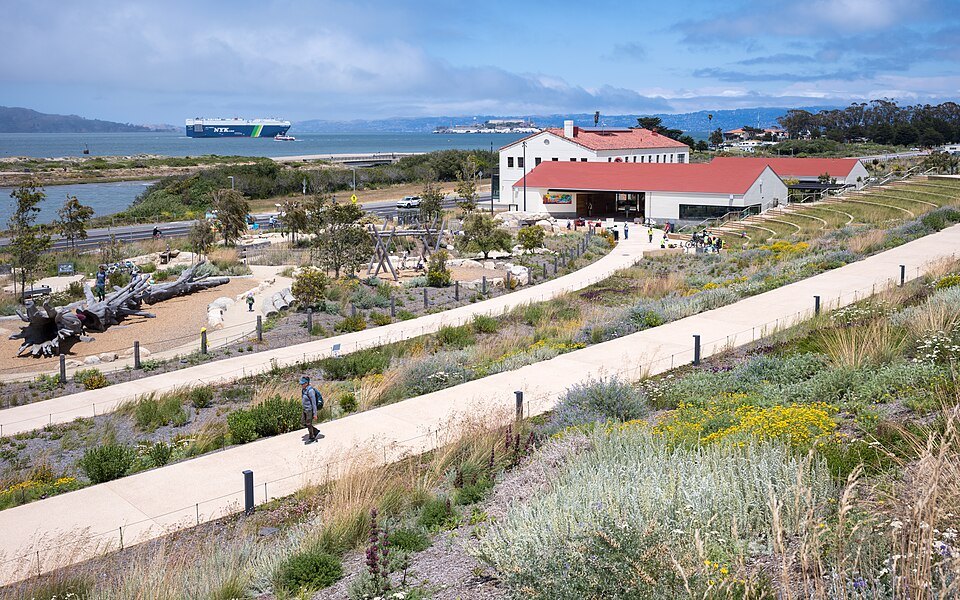
- 3Crissy FieldA former army airfield turned back into beach, tidal marsh and a long waterfront promenade.
- 4The Presidio Visitor CenterChanging exhibits on the Presidio's history, beside the Presidio Transit Center.
- 5The Goldsworthy sculpturesFour works by Andy Goldsworthy in the forest and buildings, among them the 100-foot Spire.
- 6Battery ChamberlinA coastal gun battery of 1904 at Baker Beach, with an artillery display.
Reading the place
Why it matters
The Presidio covers the northwestern tip of the San Francisco peninsula, from the Golden Gate Bridge to the edge of the Marina and down the ocean shore toward Baker Beach. It is where the city began. On September 17, 1776, settlers from New Spain founded El Presidio Real de San Francisco here, a fort to hold Alta California and the bay, and it stayed a military post under Spain, Mexico and the United States for 219 years. On October 1, 1994, the Army handed it to the National Park Service.
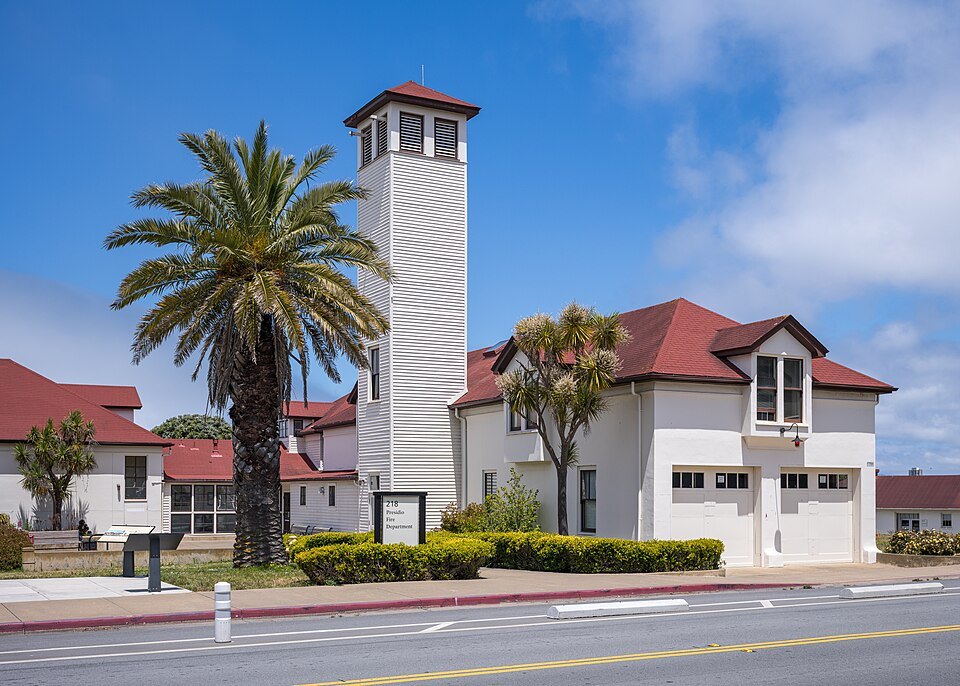
Today it is part of the Golden Gate National Recreation Area: a park of eucalyptus and cypress forest, trails and beaches, old barracks turned into homes, offices and museums, and some of the best views of the Golden Gate Bridge anywhere.
A fort to a park
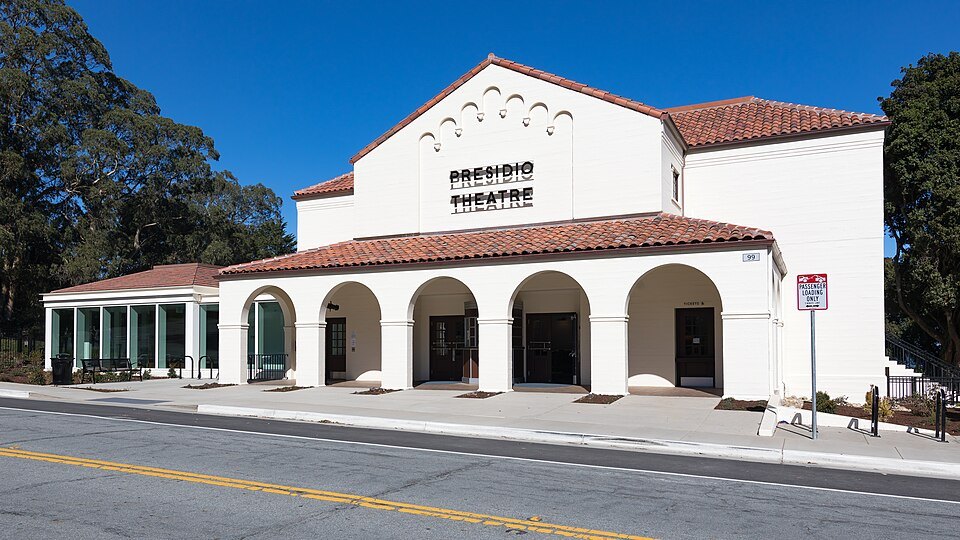
Under Spain and Mexico the Presidio was a modest adobe fort. After the American conquest in 1848 the Army made it one of its most important posts in the West, and it grew into a small town, with parade grounds, barracks, officers' houses, hospitals and a cemetery. From the 1890s it held the Letterman Army Medical Center, which cared for the wounded of every American war of the twentieth century. After the 1906 earthquake the Army housed some 16,000 refugees in tent camps here.
When the post was closed, Congress gave it an unusual arrangement. In 1996 it created the Presidio Trust to manage the interior of the park and required it to become financially self-sufficient by leasing its historic buildings, while the National Park Service kept the coastal areas. The trust met the target, and the old Army buildings now house schools, foundations, businesses, restaurants and The Walt Disney Family Museum. George Lucas's film company built its headquarters on the site of the old Letterman hospital.
Crissy Field
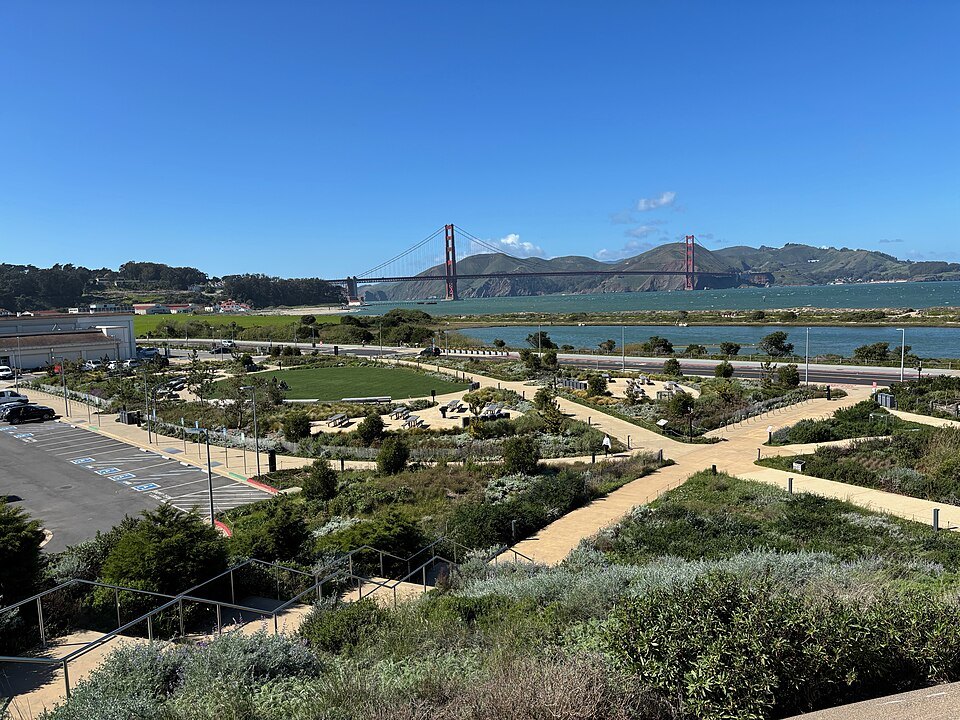
Along the bay shore, Crissy Field was a salt marsh and estuary where the Ohlone gathered shellfish and fish long before the Spanish arrived. The marsh was filled in during the 1870s and reshaped for the 1915 exposition next door, and the Army then turned it into an airfield; the first aerial forest-fire patrols in the West flew from here. It closed as an airfield after 1974. From 1994 the Park Service and the Golden Gate National Parks Conservancy restored it, and in 2001 it reopened as a beach, a tidal marsh and a long promenade.
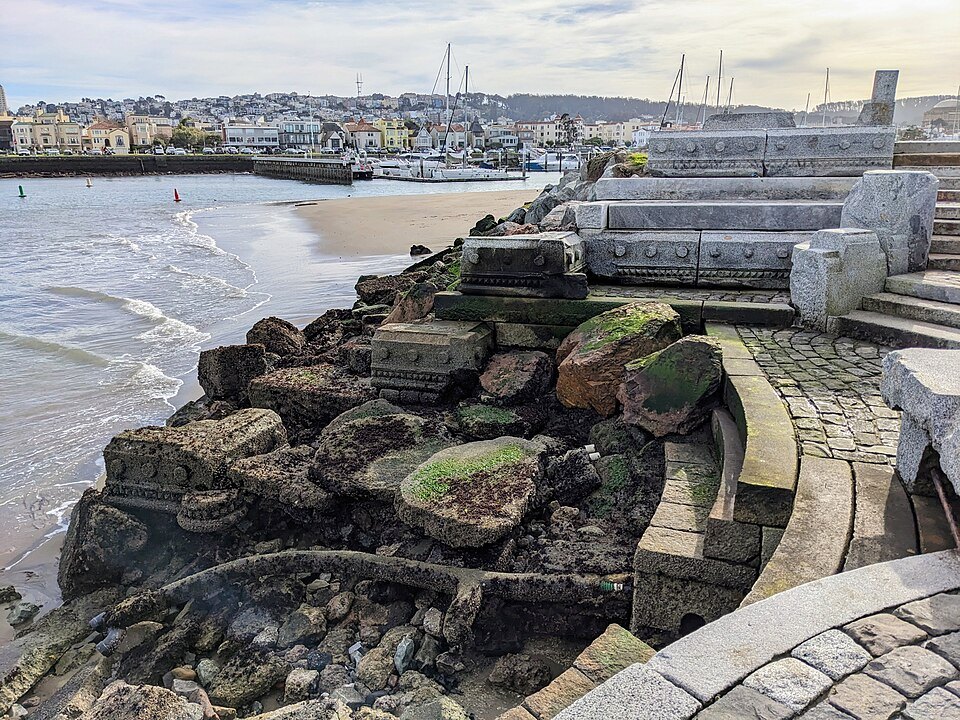
Walking the promenade west along the shore takes you toward the Golden Gate Bridge, which grows steadily larger ahead of you, and to Fort Point under its southern end. At the eastern end, a breakwater leads out to the Wave Organ, a sculpture of stone and pipes built on the shore in 1986 by the artist Peter Richards and the stonemason George Gonzales for the Exploratorium, and dedicated to its founder, Frank Oppenheimer.
Tunnel Tops and the Main Post
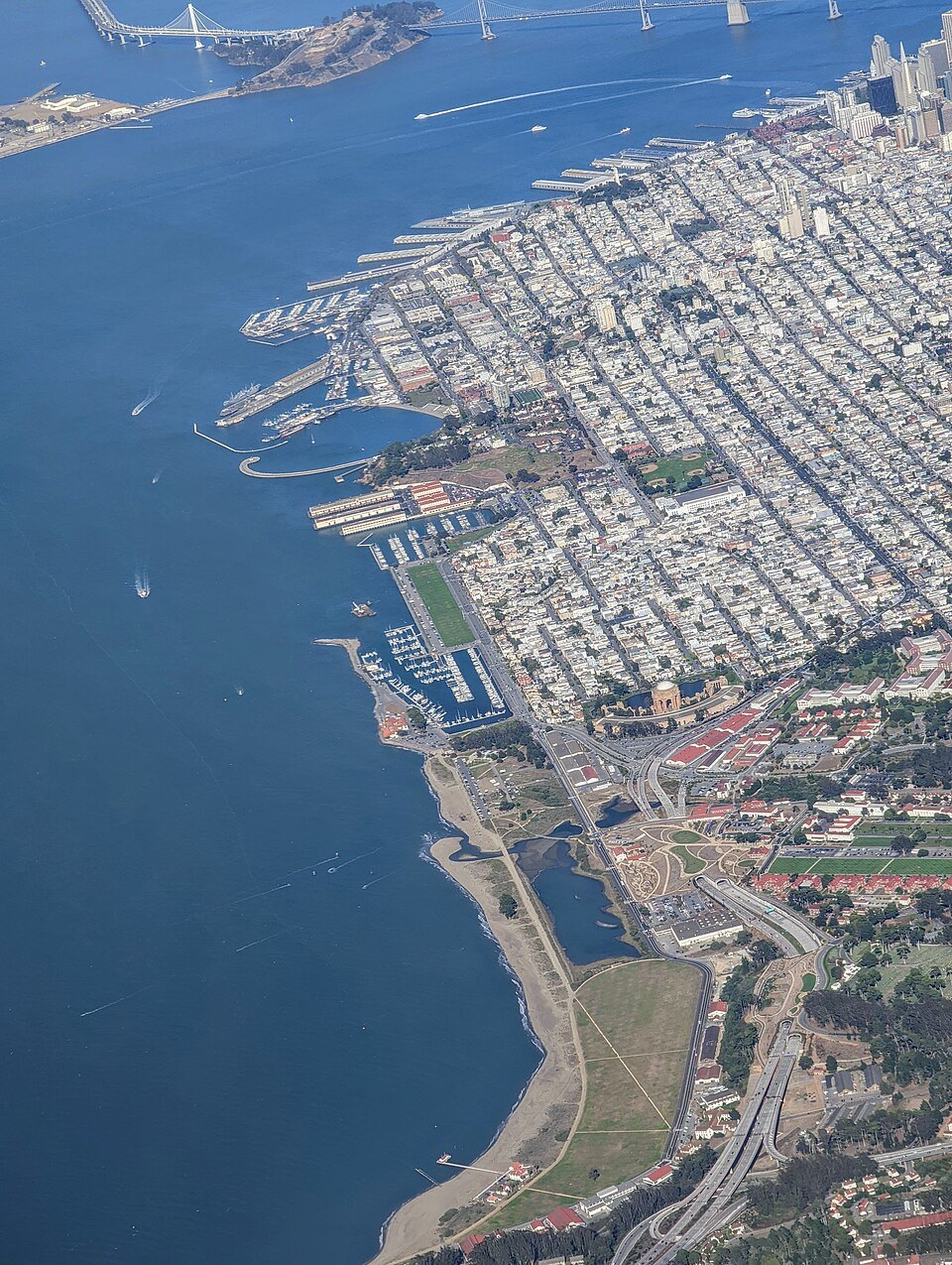
The Presidio's newest attraction sits on the roof of a highway. When Doyle Drive, the approach road to the bridge, was rebuilt in tunnels, the land above was turned into Presidio Tunnel Tops, a 14-acre park designed by the creators of New York's High Line, which opened on July 17, 2022. Its meadows, paths and overlooks join the Main Post to Crissy Field and look straight out at the bridge and the bay.
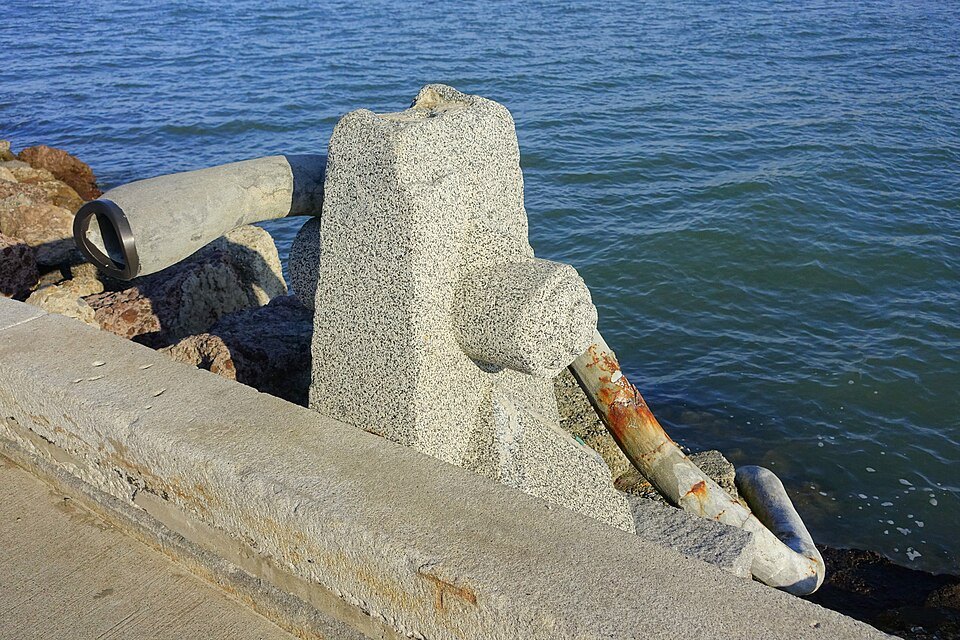
Above it, the Main Post keeps the character of an Army town: a parade ground lined with red-brick barracks, the Presidio Visitor Center and the Officers' Club. The club is one of the two oldest buildings in San Francisco: its walls include adobe laid by the Spanish soon after the founding, and since a remodeling in 2014 it has held a museum of the Presidio's history as well as a restaurant. The visitor center stands next to the transit center where the park's shuttle and Muni buses stop. The Walt Disney Family Museum is on the parade ground. To the south, the San Francisco National Cemetery, one of only four burial grounds left inside the city limits, lies in rows on the slope below the forest.
Trails, art and batteries
The Presidio has more than 24 miles of hiking trails and 19 miles of bike lanes, through eucalyptus and cypress forest and along the coastal bluffs. In the forest near the Arguello Gate stands Spire, a 100-foot sculpture of tree trunks by Andy Goldsworthy, made in 2008 to mark the replanting of the trees; three more of his works, Wood Line, Tree Fall and Earth Wall, followed. On the ocean side, Battery Chamberlin at Baker Beach, a coastal gun battery built in 1904, keeps an artillery display, and older concrete batteries line the bluffs toward the bridge.
How to visit
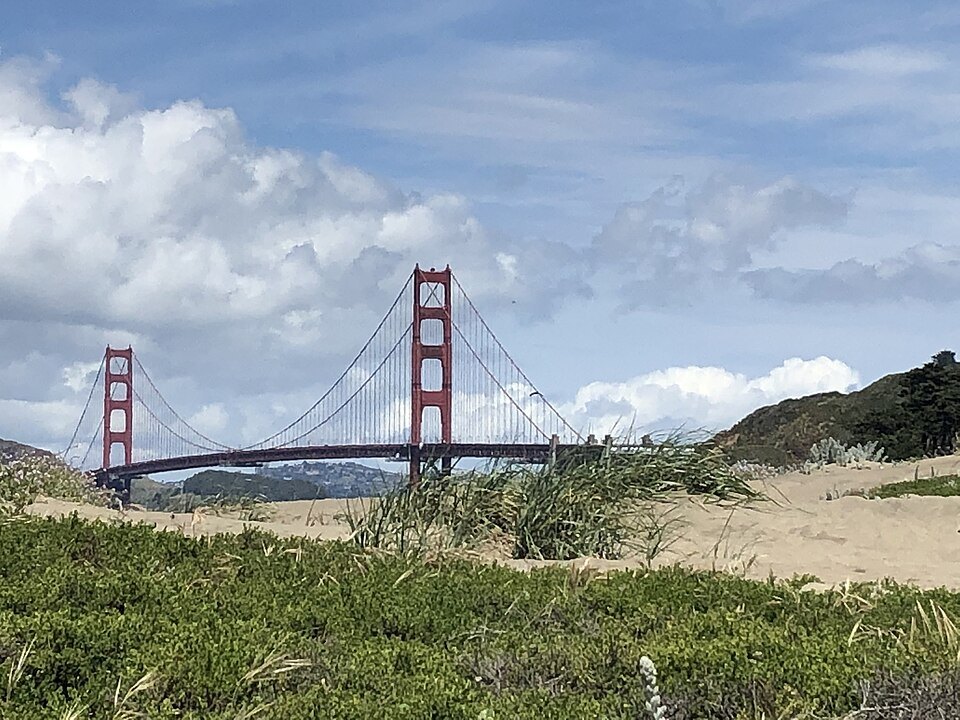
The Presidio is large and hilly in places; the Main Post, Tunnel Tops and Crissy Field are easy and mostly level, while the trails and the coastal bluffs involve climbs and steps. See the hills. Allow half a day for Crissy Field, Tunnel Tops and the Main Post, or a whole day with the trails and the batteries. The park's own shuttle and several Muni buses serve the transit center at the Main Post; see getting around.
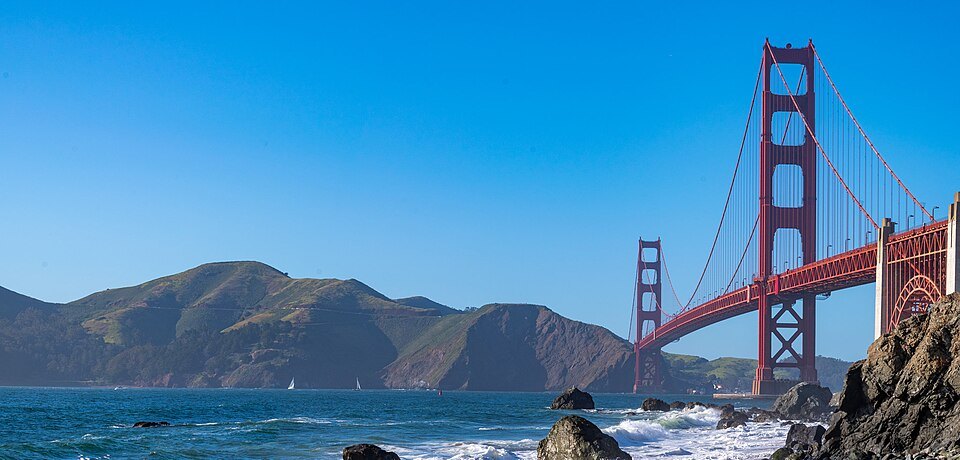
Most of the park needs no booking; the Walt Disney Family Museum sets its own ticketing. Bring layers: the Presidio sits right at the Golden Gate and takes the fog and wind before the rest of the city. The Palace of Fine Arts is just outside the park's eastern gate.
Nearby
- NearbyThe Golden Gate Bridge and Fort PointA suspension bridge of 1937 across the mile-wide mouth of the Bay, painted International Orange, with an 1861 brick fort tucked under its southern arch.Read the page
- NearbyThe Palace of Fine ArtsBernard Maybeck's classical rotunda and colonnade for the 1915 exposition, designed to look like a ruin, rebuilt in concrete from 1964 and reflected in its lagoon at the edge of the Marina.Read the page
- NearbyLands End and the Sutro BathsWindswept cliffs and cypress at the corner where the Golden Gate meets the Pacific, with the ruins of an 1896 bathhouse below, the Cliff House above them and the Legion of Honor in the woods behind.Read the page