Home · Sights · The Cable Cars
The Cable Cars
Some climbing
- 1The Powell–Hyde lineFrom Powell and Market over Nob Hill and Russian Hill, past crooked Lombard, down Hyde to the water.
- 2The Powell–Mason lineThe same start and climb, then down Mason Street toward the east end of Fisherman's Wharf.
- 3The California Street lineStraight up and over Nob Hill from near the Embarcadero to Van Ness Avenue, with double-ended cars.
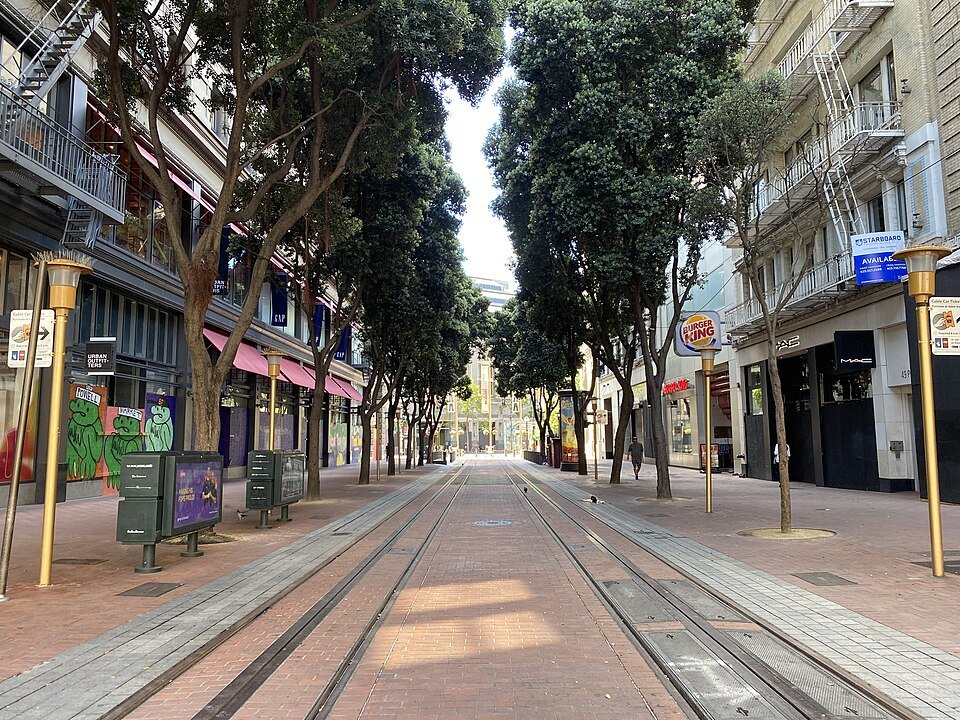
- 4The Powell and Market turntableWhere the single-ended Powell cars are pushed around by hand at the end of the line.
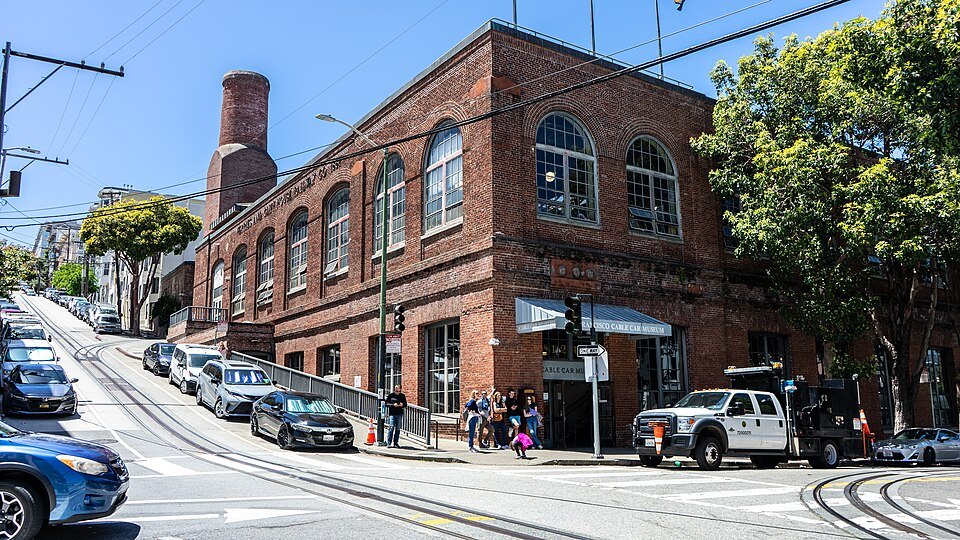
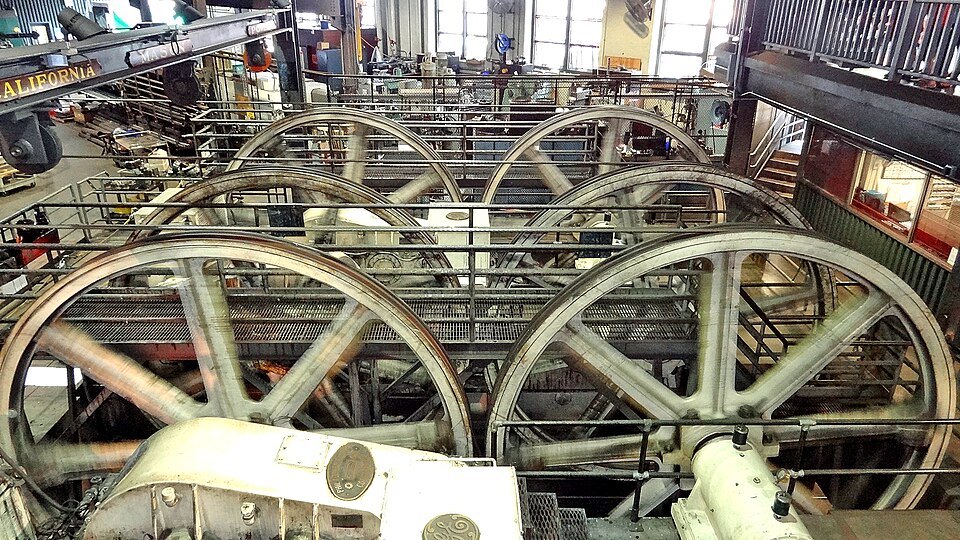
- 5The powerhouse and Cable Car MuseumAt Washington and Mason: the winding machinery that pulls every cable, seen from a gallery above.
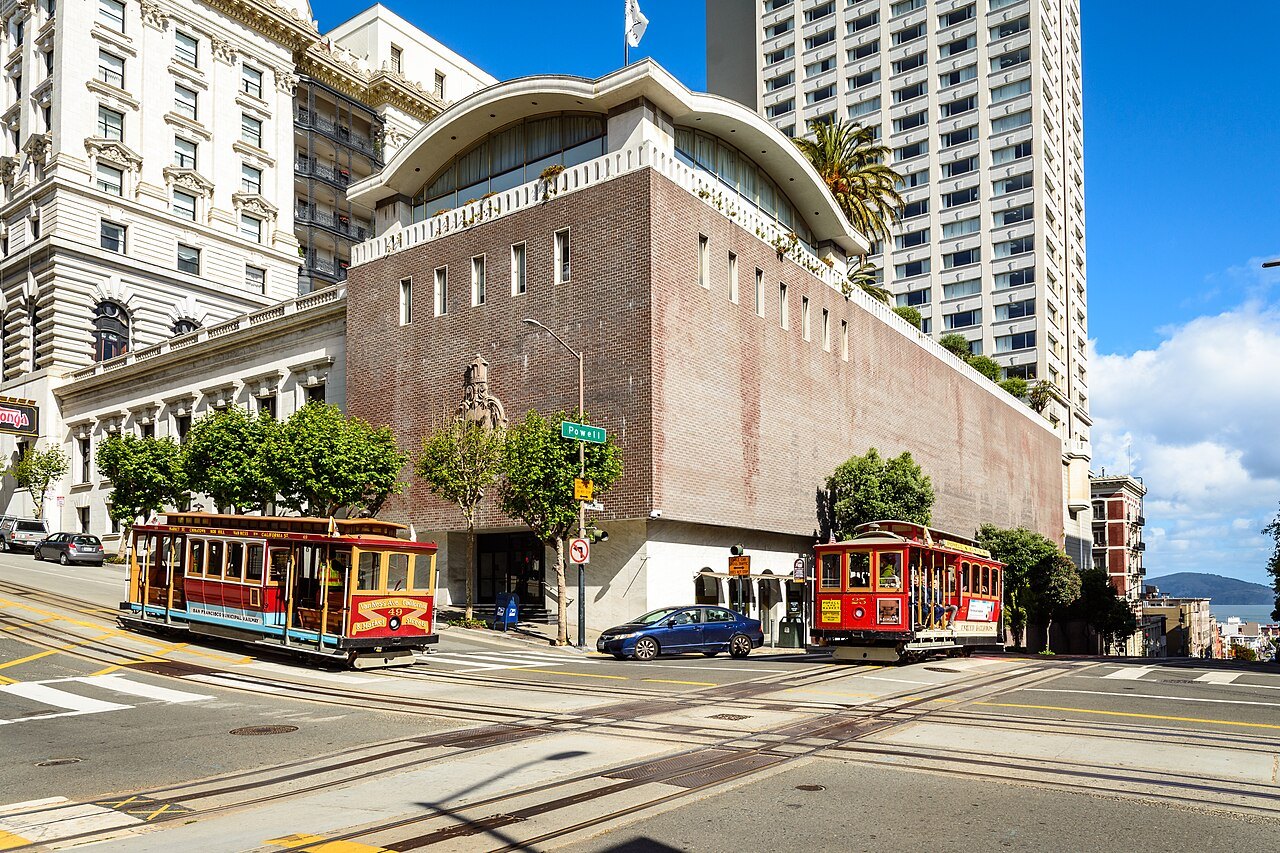
- 6The crossing at California and PowellWhere the lines meet at the crest of Nob Hill, watched from a small signal tower.
Reading the place
Why it matters
San Francisco's cable cars are the world's last manually operated cable car system, and one of only two street railways in the United States named a National Historic Landmark. They are an icon of the city in the way the bridge is, but they also still carry people up hills too steep for an ordinary streetcar, which is why they were built in the first place.
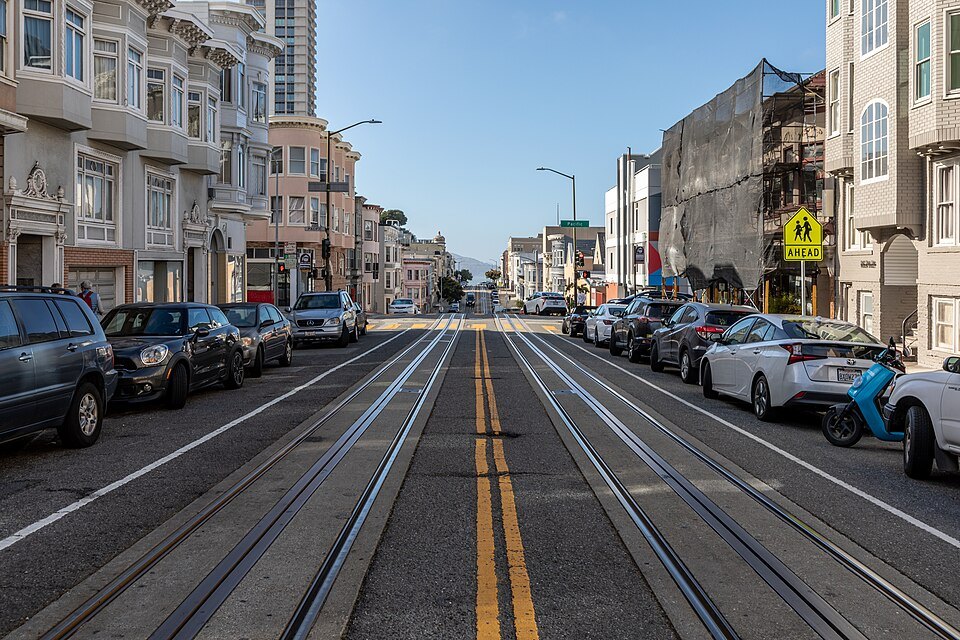
There were once twenty-three lines, built between 1873 and 1890. Three survive: two Powell Street lines from downtown near Union Square to Fisherman's Wharf, and the line along California Street. The great majority of riders are visitors, and at a busy time the wait to board at the end of a line can reach two hours or more.
How it began
The story goes that Andrew Smith Hallidie had the idea in 1869 after seeing a horse-drawn car slide backwards on wet cobblestones, killing the horses. The first line, the Clay Street Hill Railroad, made its inaugural run in August 1873, with Hallidie as promoter and William Eppelsheimer as engineer, and its grip cars became the template for cable railways elsewhere. Other companies followed within a few years, among them the California Street Cable Railroad of 1878, whose line on California Street is the oldest still running.
The 1906 earthquake and fire destroyed the powerhouses, car barns and 117 cable cars of the two biggest systems, and in the rebuilding most lines were replaced by electric streetcars. By 1912 only the steepest lines were left, those no streetcar could climb.
The fight of 1947
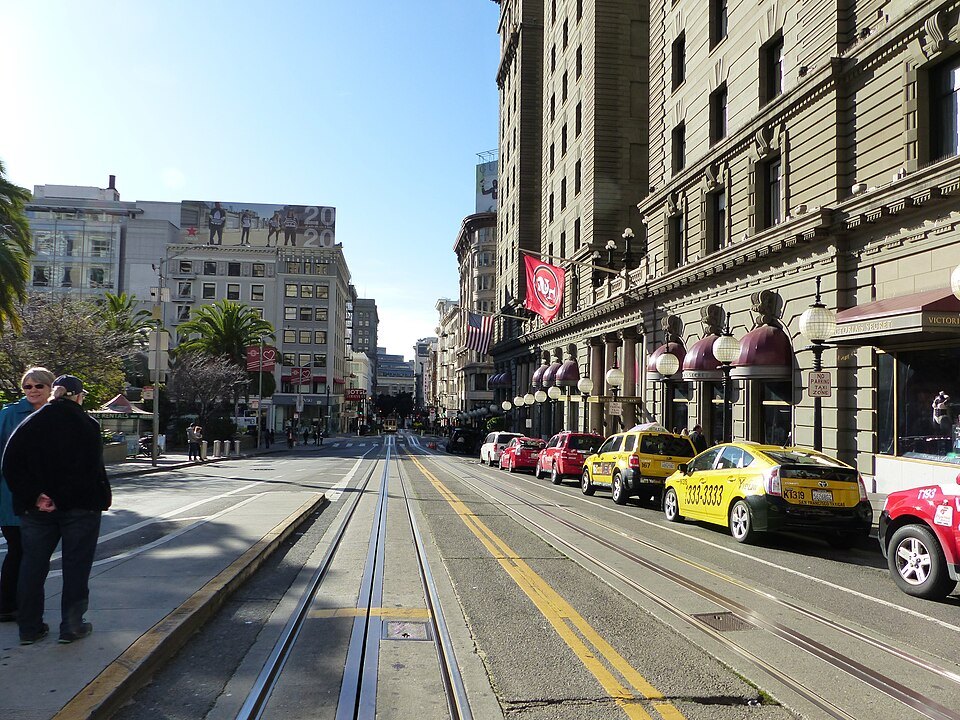
In 1947 Mayor Roger Lapham proposed closing the two city-owned Powell Street lines and replacing them with buses. A joint meeting of 27 women's civic groups, led by Friedel Klussmann, formed the Citizens' Committee to Save the Cable Cars and forced a referendum on a change to the city charter. It passed overwhelmingly, obliging the city to keep the Powell lines running. The present system of three lines is the compromise reached in the 1950s, after the city had bought the California Street company's lines as well.
From 1982 the whole system was shut for a rebuild that replaced 69 blocks of track and cable channel, rebuilt the car barn and powerhouse inside their original brick walls and restored 37 cars; it reopened in 1984.
How it works
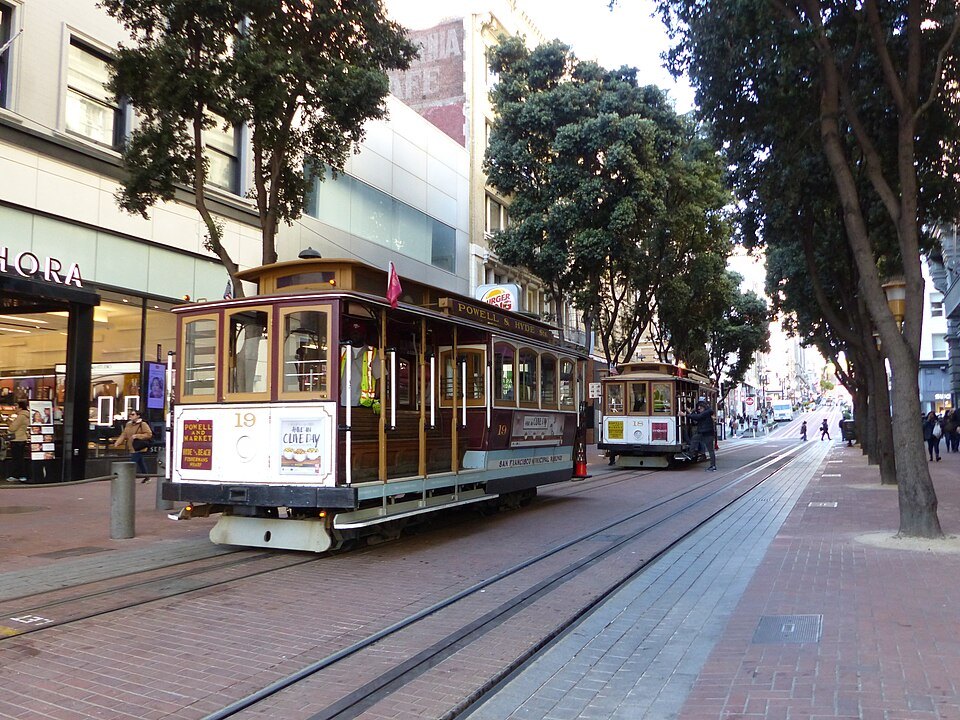
Under each line runs a steel cable in a slot between the rails, kept moving by the machinery in the powerhouse at Washington and Mason. A car has no motor. To move, the gripman pulls a lever that closes a grip below the car onto the moving cable; to stop, the grip releases and the brakes take over. Where lines cross, or where the cable turns a corner, the gripman has to let go and coast. At the crest of Nob Hill the Powell cars cross the California Street line under the eye of a small signal tower, and beyond it they drop off the cable and coast downhill for three and a half blocks.
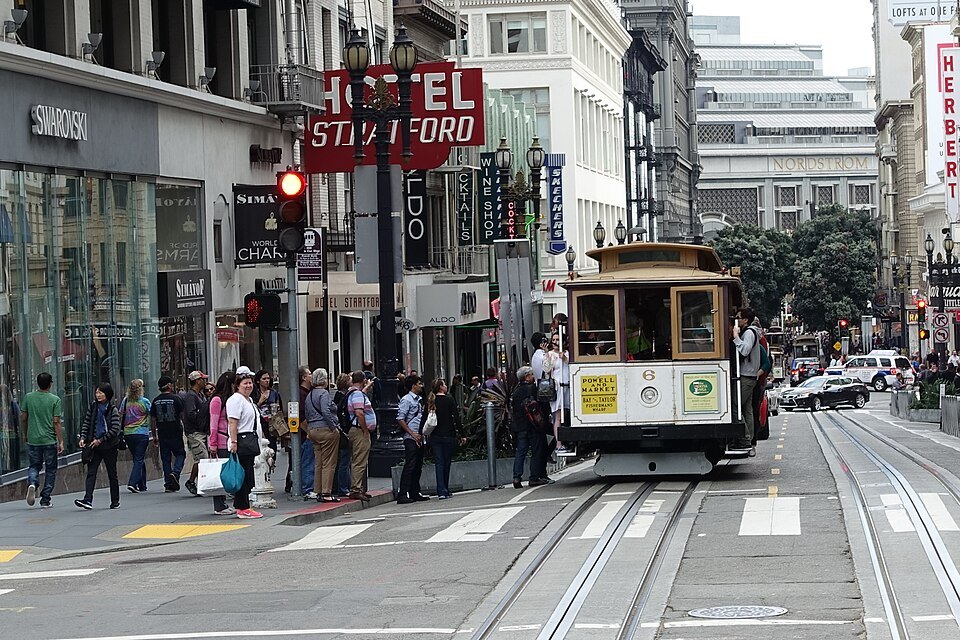
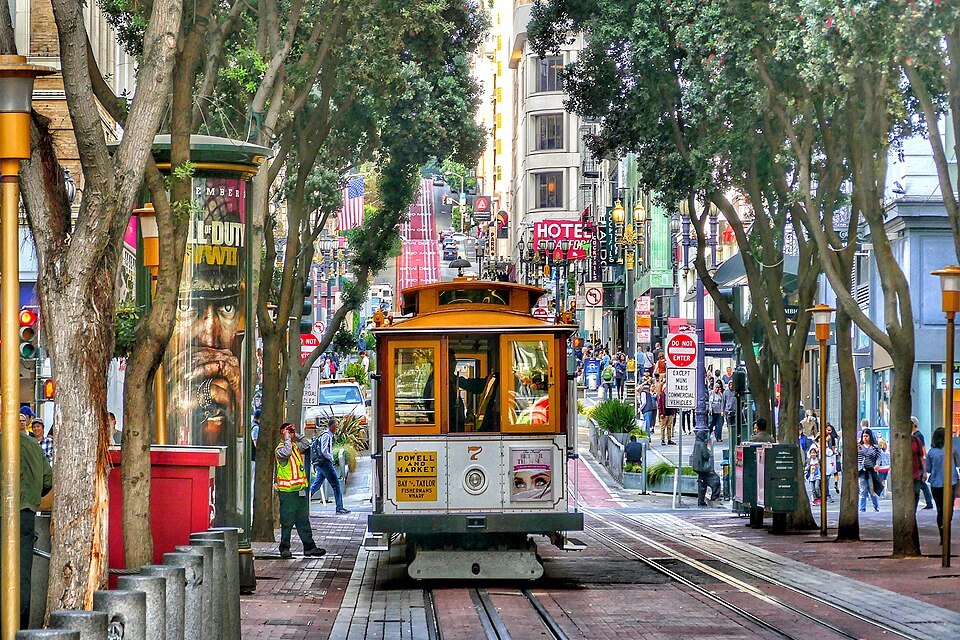
The Powell cars are single-ended, with an open front section where passengers sit facing outward beside the gripman and an enclosed rear, and they must be turned at each end of the line on turntables pushed by hand. The California Street cars are longer and double-ended, so they simply reverse.
What you see
At Powell and Market you watch the crews push a car around on the turntable while a line of riders waits along the sidewalk. Once aboard, the Powell–Hyde car climbs straight up Nob Hill, clangs across California Street and coasts down to Jackson, climbs again to the crest at Hyde Street and then gives the famous view: Alcatraz in the bay, the top of Lombard Street's crooked block, and the long drop of Hyde Street to the water at 21 percent, the steepest grade in the system.
At Washington and Mason, halfway along both Powell routes, the Cable Car Museum sits inside the working powerhouse. From a gallery you look down on the great wheels that pull every cable in the system, and from a lower room you see the cables turning into the street through a cavern of sheaves. The museum also keeps early cars, including grip car 8 of the Clay Street Hill Railroad, the only survivor of the first cable car company.
How to ride
The lines are part of Muni, the city's transit system. Muni passes cover them, but a single ride costs noticeably more than a bus ride; the getting around page explains the options. The longest queues are at the Powell and Market turntable and at the Wharf ends. Boarding a few stops up the line, where cars stop at marked stops, is often quicker, though a full car may pass you by. The California Street line is usually far less crowded and climbs the same hill.
Riding on the outside step is part of the experience, but hold on firmly, keep inside the car's width when another car passes, and step down only when it has stopped. The cars are not step-free; see the hills for other ways up for anyone who cannot climb aboard. Plan an hour for a ride end to end with the museum, longer if the queue is long.
Myths and facts
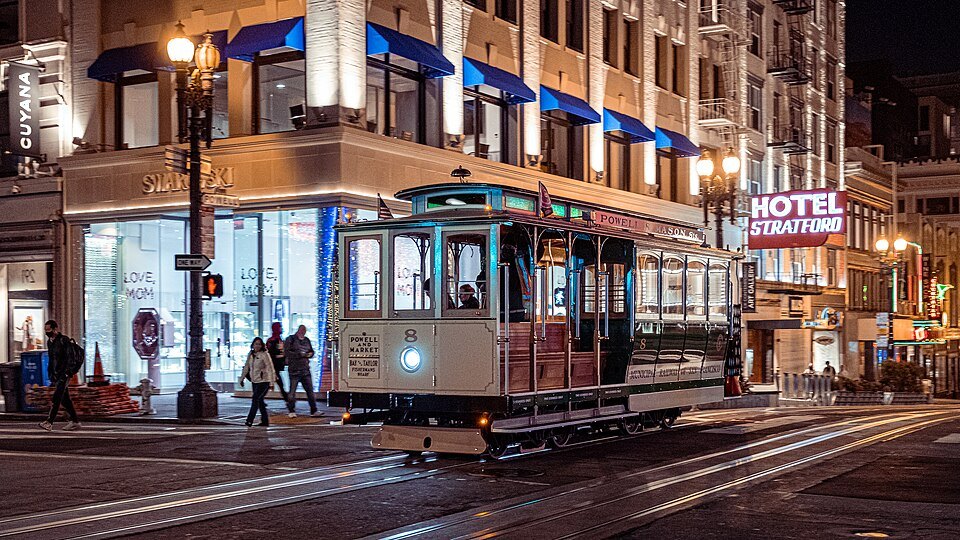
Cable cars are not trolleys or streetcars: they have no motor or overhead wire and are pulled by the moving cable beneath them. The heritage streetcars along Market Street and the waterfront are a different system altogether. And Hallidie is usually named as the inventor, but accounts differ on how large his part was, and on the exact date the first car ran.
Nearby
- NearbyChinatownTwenty-four blocks between Kearny, Broadway, Powell and Bush, settled from the 1850s, burned in 1906 and rebuilt by its own merchants, with Grant Avenue for visitors and Stockton Street for the neighborhood.Read the page
- NearbyLombard Street and Russian HillA single block of brick-paved switchbacks on Russian Hill, built in 1922 to tame a 27 percent grade, set in one of the city's oldest and most elegant hilltop neighborhoods.Read the page
- NearbyFisherman's Wharf and the Hyde Street PierA working fishing harbor turned the city's most visited waterfront, with a pier of sea lions at one end and a fleet of historic ships at the Hyde Street Pier at the other.Read the page