Chinatown
Some climbing
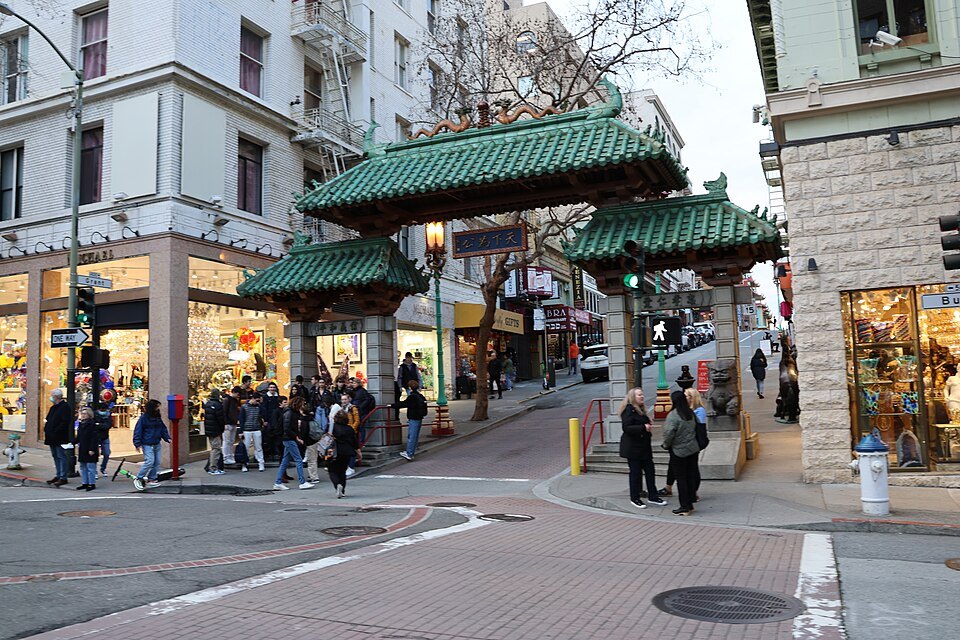
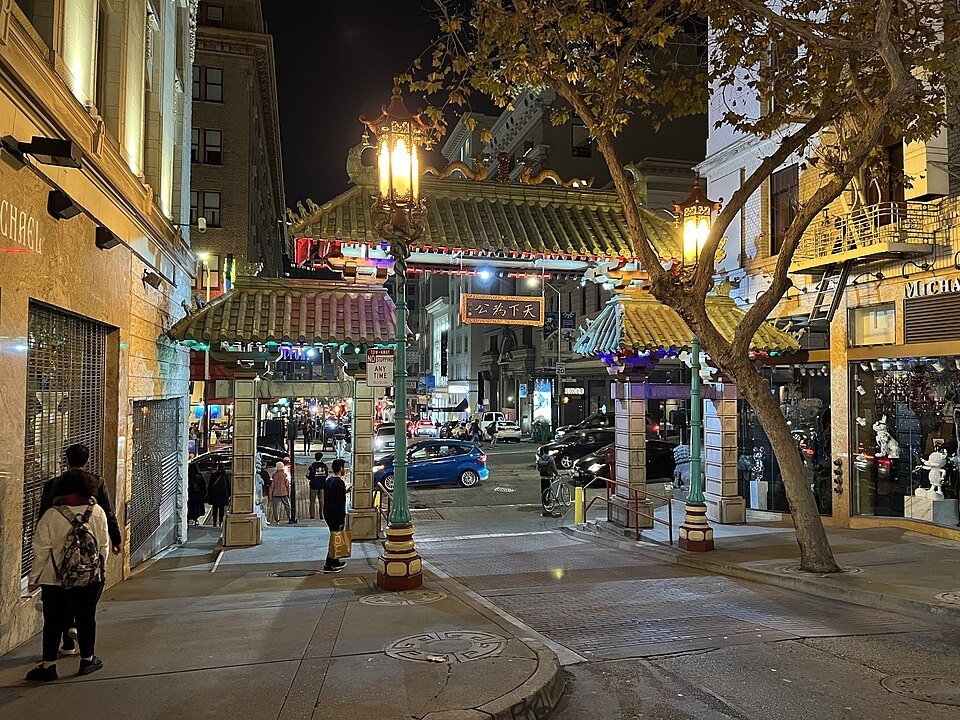
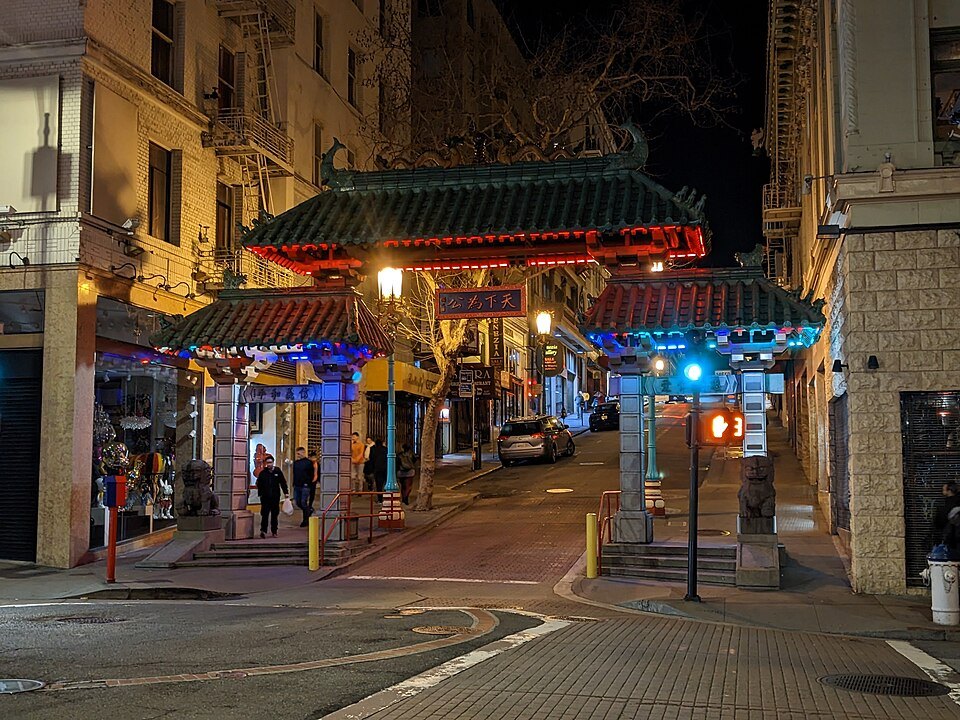
- 1The Dragon GateA gate in the style of a Chinese pailou at Grant Avenue and Bush Street, a gift of 1969.
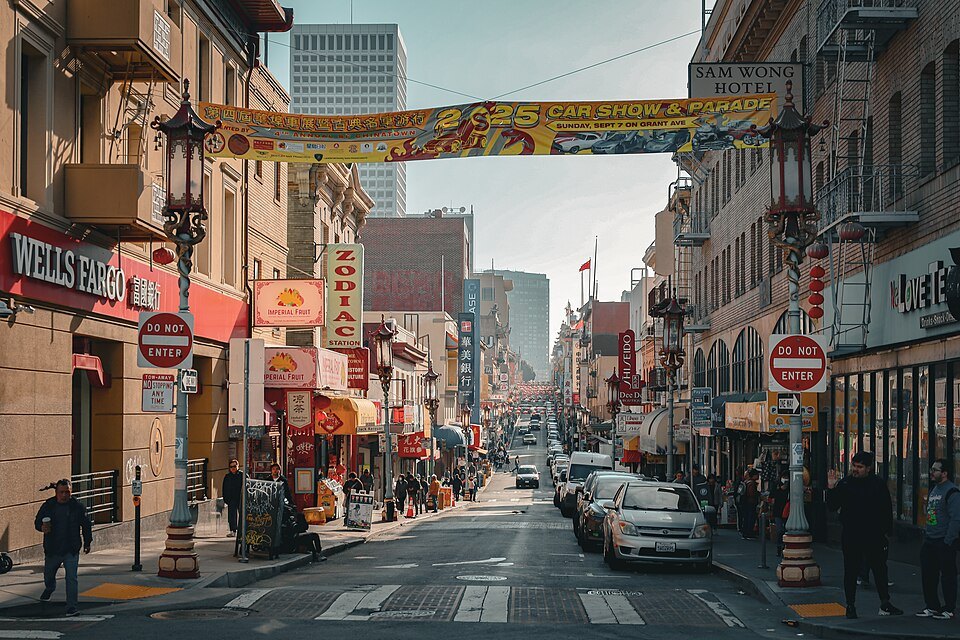
- 2Grant AvenueThe main street for visitors, hung with lanterns and lined with shops, restaurants and dragon street lamps.
- 3The Sing Chong and Sing Fat buildingsPagoda-topped corners at Grant and California, built after 1906 to draw visitors back.
- 4Old St. Mary'sA red-brick Gothic Revival church of 1854 at California Street and Grant Avenue.
- 5Stockton StreetThe neighborhood's own shopping street, with produce and fish markets and bakeries.
- 6Portsmouth SquareThe district's open space, where men play Chinese chess and people practice tai chi.
- 7Waverly PlaceA short street of association buildings with painted balconies and the old Tin How Temple.
Reading the place
Why it matters
San Francisco's Chinatown is the oldest Chinatown in North America and one of the largest Chinese communities outside Asia. From the 1850s, immigrants from the villages of the Pearl River Delta in Guangdong came to San Francisco, drawn by the Gold Rush and later by work on the first transcontinental railroad, and settled here partly for refuge from the hostility they met elsewhere in the West. It has kept its own customs, languages, temples, family associations and newspapers ever since. The Chinese Consolidated Benevolent Association, known as the Chinese Six Companies, has its headquarters here and is the umbrella for the district's family and regional associations, and it seeded similar bodies in other western Chinatowns. The district draws more visitors in a year than the Golden Gate Bridge.
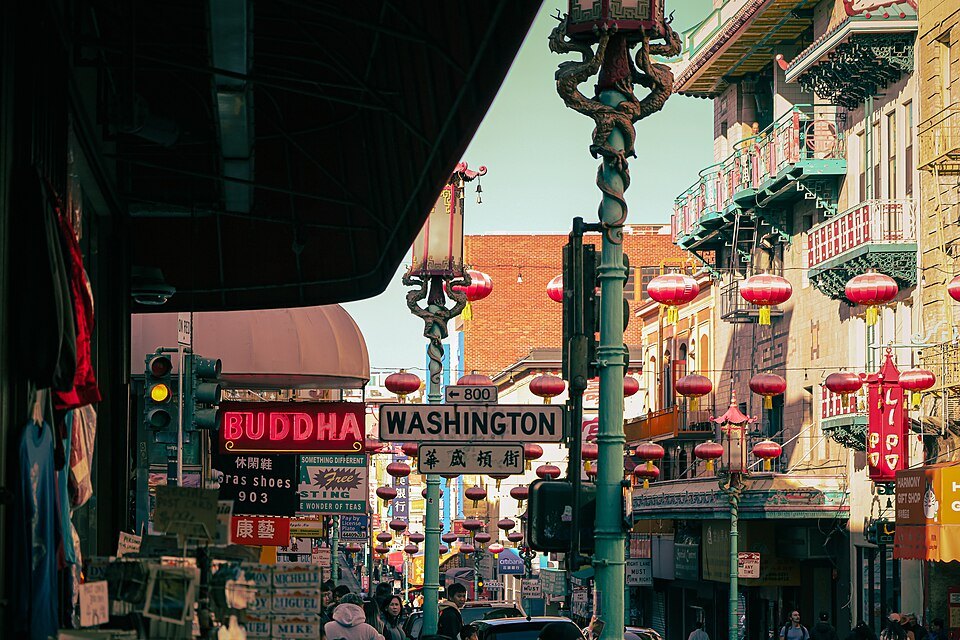
It is also a living neighborhood, and a crowded one: the city's planning department calls it the most densely populated urban area west of Manhattan, and many of its residents are elderly and speak Cantonese or other Chinese languages rather than English. A visit is richer for remembering that.
A history of exclusion and survival
Chinatown's history is bound up with the laws aimed at its people. The Chinese Exclusion Act of 1882 was the first American immigration law to target a single ethnic group, and for decades Chinese arrivals were held and interrogated at the immigration station on Angel Island, often for months. In 1900, when a Chinatown resident died of bubonic plague, the whole district was quarantined and its property burned and fumigated until a federal court stopped the city from sealing it off.
The 1906 earthquake and fire destroyed Chinatown completely, and city officials and developers saw the chance to move its residents to the southern edge of the city. The community refused. Its merchants were rebuilding within weeks, first in wood, then in brick salvaged from the fire, and by the Chinese New Year of 1907 several dozen buildings were finished. Of the roughly 30,000 people who had lived in Chinatown before the earthquake, about 5,000 had returned by the end of that year.
The rebuilt district
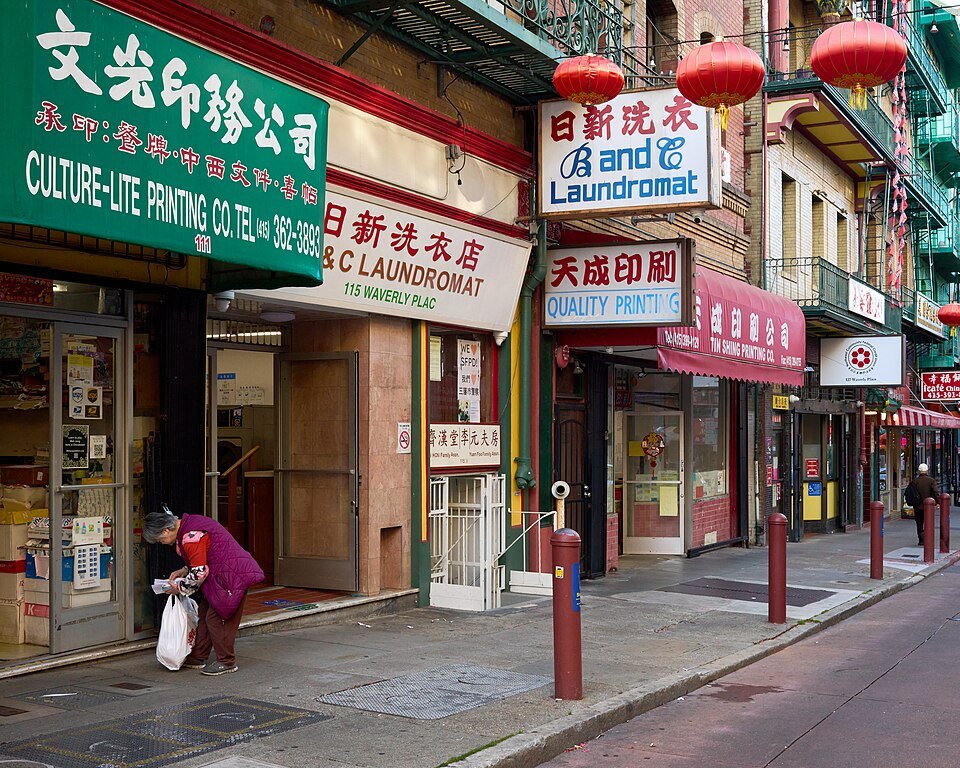
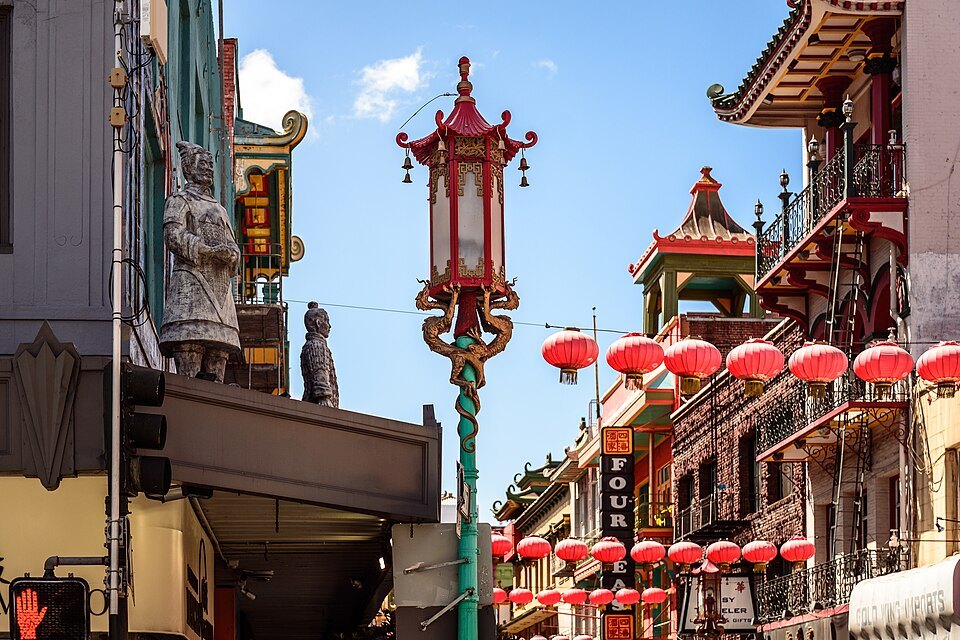
The Chinatown you walk through today is largely that rebuilding. A group of Chinese merchants, including Look Tin Eli, hired American architects to design in a deliberately "Oriental" style, with pagoda roofs, upturned eaves and bright colors, to bring visitors back: the pagoda-topped Sing Chong and Sing Fat buildings on the corners of Grant Avenue and California Street are the best-known result. It was a canny answer to the officials who had wanted the district gone, turning the exoticism used against it into a reason to visit.
Older than any of it is Old St. Mary's, a Gothic Revival church of red brick built in 1854 at California Street and Grant Avenue, which came through the earthquake of 1906 only to be gutted by the fires a day later, and was rebuilt inside its walls. The Tin How Temple on Waverly Place, dedicated to the Queen of Heaven, traces its founding to the early 1850s and is counted the oldest Chinese temple in the United States; since 1910 it has occupied the top floor of a four-story building.
What you see
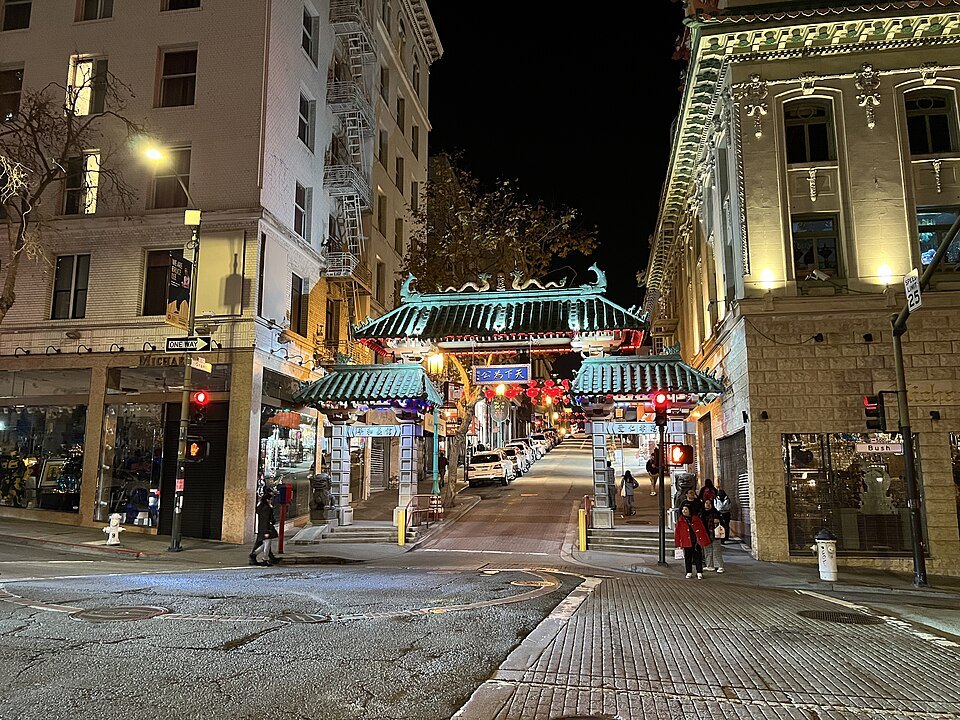
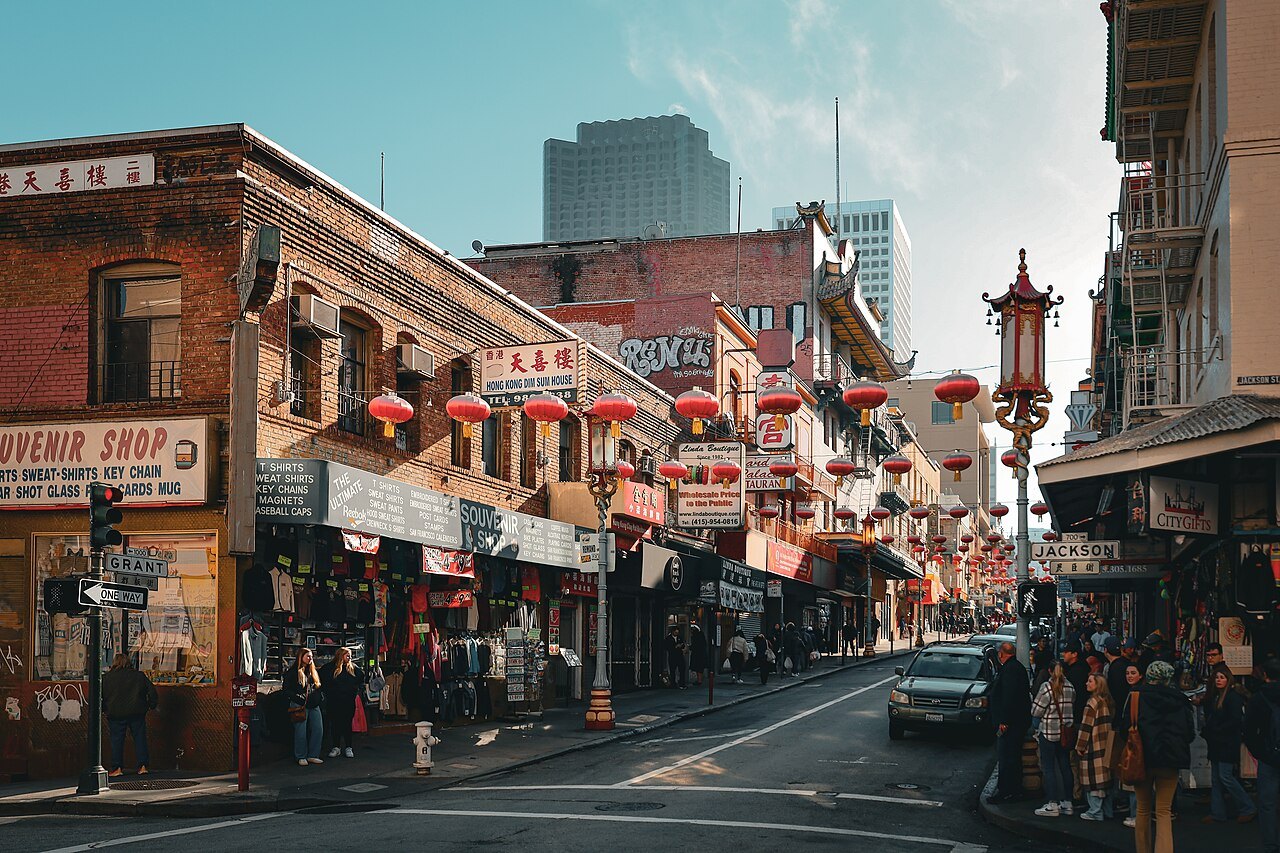
Most visitors enter through the Dragon Gate at Grant Avenue and Bush Street, a gate in the style of a traditional Chinese pailou, given by the Republic of China in 1969. Beyond it, Grant Avenue climbs gently north under strings of lanterns and past shop after shop of tea, porcelain, silk and souvenirs, with dragon street lamps first paid for in 1925 along the curb.
One block west, Stockton Street is where the neighborhood shops: crowded sidewalks, produce and live fish markets, bakeries and roast-meat counters, signs mostly in Chinese. In between, the narrow alleys are worth wandering, especially Waverly Place with its painted association balconies. Portsmouth Square, on Kearny Street, is the district's living room, busy with men playing Chinese chess and early-morning tai chi, and it holds a bronze replica of the Goddess of Democracy from the Tiananmen Square protests.
How to visit
Chinatown is a few minutes' walk from Union Square: walk up Grant Avenue from Bush Street, or ride the California Street cable car, which crosses Grant at Old St. Mary's. The streets rise gently from Kearny toward Powell, steeply toward the top; the hills page has the gradients. Two or three hours, including a meal, is a good visit, and nothing needs booking. Mornings are the liveliest time on Stockton Street, when the markets are busiest.
The temples and the association buildings are places of worship and community, not attractions: if you go in, be quiet, follow any posted rules and ask before taking photographs. For dim sum and the neighborhood's bakeries, see eating and drinking. The Chinese New Year Festival and Parade, first organized in the 1950s, is the district's biggest event of the year, and the Autumn Moon Festival in mid-September fills Grant Avenue with stalls, performances and mooncakes; the when to come page places it in the calendar.
Myths and facts
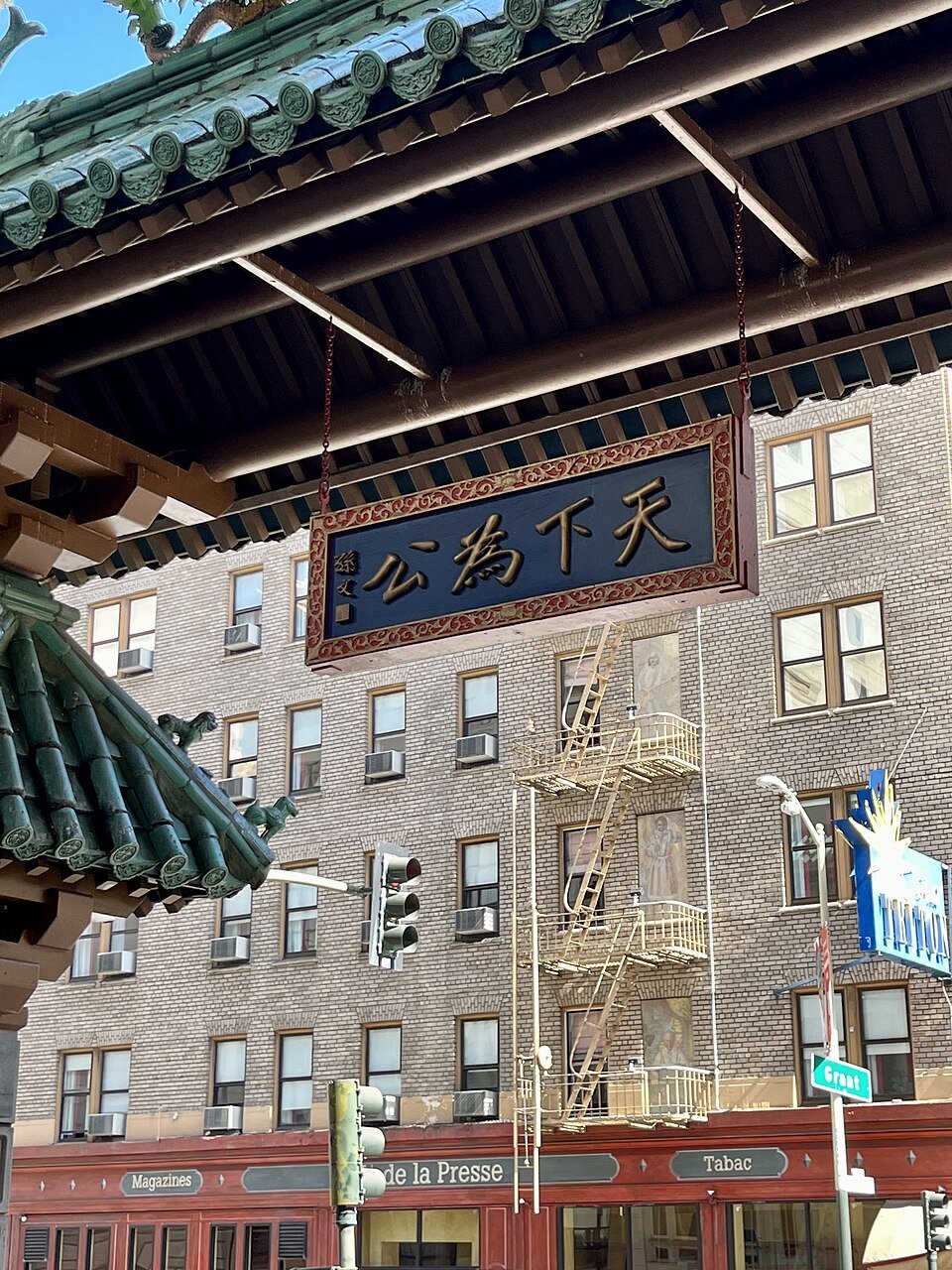
Chinatown's pagodas and dragon-roofed corners are not centuries old; they were designed after 1906, largely by American architects working for Chinese merchants, to make the rebuilt district appealing to visitors. The Dragon Gate is younger still, from 1969. And Grant Avenue is not the whole of Chinatown: the district's own daily life is on Stockton Street and in the alleys, a block away from the lantern-hung street that most visitors see.
Nearby
- NearbyThe Cable CarsThree surviving lines out of twenty-three, still pulled up Nob Hill and Russian Hill by a cable under the street and saved from closure in 1947 by a citizens' committee.Read the page
- NearbyCoit Tower and Telegraph HillA fluted concrete tower of 1933 on Telegraph Hill, paid for by a firefighting socialite's bequest, with New Deal fresco murals in its lobby and a stairway garden down the hill's eastern face.Read the page
- NearbyThe Ferry Building and the EmbarcaderoThe city's old front door to the Bay: a terminal of 1898 with a 245-foot clock tower, freed from a freeway after 1989 and reopened in 2003 as a working ferry terminal with a food hall under its glass roof.Read the page