Home · Sights · Lombard Street and Russian Hill
Lombard Street and Russian Hill
Steep or many steps
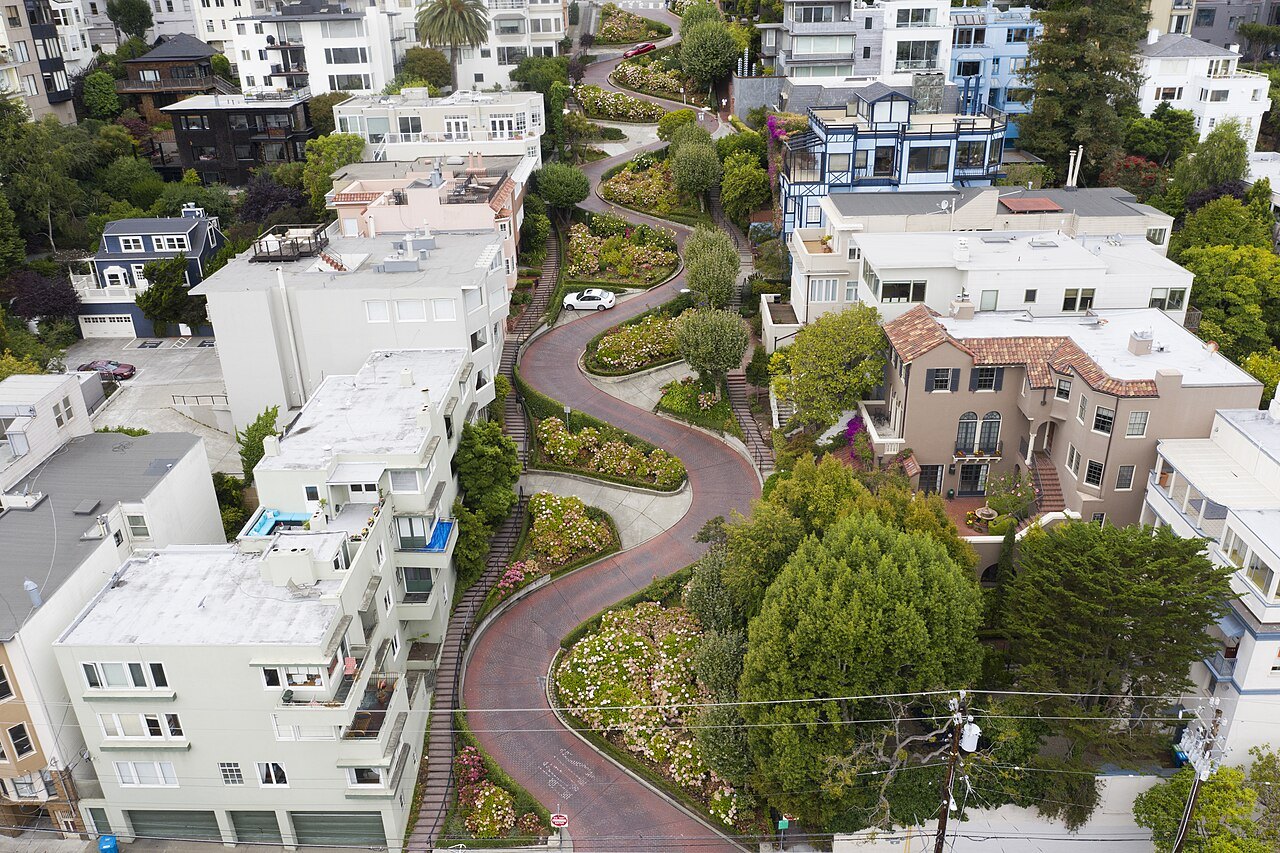
- 1The crooked blockEight sharp turns on one block between Hyde and Leavenworth streets, one-way downhill and paved with red brick.
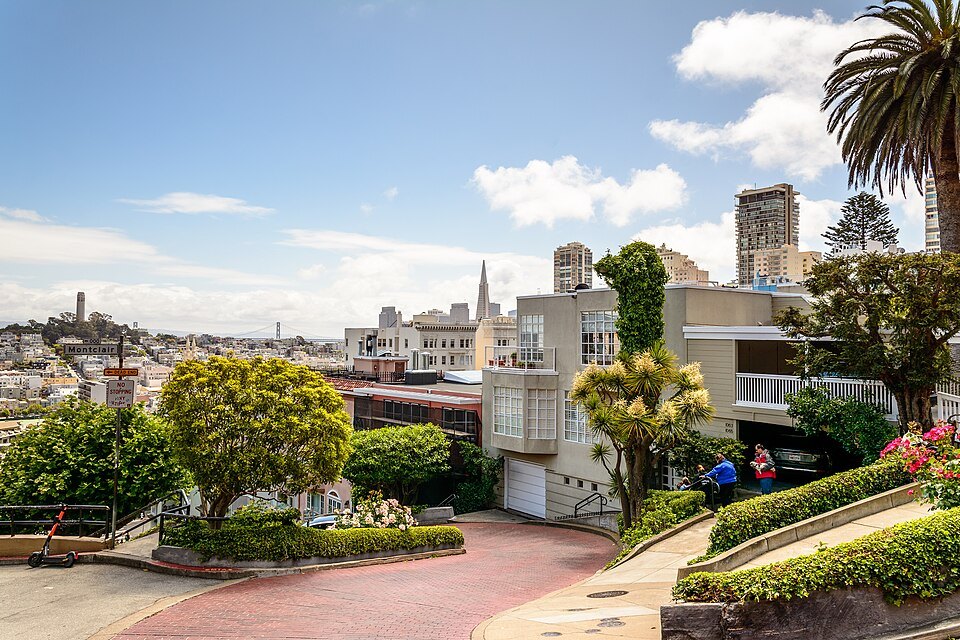
- 2The top at Hyde StreetWhere the Powell–Hyde cable car stops, with the classic view down the curves to Coit Tower.
- 3The garden bedsHydrangeas and hedges planted in the bends between the switchbacks.
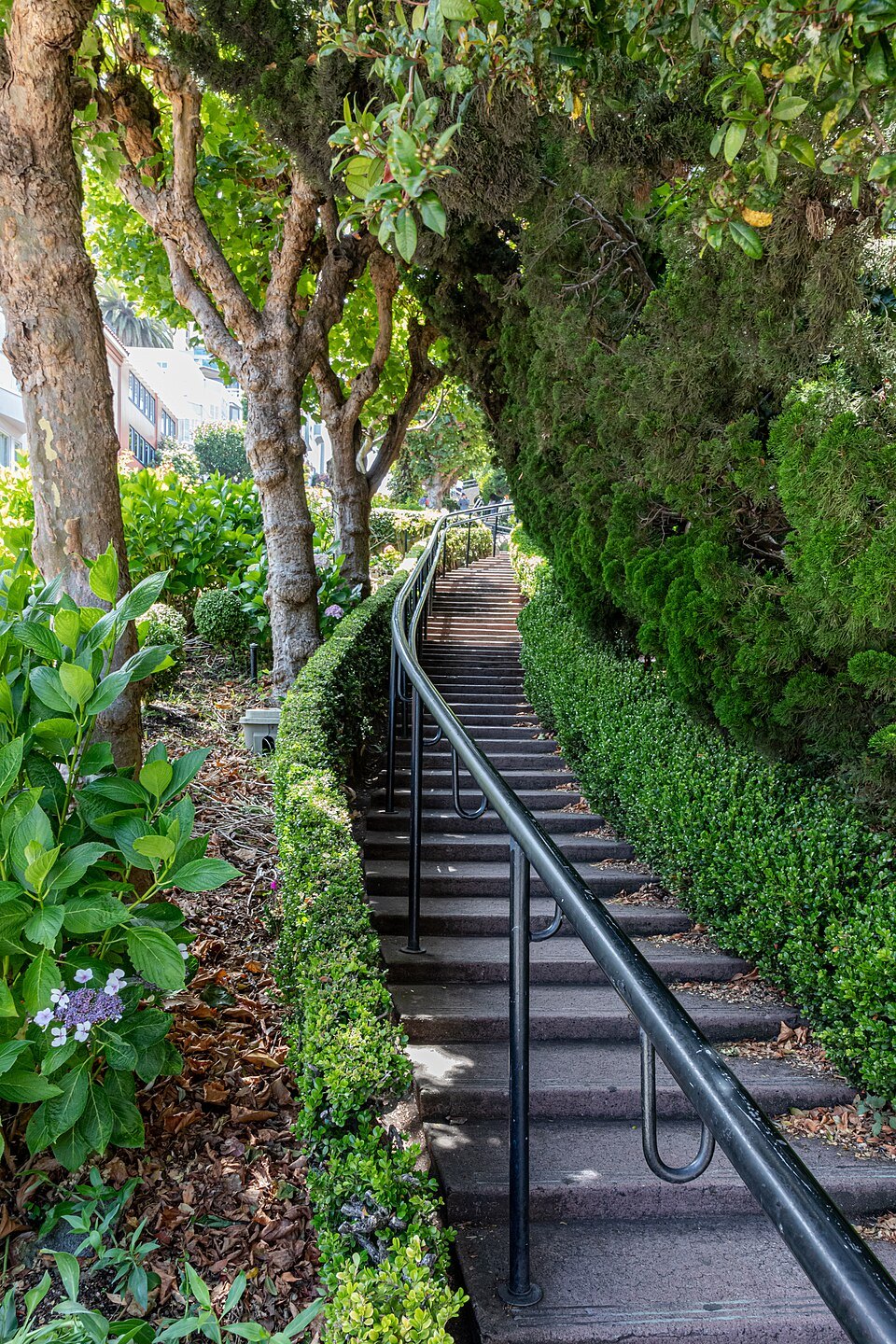
- 4The step sidewalksStairways on both sides of the crooked block for people on foot.
- 5The Vallejo Street CrestA hilltop district of early houses, with a small park and a memorial to the old Russian cemetery.
- 6Macondray LaneA pedestrian-only lane among trees and old houses on the hill's northern slope.
Reading the place
Why it matters
Lombard Street is an ordinary east–west street for most of its length, a busy arterial through Cow Hollow and the Marina that carries US Route 101. For one block on Russian Hill, between Hyde and Leavenworth streets, it turns into the famous switchbacks: eight sharp turns down a slope so steep that the street was once almost impossible to drive. Billed as "the crookedest street in the world", the block draws around two million visitors a year, and up to 17,000 a day on busy summer weekends.
It is also a good introduction to San Francisco's hills and to Russian Hill itself, one of the city's original residential hilltops, with views in every direction and streets so steep that some of them are staircases.
How the curves came to be
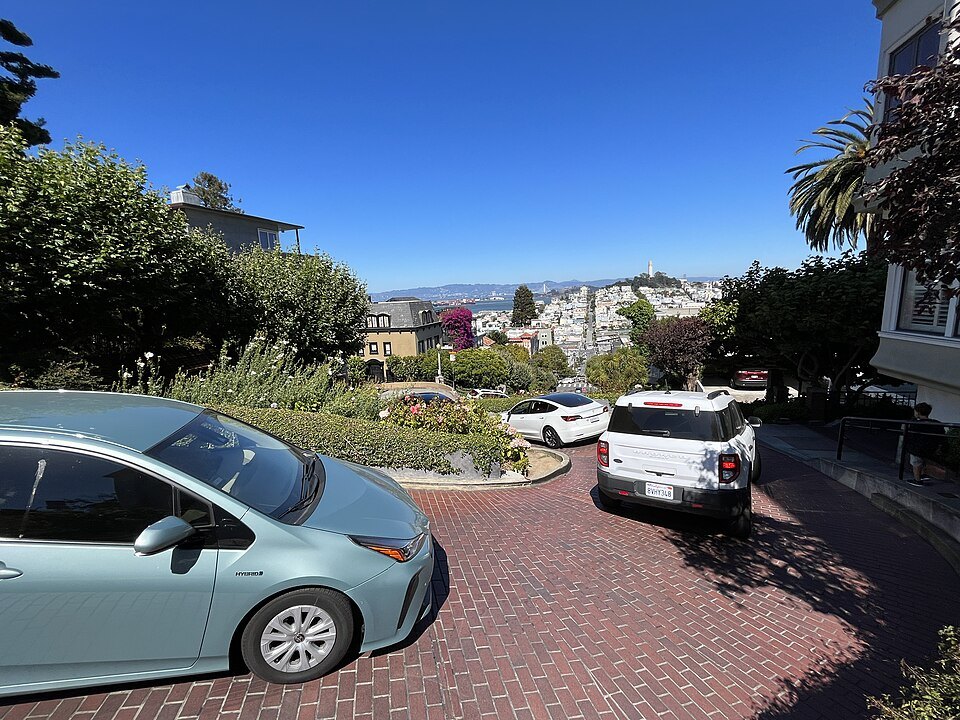
The natural grade of this block is 27 percent, too steep for most vehicles to climb. In 1922, at the suggestion of a property owner named Carl Henry, the block was rebuilt as a series of switchbacks to make it drivable. The crooked section is about 600 feet long along its curves, though the straight-line distance is only about 412 feet, and it is one-way, downhill, paved with red brick. A sign at the top recommends a speed of 5 miles per hour.
The street's name has nothing to do with the hill: the city's first surveyor, Jasper O'Farrell, named it after Lombard Street in Philadelphia. Nor is it unique. Vermont Street on Potrero Hill also claims the title of most crooked; it has seven turns instead of eight, but a steeper hill.
Russian Hill
The hill takes its name from the Gold Rush years, when settlers found a small Russian cemetery at its top, the graves of sailors from Russian naval and merchant ships that had visited San Francisco since 1806. The cemetery was later removed, but the name stuck, and a small park at the top of Vallejo Street holds a memorial placed by the Russian government.
Since the 1850s the northern slope overlooking the Bay has been one of the city's most desirable places to live. The Vallejo Street Crest, on the southeastern side, keeps some of the city's oldest houses behind a retaining wall and a natural bluff, among them the Atkinson House of 1853, one of the oldest houses still standing in the city. The Paris Block Architectural District on Green Street is known for its houses, among them the eight-sided Feusier Octagon House.
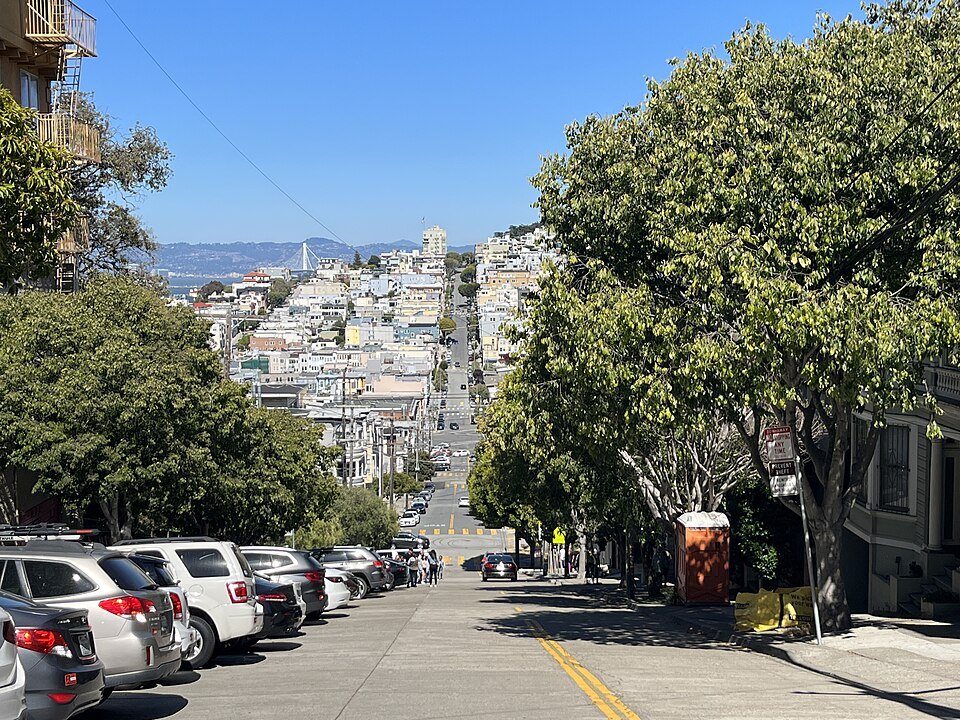
Another small park on Vallejo Street is named after Ina Coolbrith, California's first poet laureate and the first poet laureate of any American state, and looks straight out over downtown. Macondray Lane, on the northern slope, is a pedestrian-only lane of historic houses among trees, and parts of Vallejo and Green streets climb the hill as flights of steps.
What you see
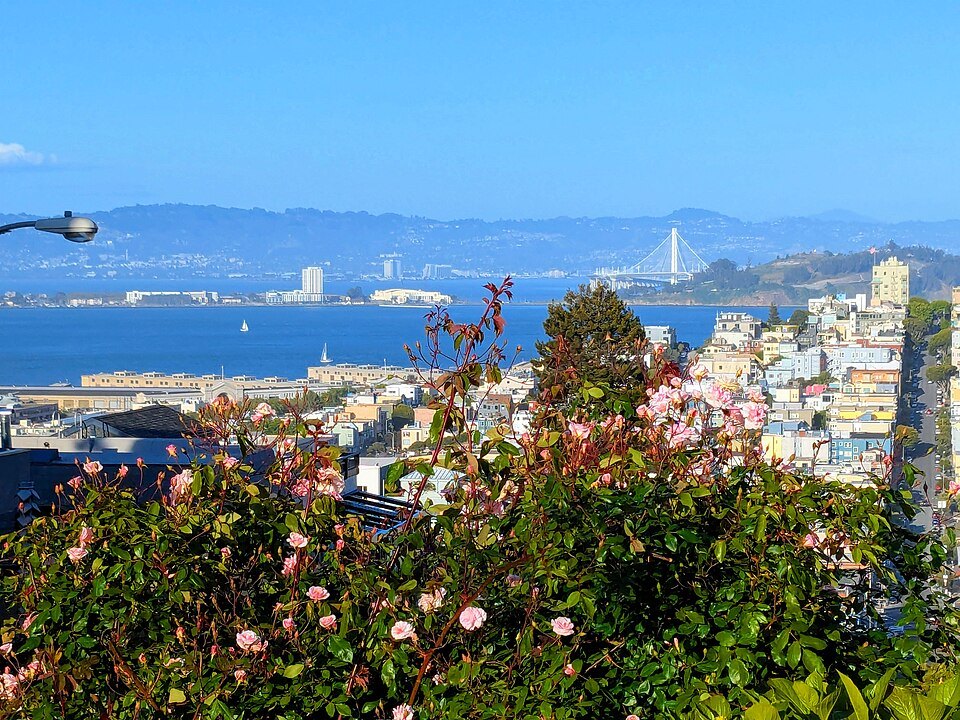
Standing at the top, on Hyde Street, you look down over the brick switchbacks and their hedges and hydrangeas to North Beach, with Coit Tower on Telegraph Hill straight ahead. Cars inch down the curves one at a time, and the houses along the block, many with bay windows and small gardens, watch the procession go by. From the bottom, on Leavenworth Street, the view is reversed: the whole block climbs away above you like a staircase of gardens.
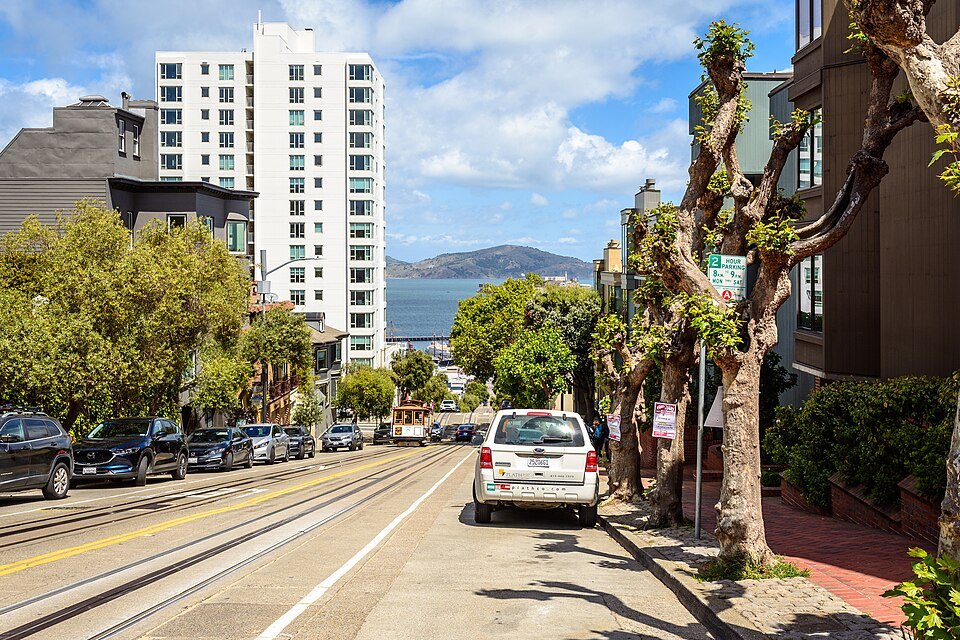
The Powell–Hyde cable car stops at the top of the block, and Hyde Street itself is part of the show, with the cars climbing and dropping past, Alcatraz in the bay beyond and the water at the bottom of the street.
On screen
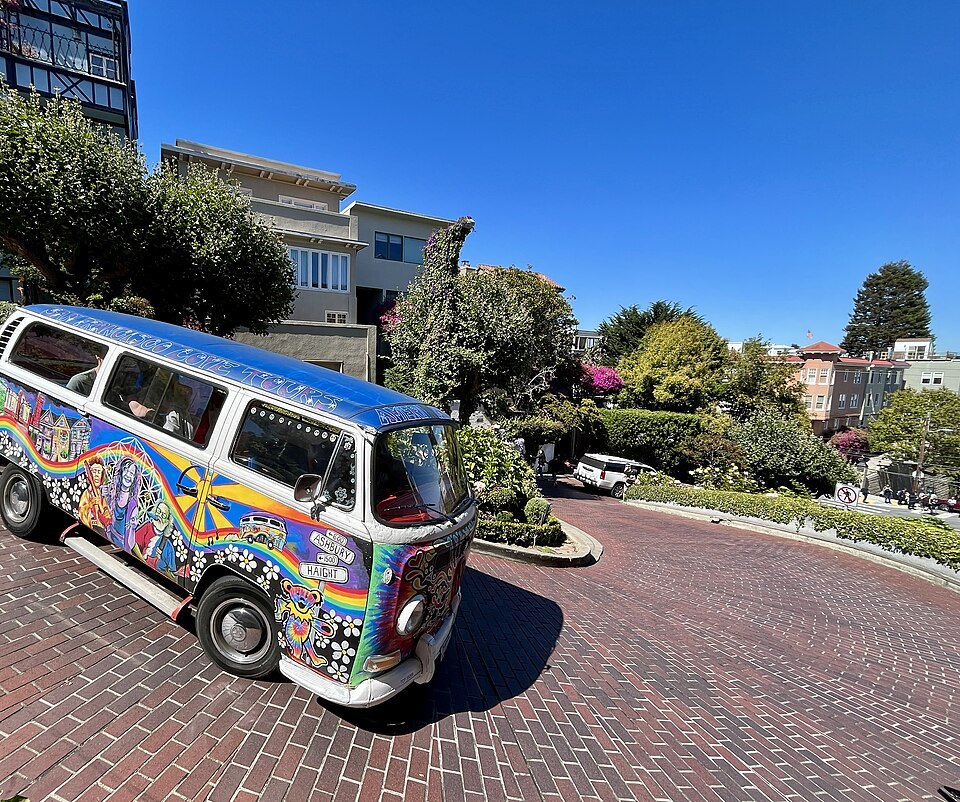
The block's switchbacks have made it a favorite of filmmakers for more than half a century. Chase and race scenes have been shot on its curves in films from Good Neighbor Sam and The Love Bug to What's Up, Doc? and Ant-Man and the Wasp, and it appears in Pixar's Inside Out of 2015. Many visitors know the view from the top before they arrive, which is part of why the corner of Hyde and Lombard is so crowded with cameras.
How to visit
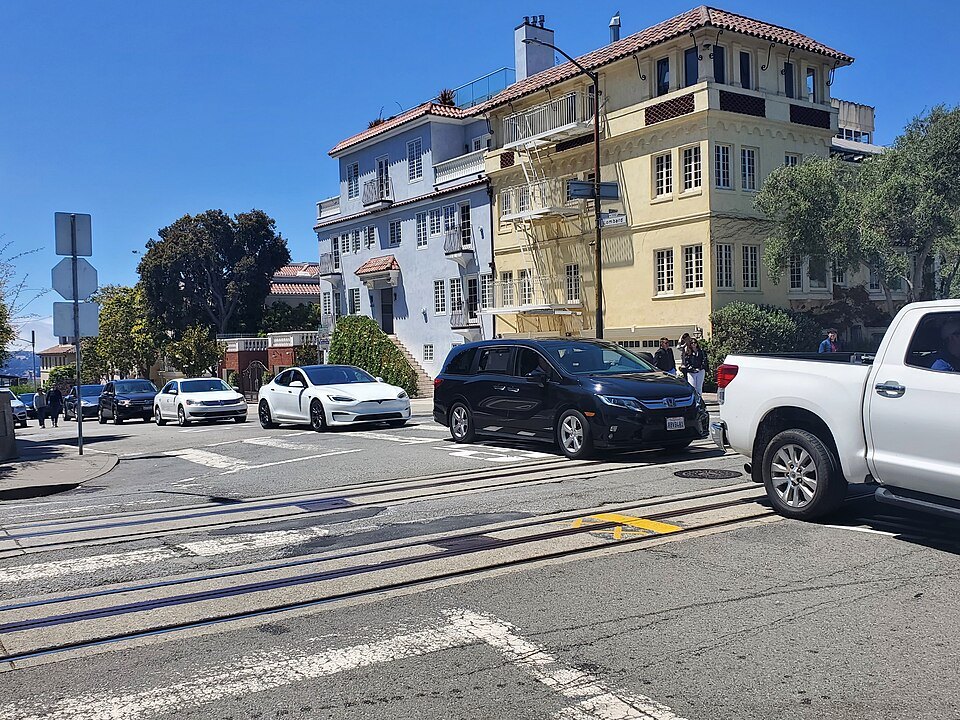
Most people arrive on the Powell–Hyde cable car and get off at the top, walk down one of the stairways that run along both sides of the crooked block, and carry on down to North Beach or the Wharf. Walking up from the bottom is a hard climb; see the hills for the gradients and for ways to reach the top without the stairs. Twenty minutes is enough for the block itself; allow an hour or two to wander Russian Hill's lanes and parks.
If you drive down the curves, expect a queue at busy times that can back up for several blocks, up to about twenty minutes. The block has also been a hot spot for car break-ins, helped by its heavy traffic and the number of visitors: leave nothing in a parked car, not even for a few minutes, and read street sense for the details. Remember that people live on this block, so keep off the steps of the houses and keep noise down.
Myths and facts
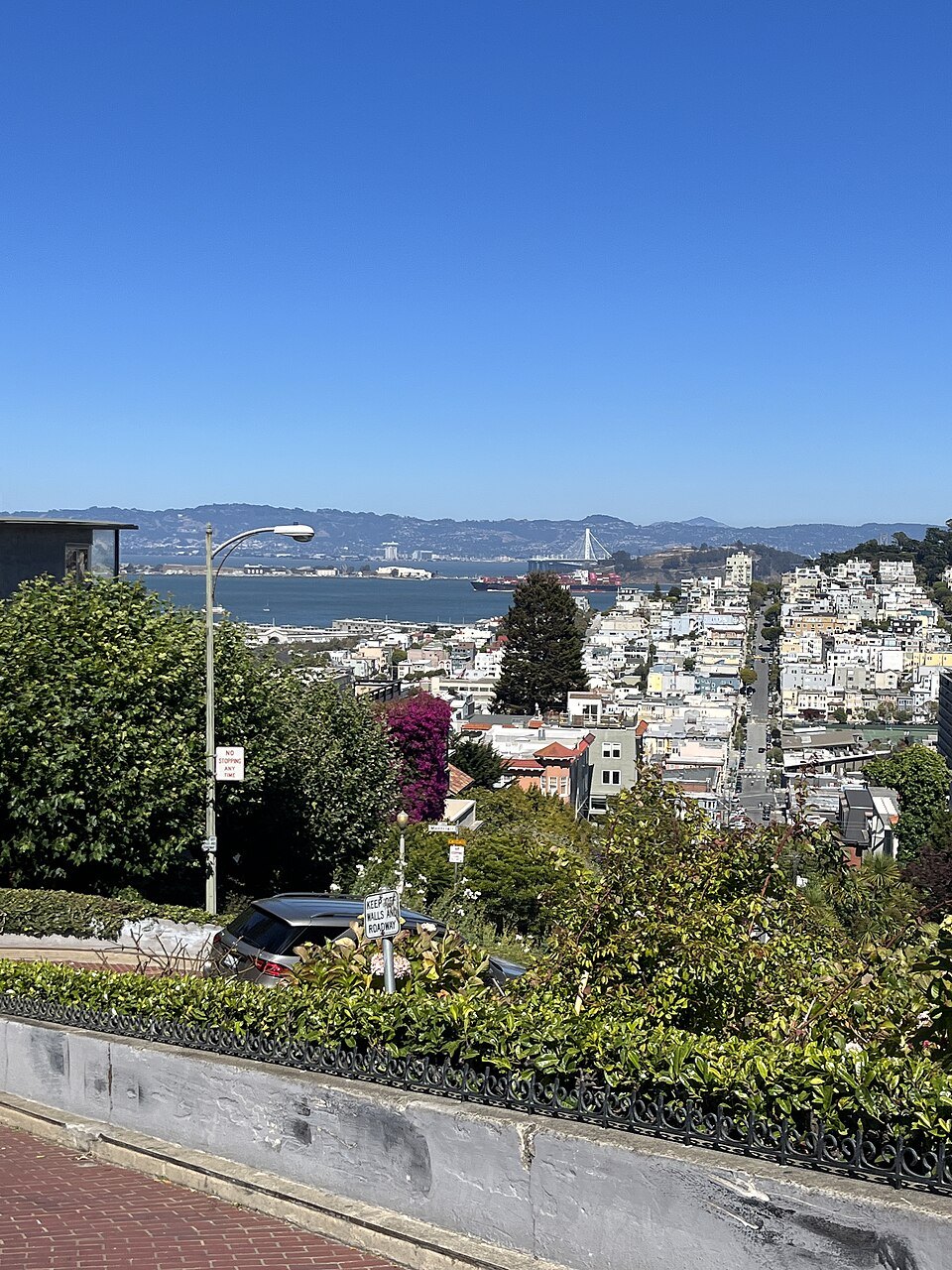
Lombard Street is not the crookedest street in the world, nor even certainly in San Francisco: Vermont Street has a rival claim. It was not built crooked for show either; the curves were a practical answer to a grade that ordinary cars could not manage. And the crooked block is only a tiny part of a long street that runs all the way from the Presidio to the Embarcadero.
Nearby
- NearbyThe Cable CarsThree surviving lines out of twenty-three, still pulled up Nob Hill and Russian Hill by a cable under the street and saved from closure in 1947 by a citizens' committee.Read the page
- NearbyCoit Tower and Telegraph HillA fluted concrete tower of 1933 on Telegraph Hill, paid for by a firefighting socialite's bequest, with New Deal fresco murals in its lobby and a stairway garden down the hill's eastern face.Read the page
- NearbyFisherman's Wharf and the Hyde Street PierA working fishing harbor turned the city's most visited waterfront, with a pier of sea lions at one end and a fleet of historic ships at the Hyde Street Pier at the other.Read the page