Home · Sights · The Ferry Building and the Embarcadero
The Ferry Building and the Embarcadero
Level
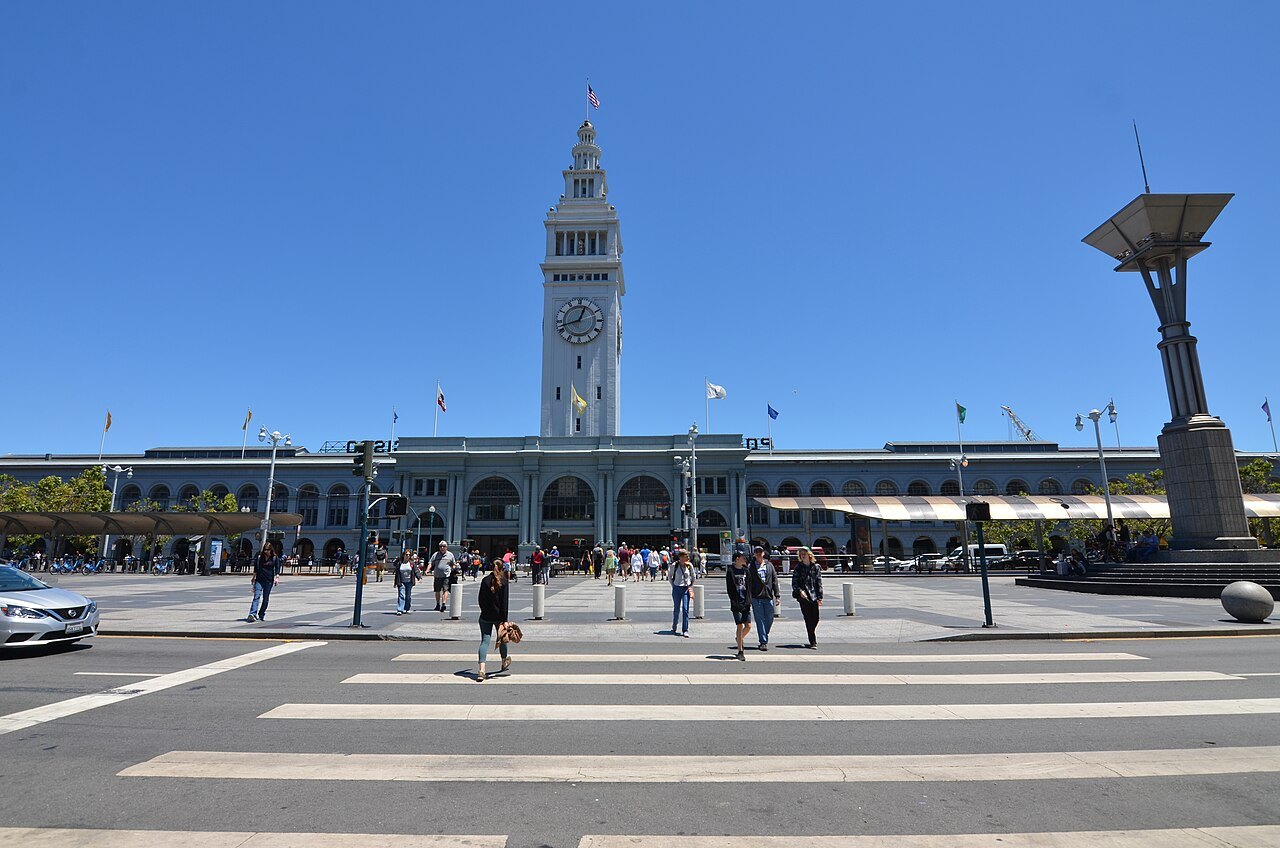
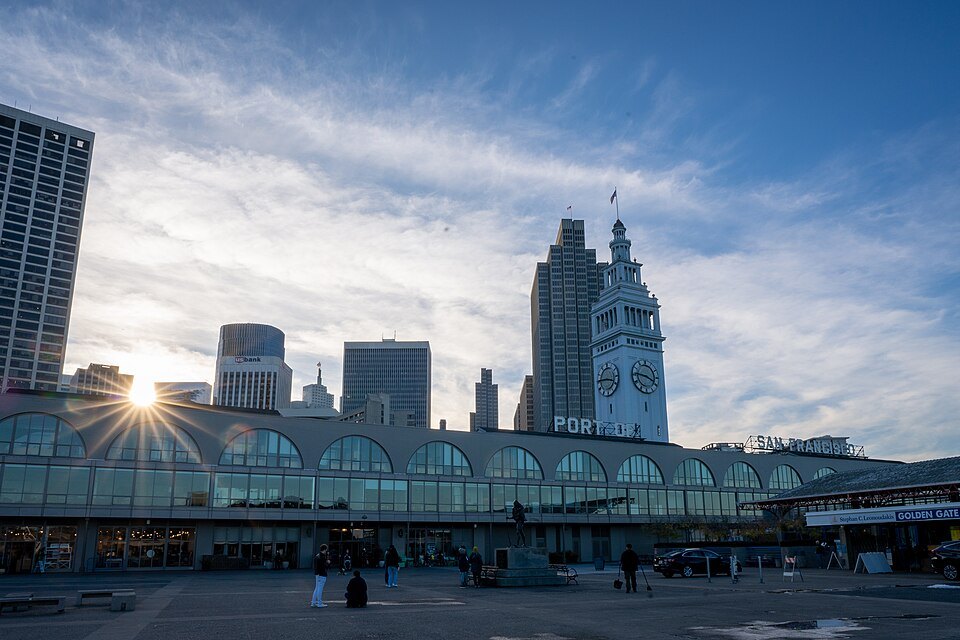
- 1The clock tower245 feet high with four dials each 22 feet across, visible the length of Market Street.
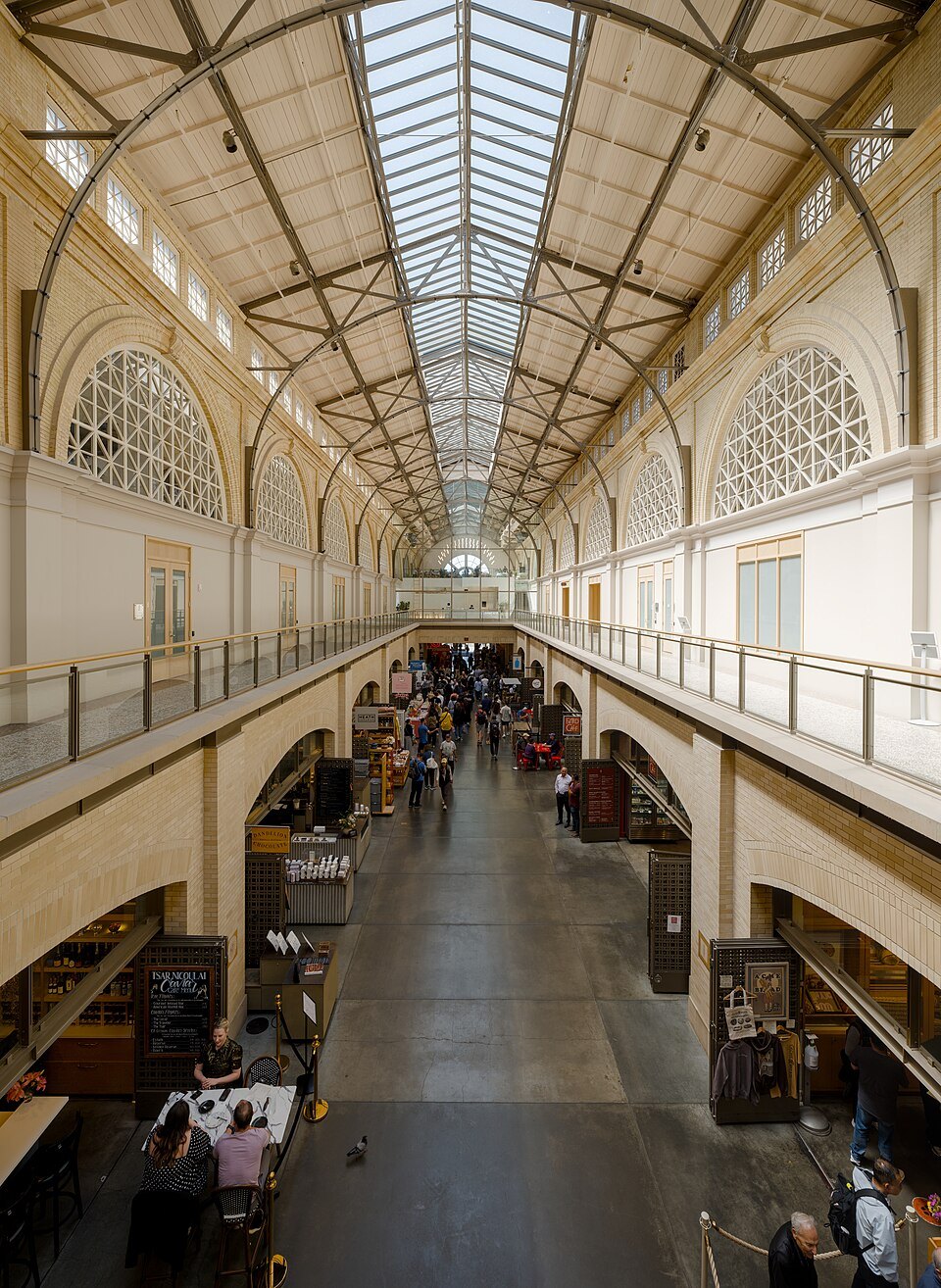
- 2The Great NaveThe 660-foot skylit hall on the upper floor, restored to its full height in the early 2000s.
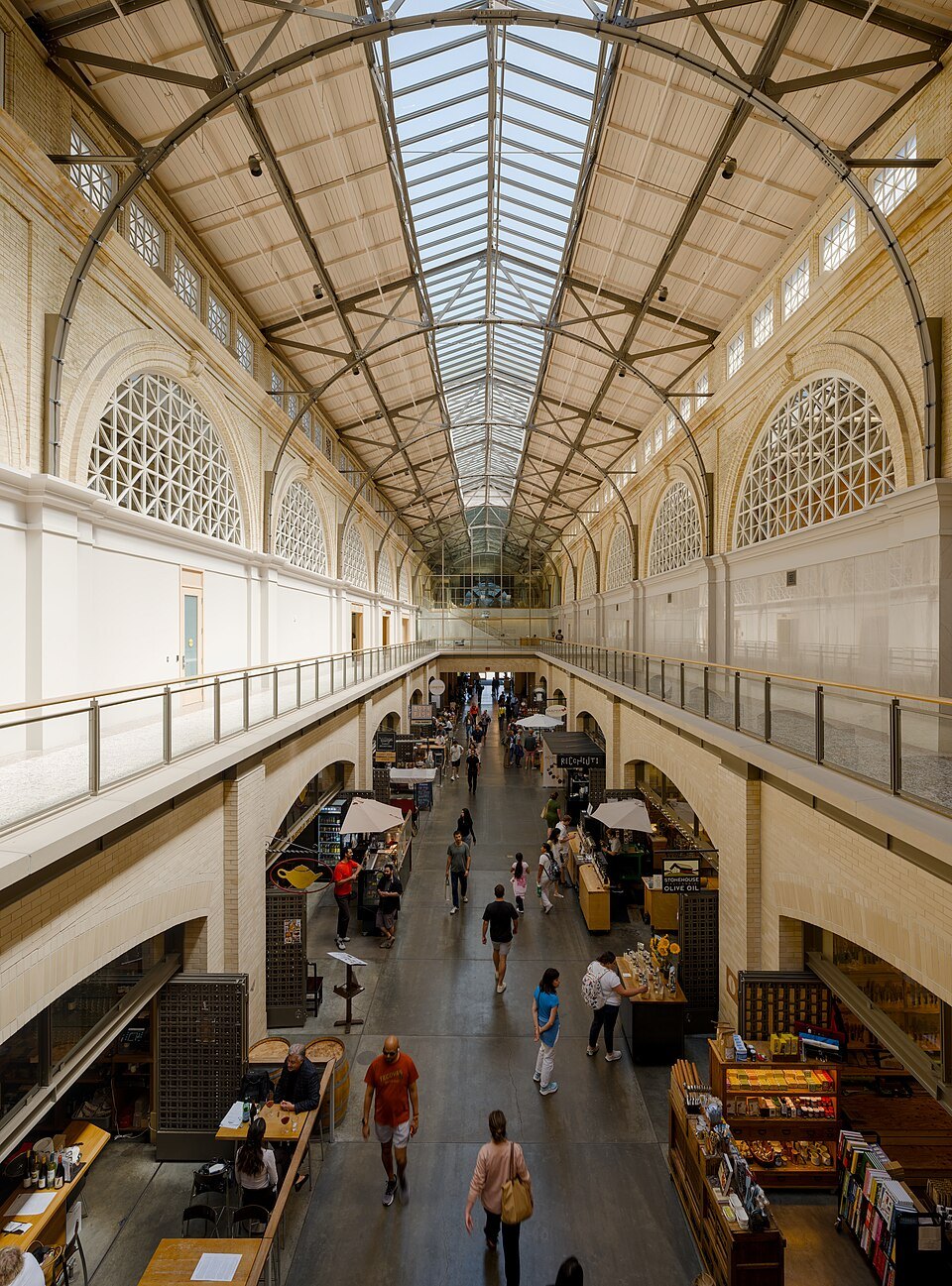
- 3The marketplaceAbout fifty food stalls, shops and restaurants in the former baggage area on the ground floor.
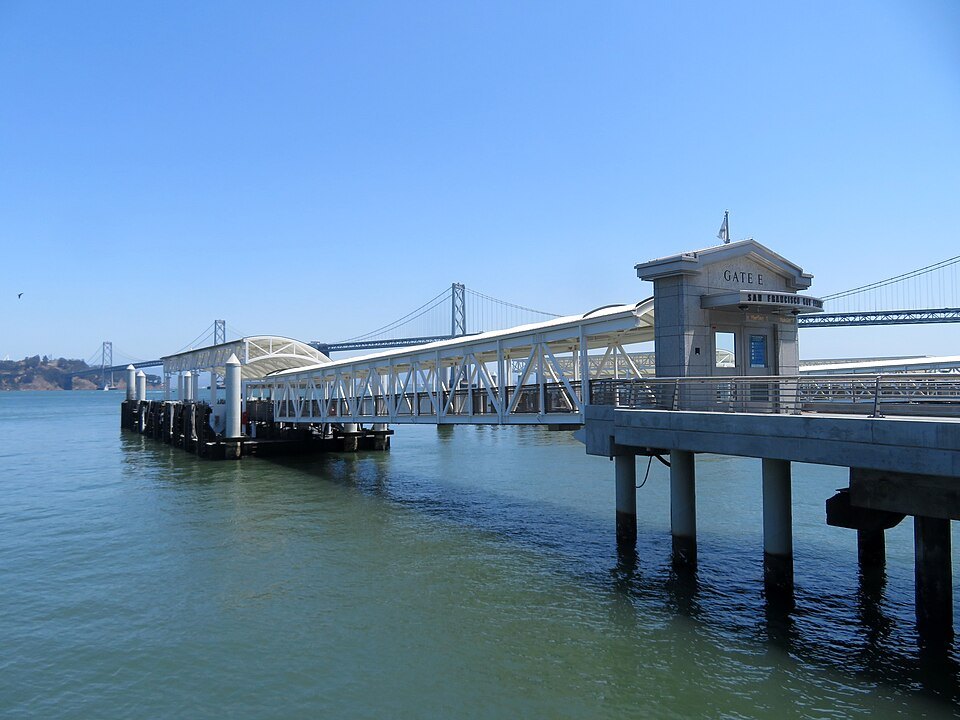
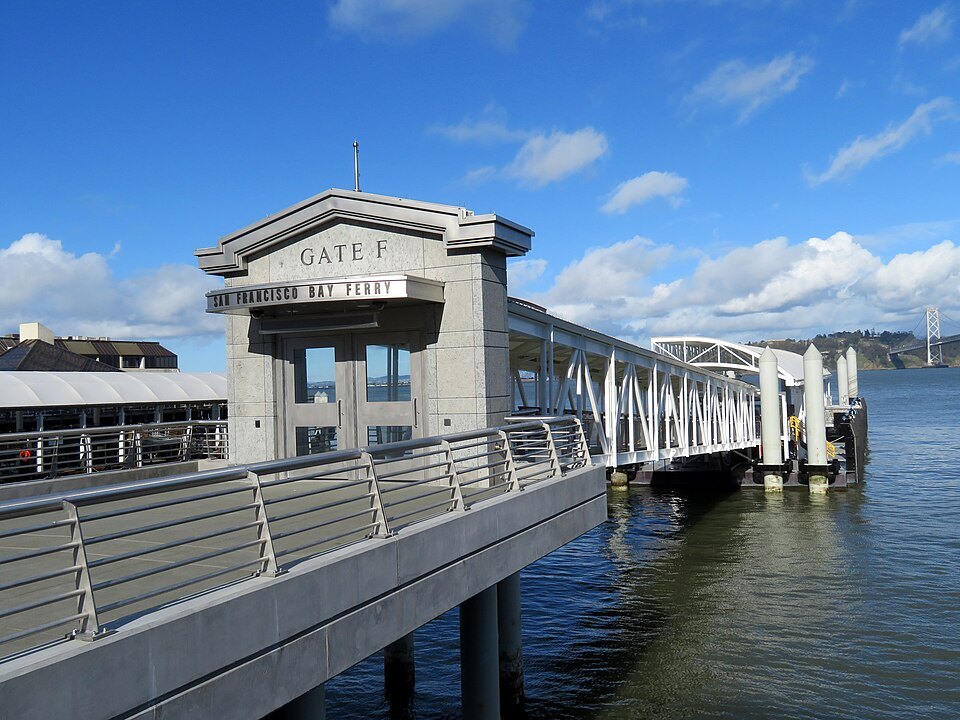
- 4The ferry gatesBehind the building, where commuter ferries leave for the other shores of the Bay.
- 5The Embarcadero promenadeThe waterfront boulevard of palms and piers that replaced the double-decker freeway in the 1990s.
- 6The arcadesArched arcades along both long sides of the building, the motif of the whole design.
Reading the place
Why it matters
For most of its life the Ferry Building was how you arrived in San Francisco. Before the Bay Bridge and the Golden Gate Bridge opened in the 1930s, commuters from the East Bay, passengers off the transcontinental trains that ended across the bay, and travelers from the north all came in by ferry to this building at the foot of Market Street. In those years it was the second-busiest transit terminal in the world, after London's Charing Cross. It is still the landmark that closes the long view down Market Street, and it is still a ferry terminal, now with a food hall inside.
The building also stands at the center of the city's best planning story: how a waterfront cut off by a freeway was given back to the people who live and visit here.
The building
The architect A. Page Brown designed it in 1892 in the Beaux-Arts style, and it opened on July 13, 1898, replacing a wooden terminal of 1875 on the same site. At its opening it was the largest project the city had undertaken. Its clock tower, 245 feet high with four dials each 22 feet across, may have been inspired by the Giralda, the bell tower of Seville's cathedral. Along both long sides of the building runs a continuous arcade of arches.
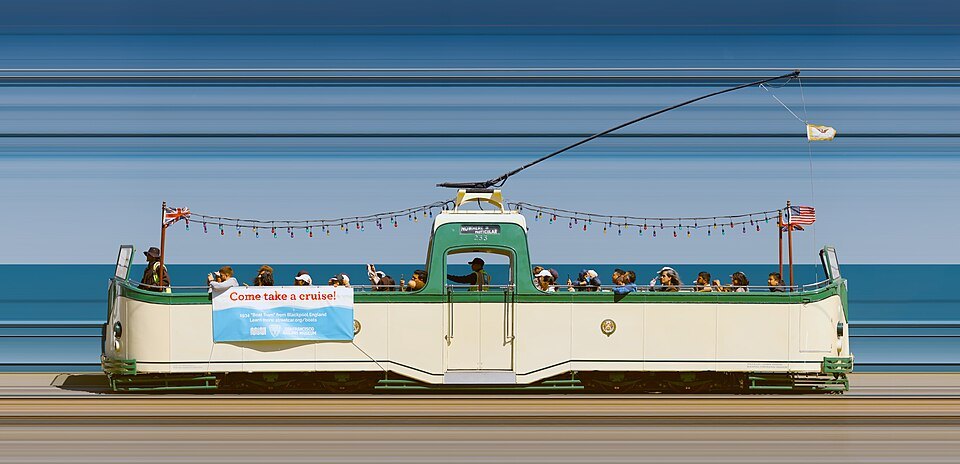
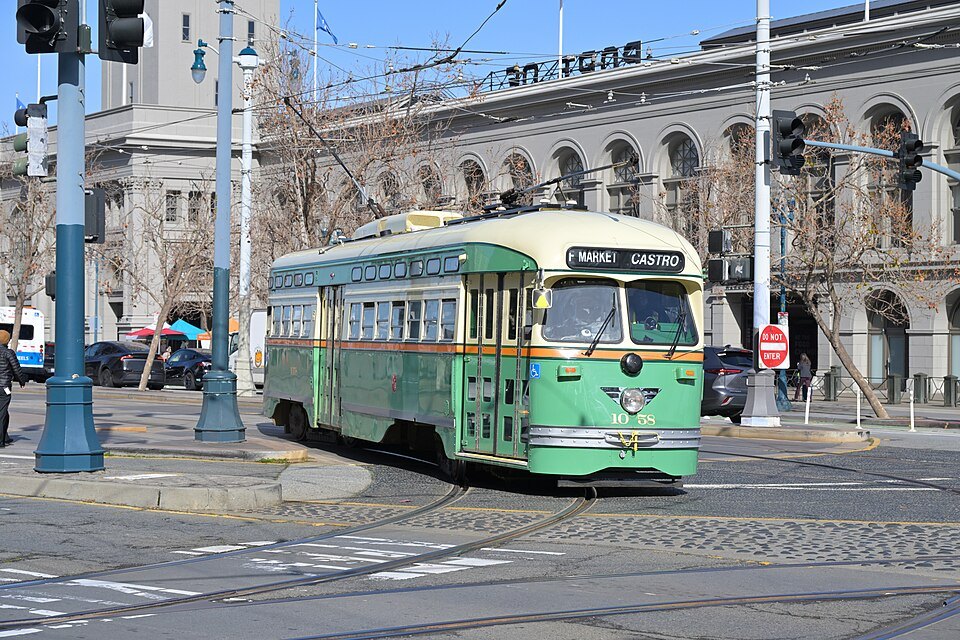
The well-built structure with its arched arcades came through the earthquakes of 1906 and 1989 with little damage. After 1906 a two-track streetcar loop was laid in front of it so that ferry passengers could change straight onto the city's streetcars; the last of those streetcars ran in 1949. The clock bell still chimes parts of the Westminster Quarters on the hour in daylight.
Decline and the freeway
After the bridges opened, ferry traffic fell sharply, and from the 1950s the building was carved into offices, its great upstairs hall broken up by a mezzanine. In the late 1950s the double-decker Embarcadero Freeway was built right in front of it, hiding the clock tower from Market Street and cutting the city off from its own waterfront. When the Loma Prieta earthquake of October 1989 damaged the freeway, the city chose not to rebuild it. The freeway came down, and a ground-level boulevard lined with palms and a waterfront promenade took its place along the Embarcadero, the three-mile seawall from which the piers reach into the bay.
The restoration
A restoration and renovation of the whole building began in the early 2000s and it reopened in 2003. The 660-foot Great Nave upstairs was restored to its full height and materials, its long skylight once again lighting the hall, and the old baggage-handling area on the ground floor became a marketplace of about fifty restaurants, shops and food producers with an emphasis on local products. The floors above are offices, including those of the Port of San Francisco. A farmers' market fills the plaza outside on its market days.
What you see
From Market Street you see the tower head-on at the end of the view, with the arcade spread out on either side. Inside, the marketplace runs the length of the ground floor, bakeries and cheese makers, coffee roasters, oyster bars and grocers, while above it the restored nave, with its tiled floor and skylight, gives the scale of the old terminal. Walk through to the bay side and you are on the water: the ferry gates, the Bay Bridge to the south, and boats coming and going to the other shores.
The Embarcadero promenade runs in both directions. North, it leads along the numbered piers toward Pier 33, where the Alcatraz ferries leave, and on to the Wharf. South, it passes under the Bay Bridge. Across the road from the building, the plazas lead into the Financial District. The historic F-line streetcars run along the waterfront from here, many of them old cars from cities around the world.
How to visit
The Ferry Building is at the foot of Market Street, where the BART and Muni Metro Embarcadero station lets you out a short walk away; the getting around page covers both, and the F-line streetcar stops in front. Nothing needs booking. An hour covers the building and a coffee on the water; plan longer if you are eating, and come hungry. The marketplace and plaza are busiest around lunch and on farmers' market days.
From the ferry gates behind the building, commuter ferries cross to Sausalito, Oakland and other towns around the Bay, an easy way to see the city from the water; day trips covers the destinations. For the city's own dishes you will find here, see eating and drinking. A walk north along the Embarcadero to Fisherman's Wharf is flat and takes in the piers on the way.
Myths and facts
The Ferry Building is often described as a food hall, but it never stopped being a terminal: commuter ferries still leave from the gates behind it every day, and a ride out and back is one of the easiest ways to see the skyline and both bridges from the water. The clock tower is often said to be a copy of Seville's Giralda; the most the record says is that the Giralda may have been one of the architect's inspirations. And the waterfront you walk along is younger than it looks: until the early 1990s a double-decker freeway ran in front of the building, and the palms, the promenade and the open plazas all date from after its removal.
Nearby
- NearbyFisherman's Wharf and the Hyde Street PierA working fishing harbor turned the city's most visited waterfront, with a pier of sea lions at one end and a fleet of historic ships at the Hyde Street Pier at the other.Read the page
- NearbyChinatownTwenty-four blocks between Kearny, Broadway, Powell and Bush, settled from the 1850s, burned in 1906 and rebuilt by its own merchants, with Grant Avenue for visitors and Stockton Street for the neighborhood.Read the page
- NearbySFMOMA and Yerba BuenaA museum founded in 1935, in Mario Botta's striped-brick building of 1995 and Snøhetta's rippling white extension of 2016, beside the gardens and galleries of Yerba Buena in SoMa.Read the page