Home · Eating & Drinking
What to order
Eating & Drinking
A city of arrivals
Every wave of newcomers to San Francisco brought a cuisine with it, and several of them turned into dishes the city claims as its own. The French brought their bread in the Gold Rush; Italian fishermen, many from the coast of northwest Italy, brought their fish stews to North Beach; Cantonese immigrants built Chinatown's restaurants and teahouses; and Mexican and Central American families filled the Mission with taquerias. The result is a food city built less on grand restaurants than on bakeries, fish stalls, dim sum halls and burrito counters.
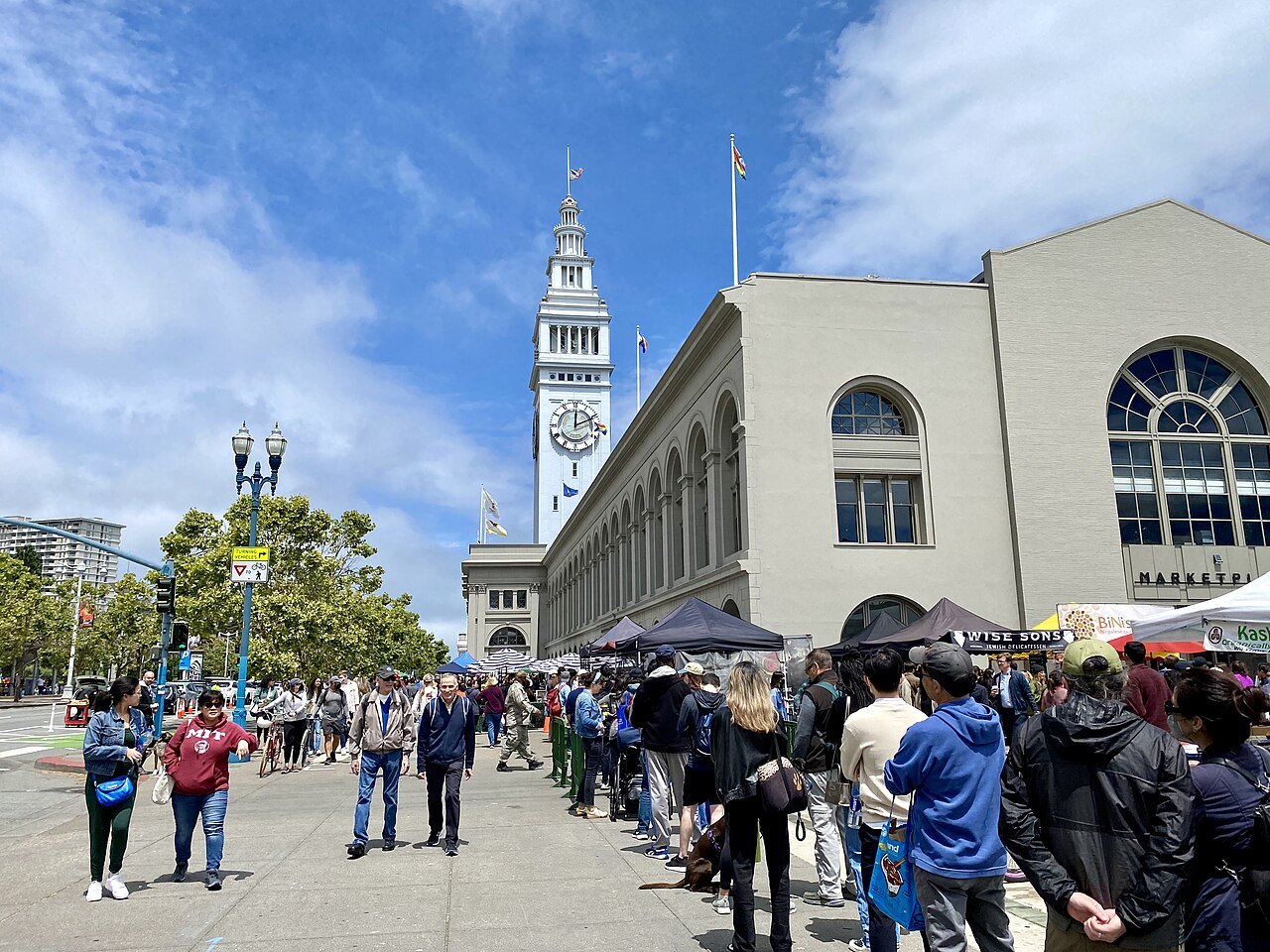
You can eat very well here without a reservation. The Ferry Building marketplace, with about fifty restaurants, shops and food makers on its ground floor, is a good place to start.
The Ferry Building and the markets
The Ferry Building is the city's food hall. When it was restored and reopened, a marketplace was made on the ground floor, in the old baggage-handling area, and it now holds about fifty restaurants, shops and food makers, most of them open seven days a week, below the restored Great Nave, six hundred and sixty feet long, on the floor above. An outdoor farmers' market sets up on the plaza around the building on market days.
It is the easiest place in the city to taste the region in one visit, and the bay-front benches behind the building are the place to eat what you buy, watching the ferries come and go. Check the market's own schedule before you plan a meal around it.
Sourdough
Sourdough bread, leavened with a culture of wild yeast and bacteria that gives it a sour taste, has long been linked to the prospectors of 1849, although they were more likely to bake with commercial yeast or baking soda. The loaf that made the city famous came from Isidore Boudin, the son of a family of master bakers from Burgundy, who founded his bakery in 1849 by blending the sourdough common among the miners with French technique.
Boudin Bakery is recognized as the oldest continually operating business in San Francisco, and it says it still uses the same starter culture it developed in the Gold Rush. It still has a bakery and café on the waterfront at Fisherman's Wharf.
Cioppino and crab
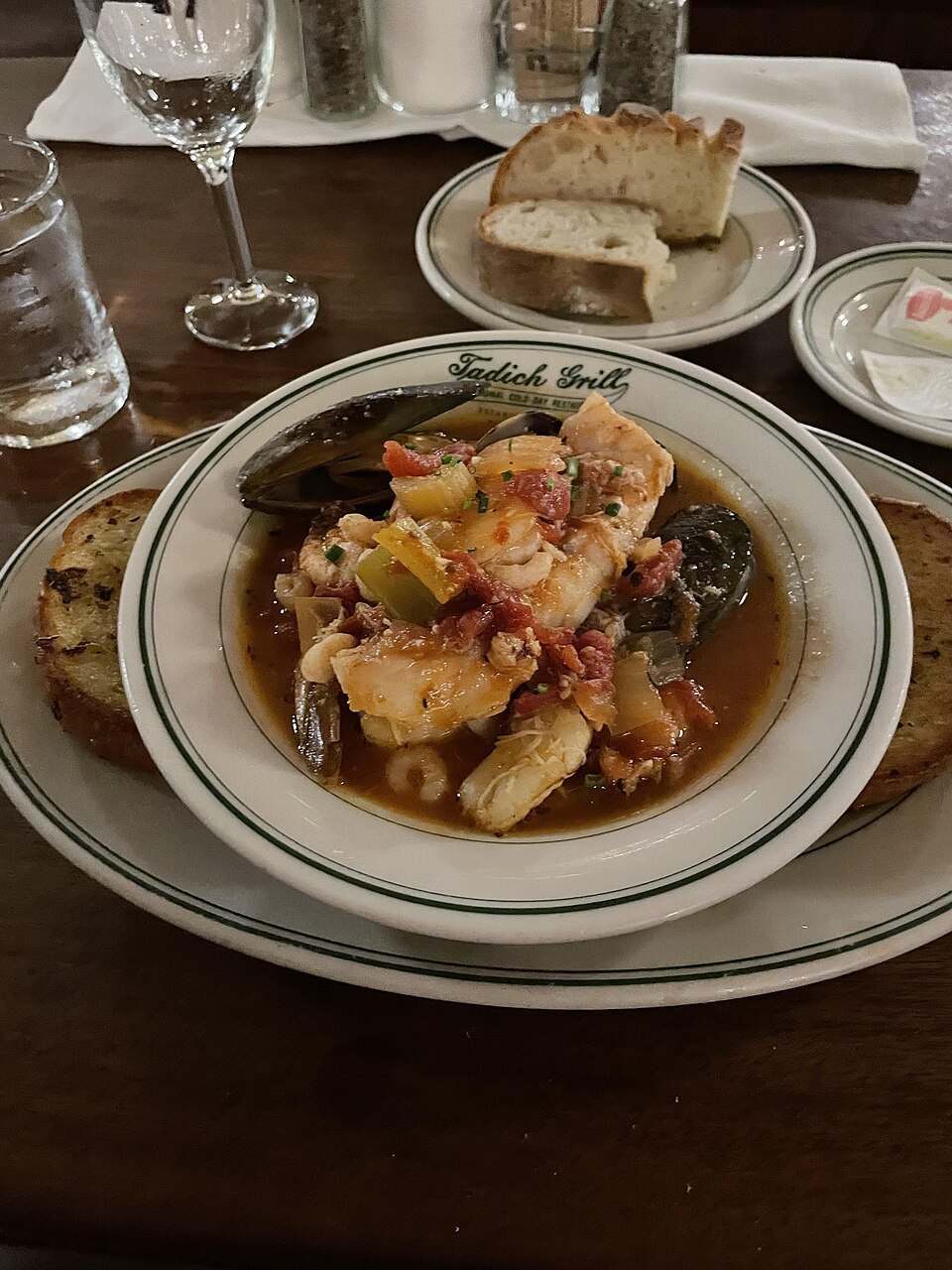
Cioppino, a fish stew, was developed in the late nineteenth century by Italian immigrants, many of them from the northwest Italian coast, along with Spanish and Portuguese fishermen who worked off Meiggs Wharf and lived in North Beach. It is made from the catch of the day, which in San Francisco usually means Dungeness crab, clams, shrimp, scallops, squid, mussels and fish, all from the Pacific, and it spread to Italian restaurants across the city.
Dungeness crab is its star. The Dungeness fishery was started by San Francisco fishermen in 1848, and a whole crab, cracked at the table with a crab fork and a cracker, is one of the classic meals of the waterfront. The crab stalls and seafood restaurants of the Wharf are the obvious place to try it.
Chinatown and dim sum
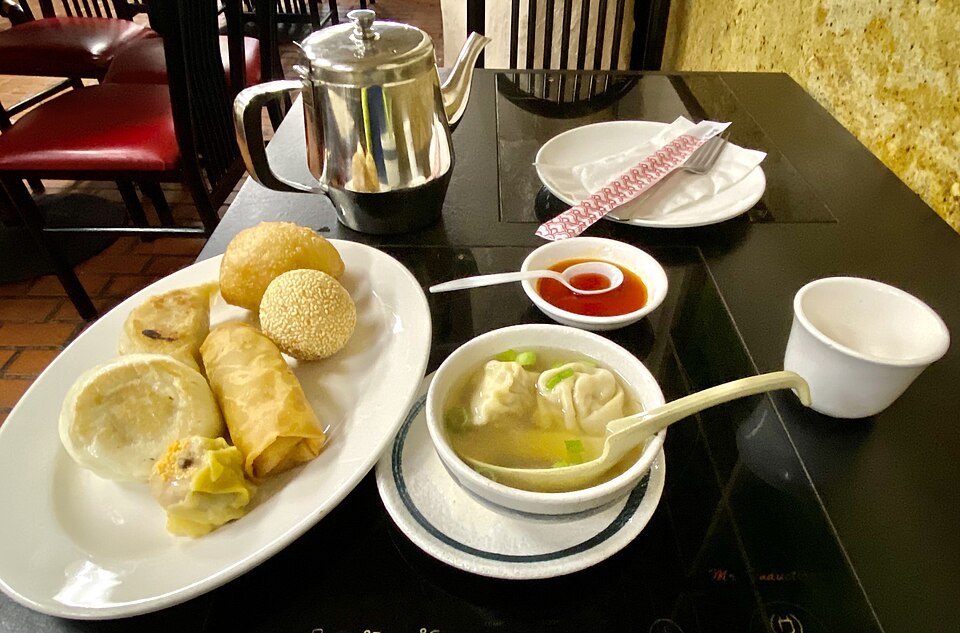
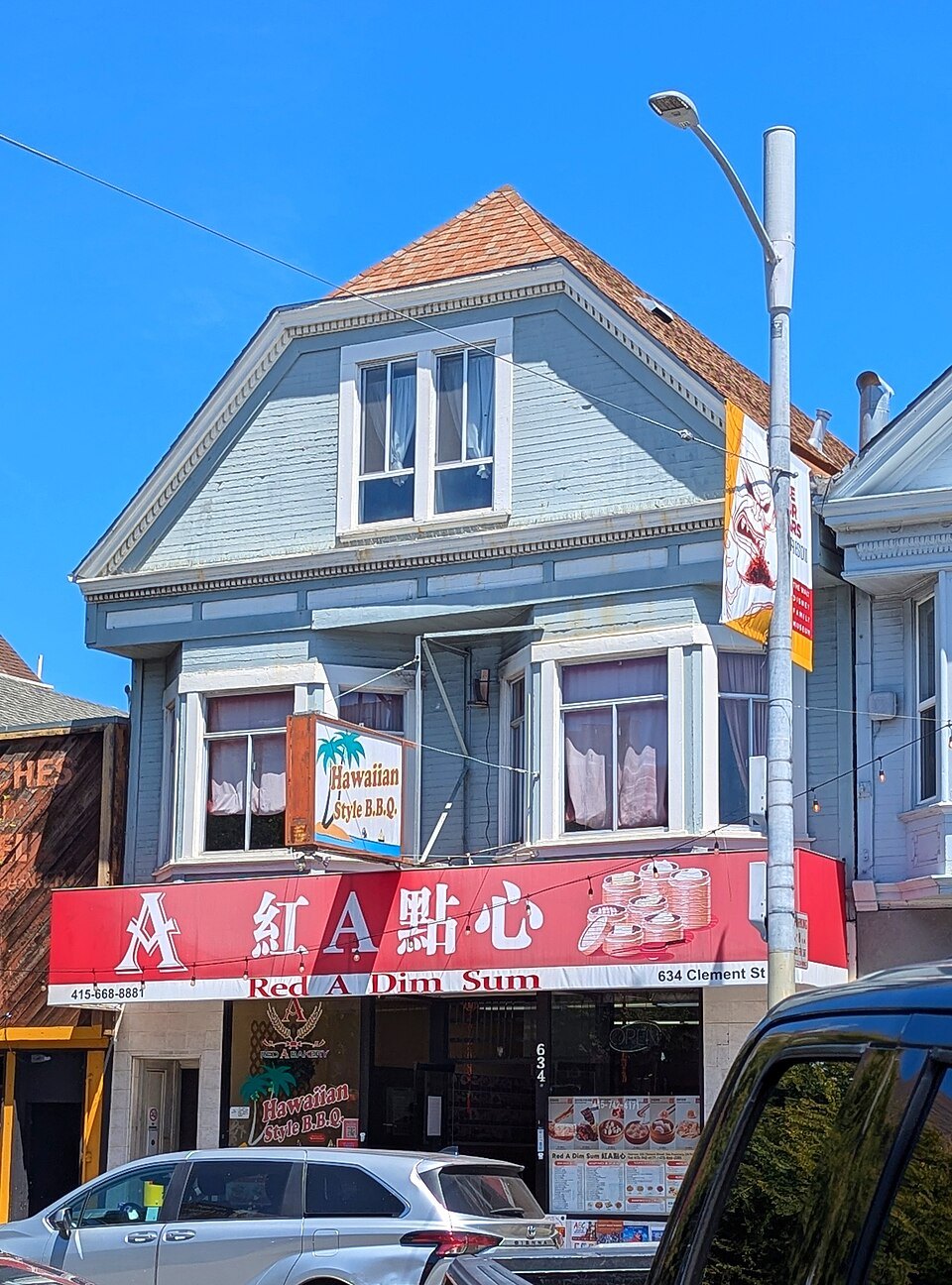
Dim sum, a wide range of small Cantonese dishes traditionally eaten with tea at a late-morning meal called yum cha, crossed the Pacific with the city's Chinese community, and one of the oldest dim sum restaurants still operating in the country opened in San Francisco in the 1920s. Large dim sum restaurants remain a mainstay of the city.
Chinatown is the natural place to eat it: the oldest Chinatown in North America, with bakeries, tea shops and restaurants along Grant Avenue and Stockton Street. Go early and go hungry; the busiest dim sum halls fill on weekend mornings.
The Mission burrito
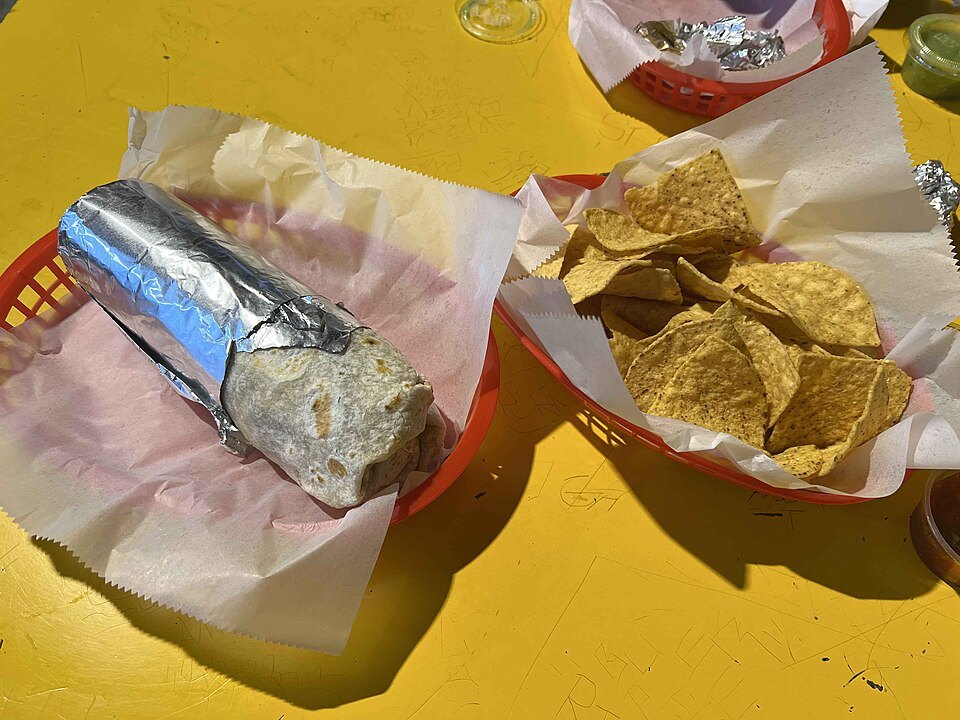
The Mission burrito, also called the San Francisco burrito, became popular in the taquerias of the Mission District in the 1960s. It is distinguished by its size and by the rice packed inside with the beans and meat, and by its method: the flour tortilla is usually steamed to make it flexible before it is filled, folded and wrapped in foil. A food critic for the San Francisco Chronicle counted hundreds of taquerias in the Bay Area and noted that the question of which makes the best burrito can encourage fierce loyalty and ferocious debate.
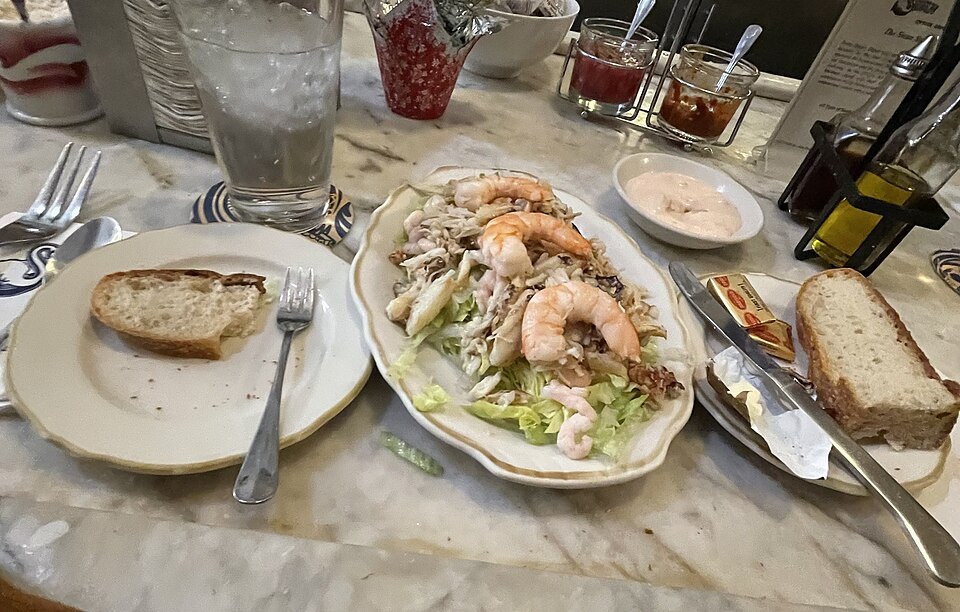
Walk down Mission Street or Twenty-Fourth Street and you will pass dozens of taquerias; pick one that is busy with neighbors. The murals of Balmy Alley and a slice of Mission Dolores Park make a natural afternoon around it.
North Beach, coffee and the Beats
North Beach, San Francisco's Little Italy, was settled largely by northern Italians, and after the rebuilding that followed the earthquake of 1906 it took on the Italian character it still has, with its cafés, bakeries and restaurants around Washington Square and the church of Saints Peter and Paul. In the 1950s its cafés and bars became the home of the Beat Generation; City Lights Bookstore, founded by the poet Lawrence Ferlinghetti, still stands on the corner of Columbus Avenue and Broadway, and an alley beside it is named for Jack Kerouac.
North Beach sits at the foot of Telegraph Hill, so a coffee and a pastry there make a good reward after the climb down from Coit Tower.
Irish coffee and sweets
The Buena Vista Cafe, near the end of the Powell–Hyde cable car line, began serving Irish coffee on November 10, 1952, after the travel writer Stanton Delaplane, who had tasted it at Shannon Airport in Ireland, worked with the café to recreate it; the drink's inventor, the chef Joe Sheridan, later emigrated to work there.
For something sweet, the It's-It, a scoop of vanilla ice cream between two oatmeal cookies dipped in dark chocolate, was invented in 1928 by George Whitney at Playland at the Beach by Ocean Beach, and sold only at his shop until Playland was demolished in 1972. At the other end of the Wharf, Domenico Ghirardelli bought a whole city block in 1893 for his chocolate company; the chocolate shop is in the clock tower of what is now Ghirardelli Square. And in Golden Gate Park, the Tea House of the Japanese Tea Garden has served tea since the fair of 1894.
More photographs
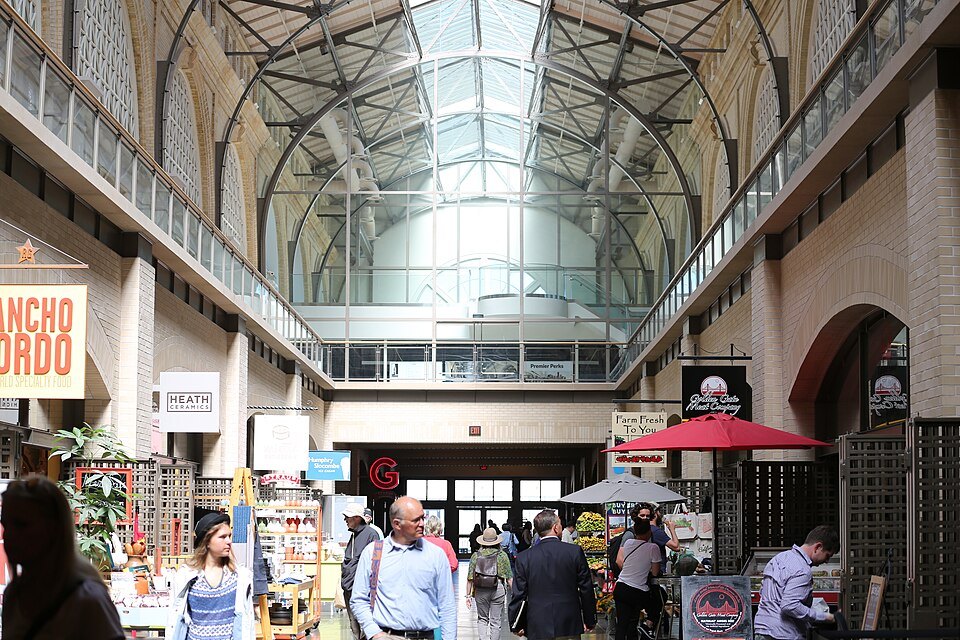
The skylit arcade of the Ferry Building marketplace, crowded with shoppersTobias Kleinlercher / Wikipedia, Wikimedia Commons, CC BY-SA 3.0 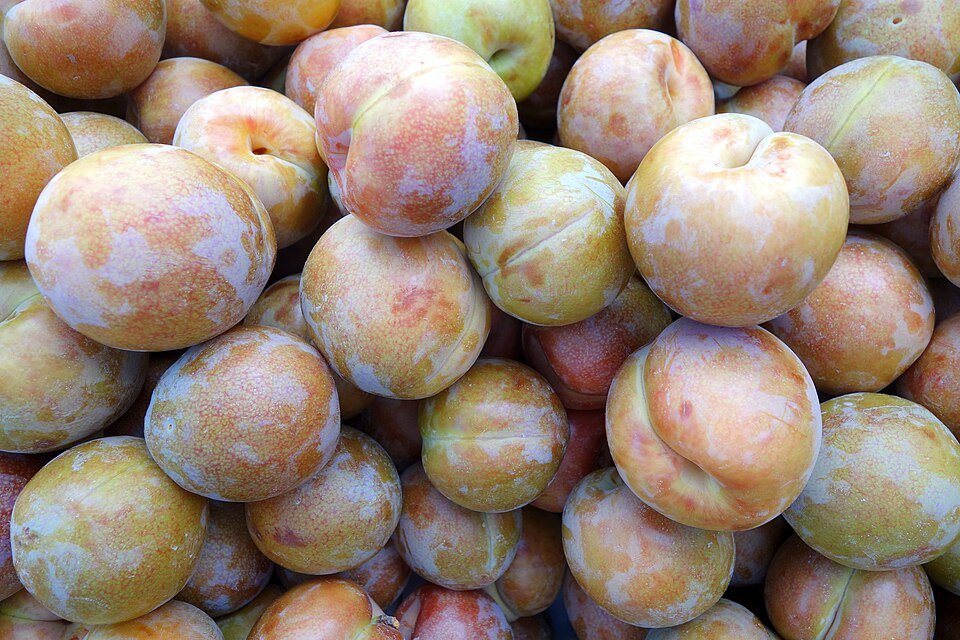
Pluots piled high on a stall at the Ferry Building farmers' marketDaderot, Wikimedia Commons, CC0 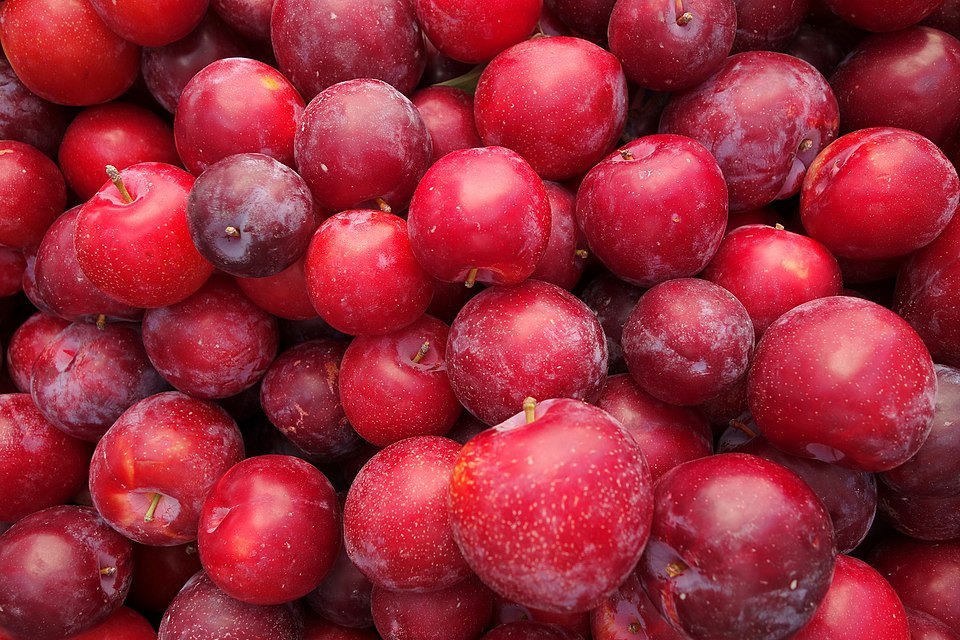
Red plums at the Ferry Building farmers' marketDaderot, Wikimedia Commons, CC0