Home · Sights · Coit Tower and Telegraph Hill
Coit Tower and Telegraph Hill
Steep or many steps
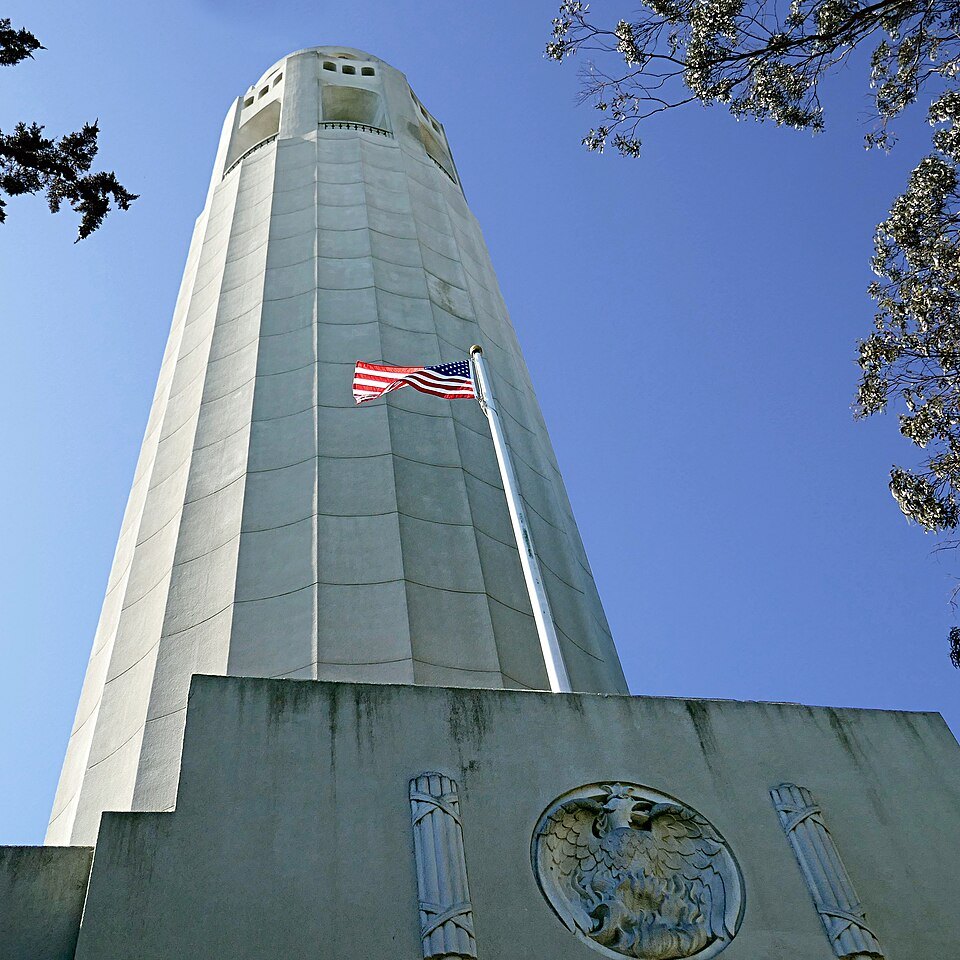
- 1The tower210 feet of unpainted, fluted reinforced concrete by the architects Arthur Brown Jr. and Henry Temple Howard.
- 2The lobby muralsFresco murals of California life in 1934, the pilot project of the New Deal's first program for artists.
- 3The viewing deckNear the top, reached by elevator and stairs, looking out over the Bay, the bridges and the city.
- 4Pioneer ParkThe small park on the summit around the tower, with its parking circle and the city below.
- 5The Filbert StepsAbout 400 wooden steps down the hill's eastern face, through gardens, to the Embarcadero.
- 6The Greenwich StepsA second step street down the same slope, parallel to the Filbert Steps.
Reading the place
Why it matters
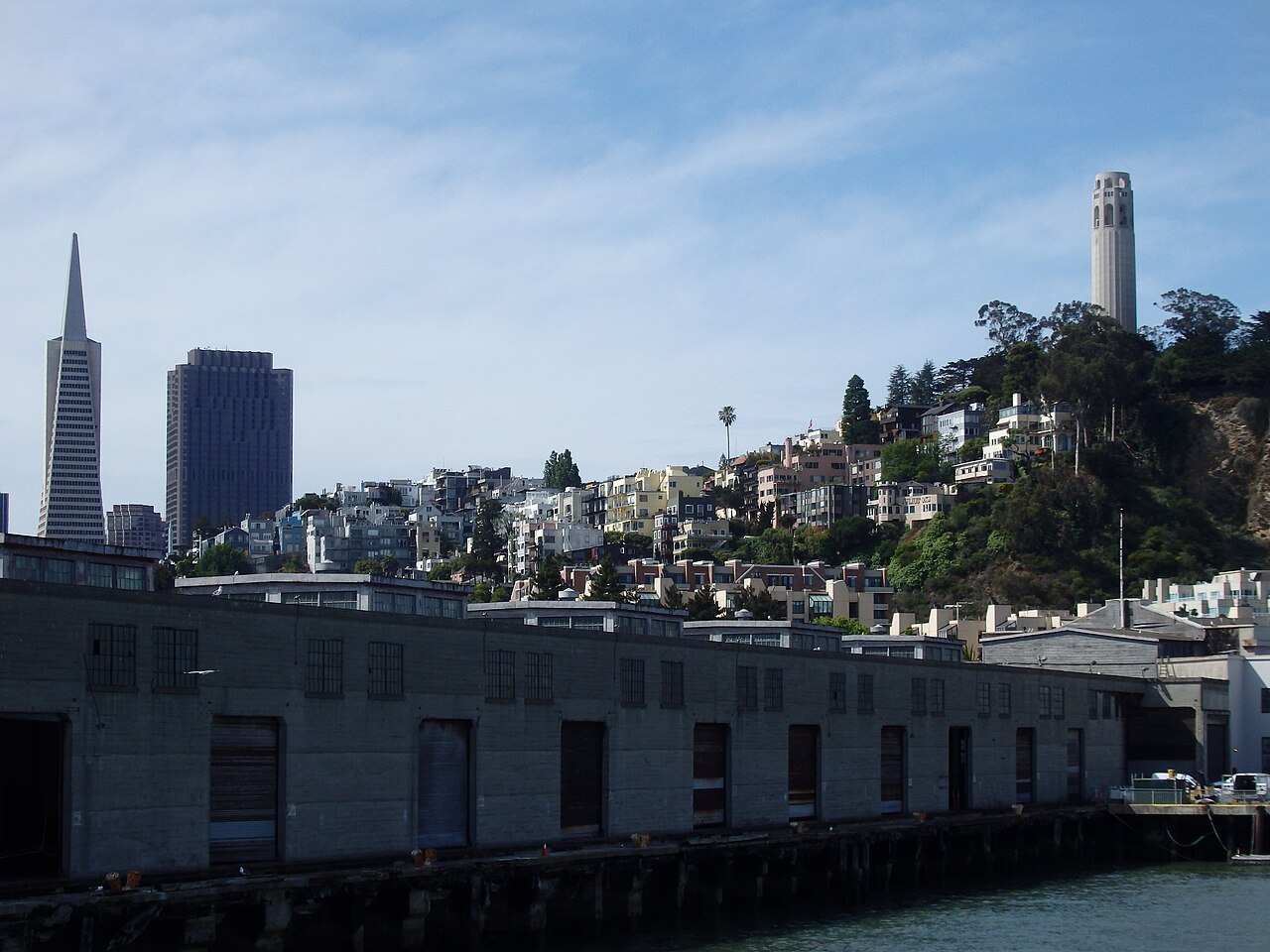
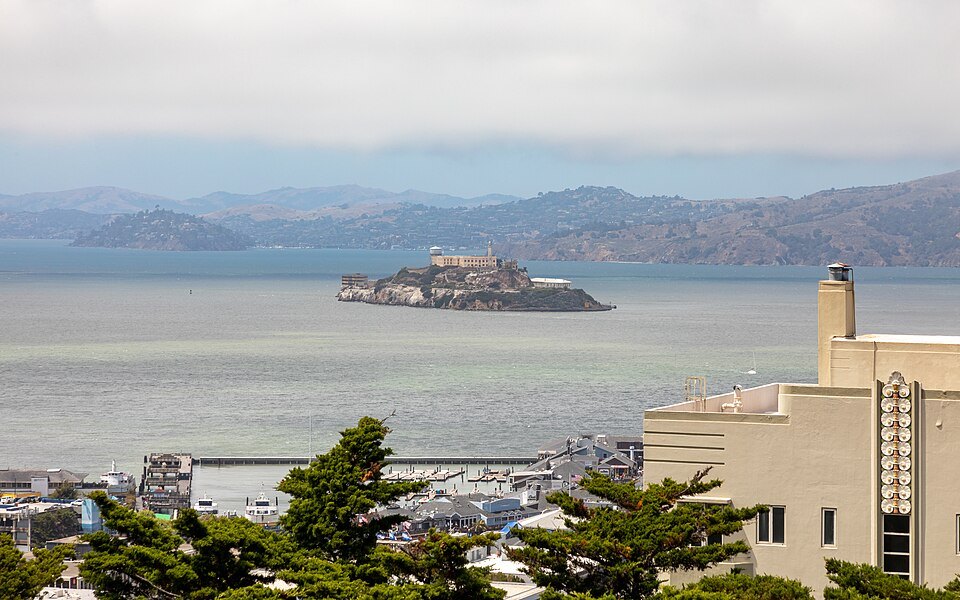
Coit Tower is the slender white column on top of Telegraph Hill, above North Beach and the northern waterfront, and it is one of the landmarks you use to find your way around the city. It rises 210 feet from the summit, and from its viewing deck you see the Bay, both bridges, Alcatraz and the hills of the city in a single turn. Inside, the lobby is painted with some of the most important public murals of the New Deal.
The hill takes its name from its first job. In 1849 a semaphore, a windmill-like signal, was put up here to tell the city below what kind of ship was coming in through the Golden Gate, and an electric telegraph replaced it in 1853. Before that the Spanish and Mexican settlers had called it Loma Alta, the high hill.
Lillie Coit's bequest
The tower was paid for by Lillie Hitchcock Coit, a wealthy and famously unconventional San Franciscan who smoked cigars, wore trousers and gambled long before it was acceptable for women to do any of those things. As a girl of fifteen she saw a volunteer fire company, Knickerbocker Engine Co. No. 5, struggling to haul its engine up Telegraph Hill, threw down her schoolbooks and called on bystanders to help; the company made her its mascot, and she chased fires for the rest of her life.
When she died in 1929 she left a third of her fortune to be spent, in her will's words, on adding to the beauty of the city she had always loved. Two memorials came of it: this tower, and a bronze of three volunteer firemen in Washington Square below. The tower, designed by Arthur Brown Jr. and Henry Temple Howard, was built between 1932 and 1933. Its fluted concrete shaft holds a stair and an elevator in nested cylinders, and a relief of a phoenix, the city's symbol of rising from its fires, is set above the entrance.
The murals
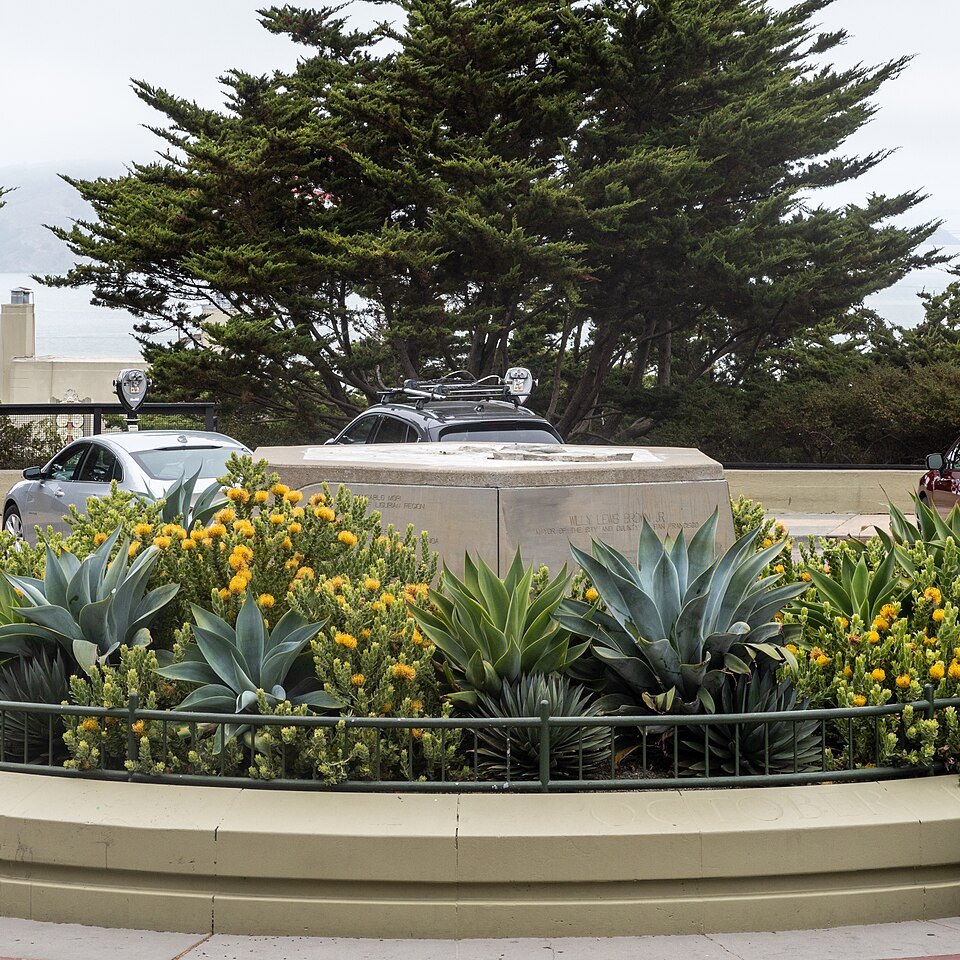
The lobby murals were the pilot project of the Public Works of Art Project, the first of the New Deal programs that paid artists to work. Ralph Stackpole and Bernard Zakheim won the commission in 1933 and led a team of more than twenty artists, among them Victor Arnautoff, Maxine Albro and John Langley Howard, who painted scenes of California life in the style of American Social Realism: farms and factories, city streets, a newsstand, a library, a busy port. Most are true frescoes, painted into wet plaster.
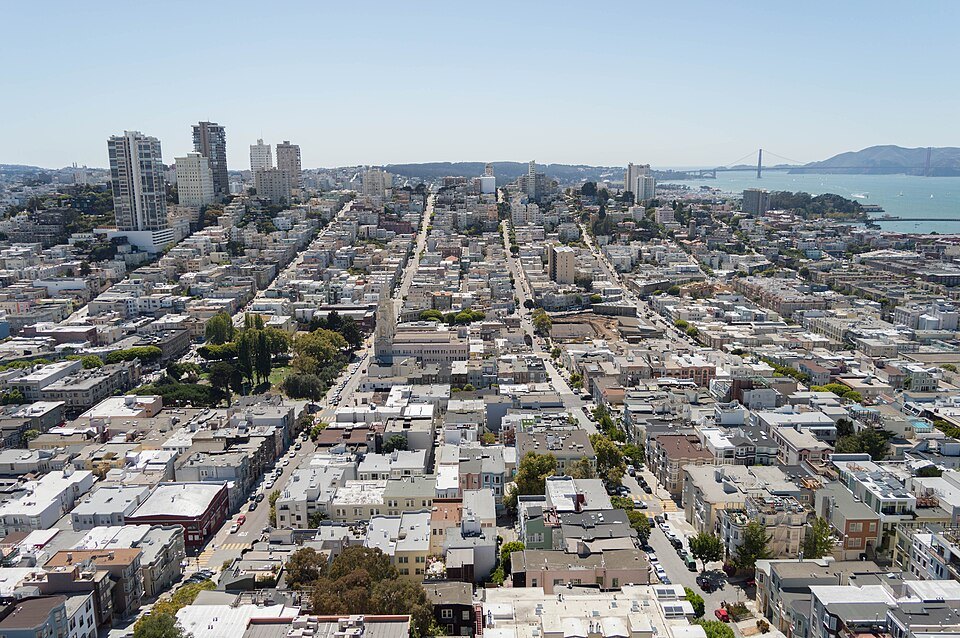
They were controversial from the start. In 1934, with a waterfront strike under way at the foot of the hill, officials and newspapers attacked details in some panels as communist propaganda, among them the banner of a communist newspaper in Howard's industrial scene and a hammer and sickle in a small panel by Clifford Wight. Those two details were painted over, and the tower finally opened to the public on October 12, 1934. The murals have been restored, and in 2012 the city's voters passed a measure requiring the city to pay for their preservation.
What you see
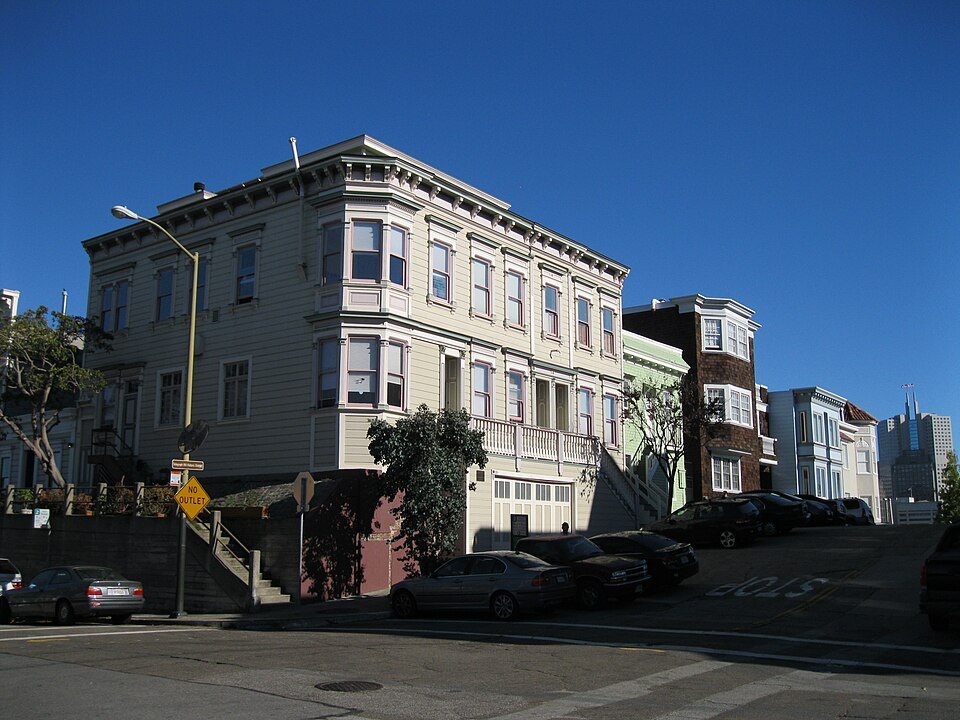
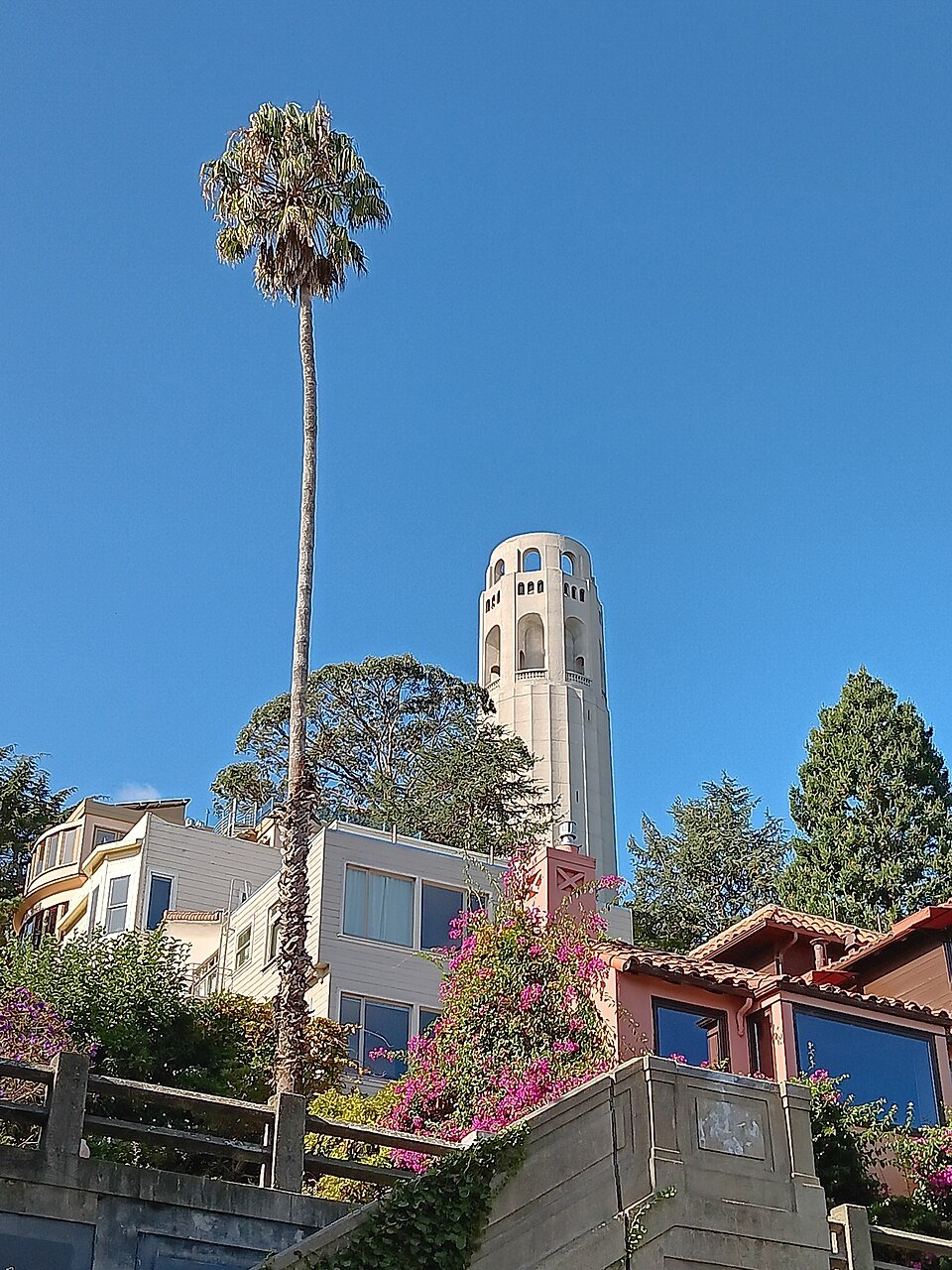
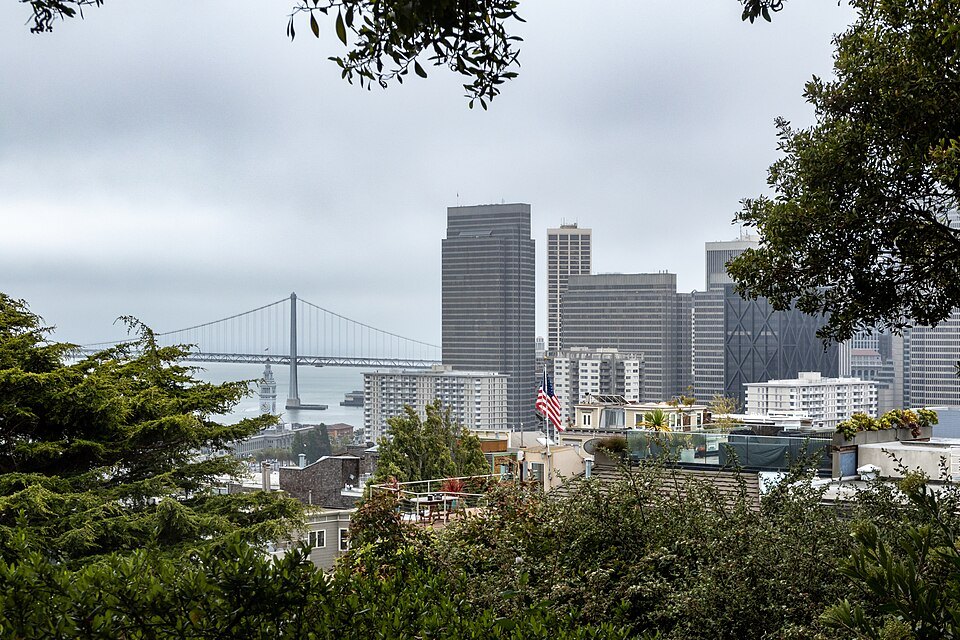
From the parking circle of Pioneer Park the tower looks plain, a fluted cylinder of unpainted concrete with a row of arched openings at the top. Inside the rotunda, the murals wrap around the walls at eye level, so close that you can study each face and shop sign. The elevator carries visitors up to the open viewing deck near the top, whose arches frame the views: the Bay Bridge and the Financial District to the south, Alcatraz and the Golden Gate to the north and west.
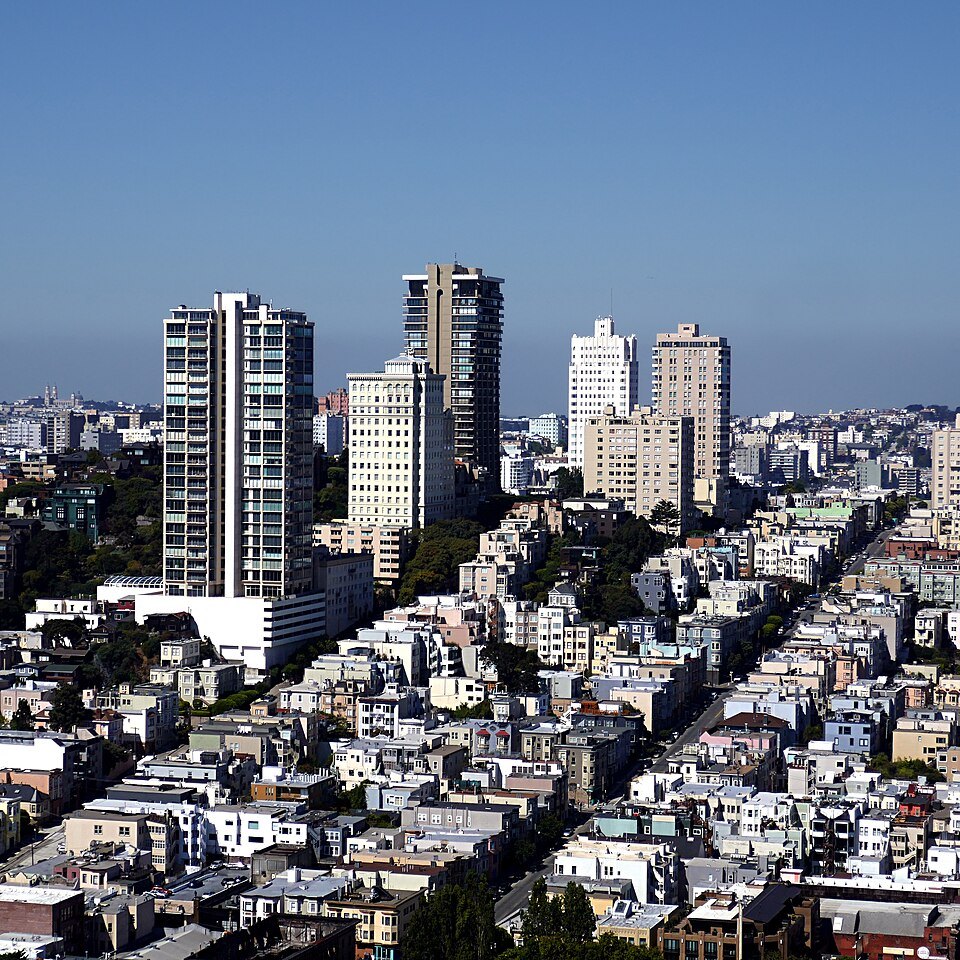
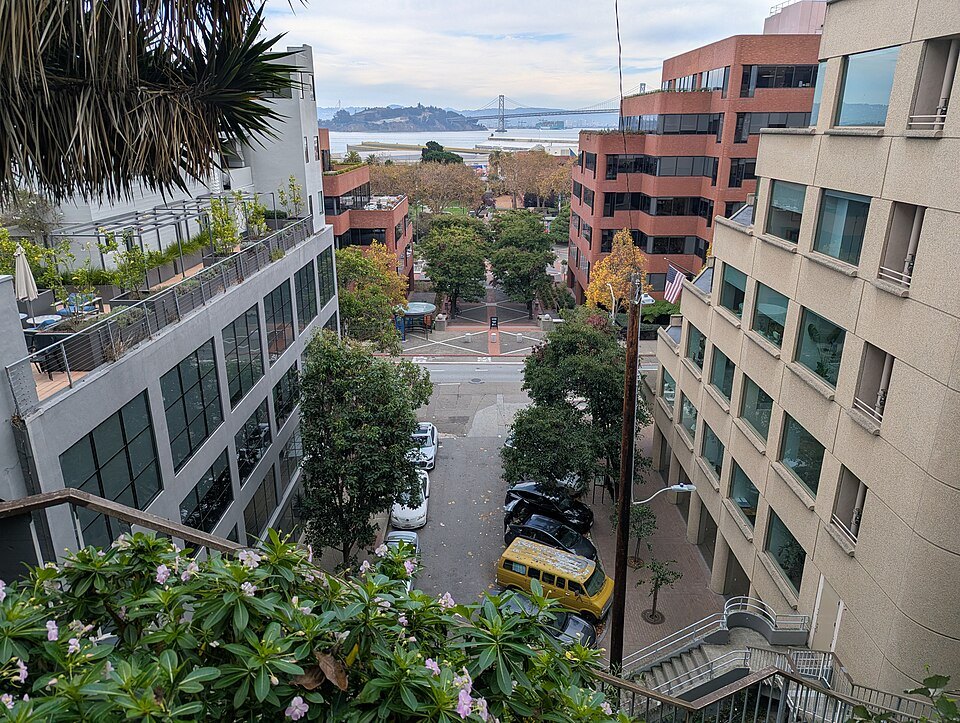
Outside, the eastern face of the hill drops away steeply. Down it run the Filbert Steps, about 400 wooden steps, through the Grace Marchant Garden that a resident began in 1949 and past houses that can be reached only on foot. The hill is also known for its wild parrots, a flock of feral parakeets that made the slope their home.
How to visit
Telegraph Hill is steep from every side; see the hills for the gradients. From North Beach and Washington Square it is a stiff uphill walk of several blocks; Muni's 39 Coit bus, one of its shortest routes, climbs to the tower from the flats below. The Filbert Steps are a beautiful way down to the Embarcadero, and a hard way up. Inside, an elevator in the tower's core carries visitors up toward the viewing deck; anyone who needs step-free access all the way should check the tower's own information before going up.
Plan an hour or more for the murals, the view and the park; the lobby murals can be seen without going to the top. The parking circle on the summit is small and often full, so leave the car below. Combine the tower with Chinatown and North Beach; the homepage walk strings them together, and the where to stay page describes North Beach itself.
Myths and facts
Coit Tower was not built to look like a fire hose nozzle, and it was not dedicated to the city's firefighters. Coit's will left one sum for a memorial to the volunteer firemen, which became the statue in Washington Square, and another to beautify the city, which became the tower; the resemblance to a nozzle is a coincidence the city has enjoyed ever since. Not everyone liked it at first: a local cafe owner fired a pistol at it in protest, complaining that it looked like a silo.
Nearby
- NearbyLombard Street and Russian HillA single block of brick-paved switchbacks on Russian Hill, built in 1922 to tame a 27 percent grade, set in one of the city's oldest and most elegant hilltop neighborhoods.Read the page
- NearbyChinatownTwenty-four blocks between Kearny, Broadway, Powell and Bush, settled from the 1850s, burned in 1906 and rebuilt by its own merchants, with Grant Avenue for visitors and Stockton Street for the neighborhood.Read the page
- NearbyFisherman's Wharf and the Hyde Street PierA working fishing harbor turned the city's most visited waterfront, with a pier of sea lions at one end and a fleet of historic ships at the Hyde Street Pier at the other.Read the page