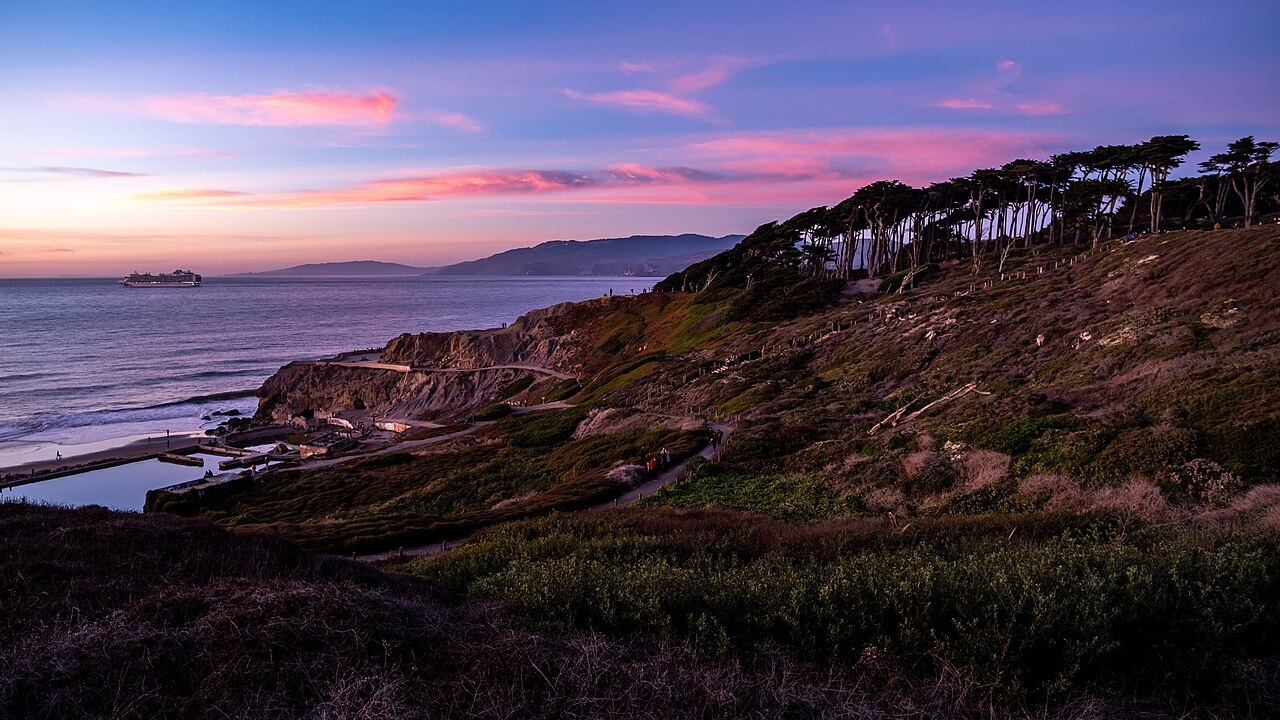
What were the Sutro Baths, and what is left of them?
The story of San Francisco's grandest Victorian bathhouse, its fiery end, and the ruins left at Lands End.
Read on
A resort at the edge of the land
Lands End is the rocky, windswept corner of San Francisco, part of the Golden Gate National Recreation Area, where cliffs, cypress and headlands run between the Sutro district and Lincoln Park. Trails look across the Golden Gate strait to the far shore and down onto wrecks and surf below. Of all the city's corners, this one feels least urban, and holds some of its most atmospheric ruins.
The Yelamu Ohlone lived on this coast before the Spanish arrived in 1776. After the Gold Rush, entrepreneurs built the first Cliff House on the headland as a resort for the wealthy, and by the 1860s a stagecoach ran out from downtown every Sunday along the new Point Lobos toll road.
In the 1880s the millionaire Adolph Sutro, who later served as mayor, built a steam railway from downtown to carry ordinary people out to the ocean for a day's outing. The main trail through Lands End today still follows the old railbed, a gentle grade cut into the hillside above the water.
The Sutro Baths
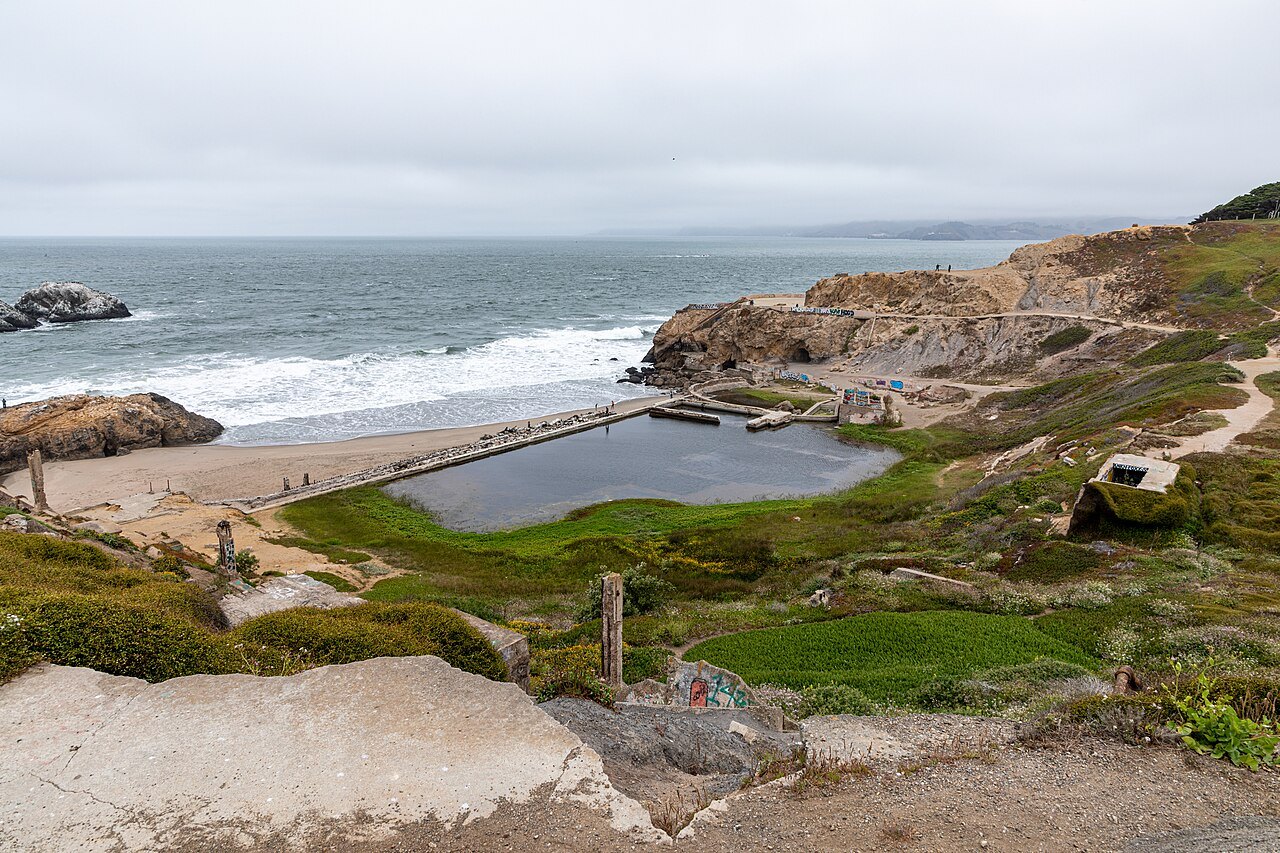
Sutro's greatest project was the baths he built below the Cliff House. The Sutro Baths opened on March 14, 1896, billed as the world's largest indoor swimming pool establishment, a glass palace of saltwater pools filled by the tides through tunnels cut into the headland rock, and it quickly became one of the city's great attractions.
In 1897, a Black man named John Harris sued Sutro after being refused entry because of his race, and won, a landmark case against segregation in public facilities in California. The baths went on to draw large crowds of San Franciscans and visitors for decades before falling into slow decline.
They were also expensive to run. The pools eventually gave way in part to a skating rink, and a later owner closed them in the 1950s, running an aerial tram from the Cliff House to Point Lobos between 1955 and 1966 in a last attempt to keep drawing visitors to the site.
The property was sold for apartments in 1964. While it was being demolished in 1966, the baths burned down; investigators found the fire to be arson, and the project was abandoned. The ruins were left as they stood, and the land later passed into the Golden Gate National Recreation Area, where visitors walk among them today.
What you see today
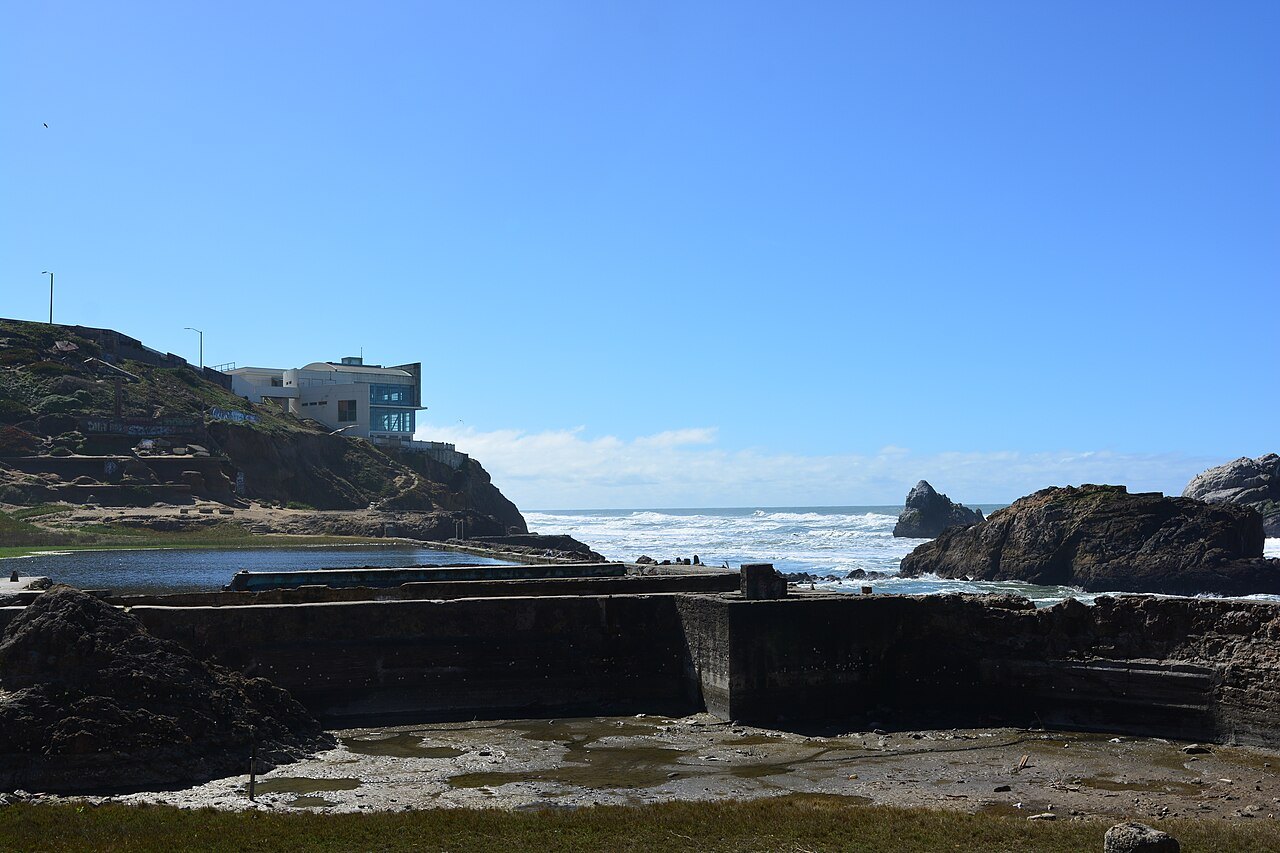
From the parking area above Point Lobos, a path drops down to the ruins: the concrete outlines of the old pools, now filled with rainwater and seawater, along with broken walls, blocked stairways and a tunnel cut through the rock with a deep crevice at its center, where the tide surges through twice a day.
Waves break over the seaward edge of the ruins, and the sound of surf carries up through the tunnel. Above, on the headland, stands the Cliff House, rebuilt several times since 1863, with the old Camera Obscura on its deck still projecting a live image of the ocean onto a table inside a darkened room.
Offshore stand Seal Rocks, the stacks that generations of visitors to the Cliff House have looked out on while the baths below filled and emptied with the tide. Together the ruins, the headland and the rocks form one continuous view down the length of this stretch of coast, often softened by drifting fog.
Along the Coastal Trail
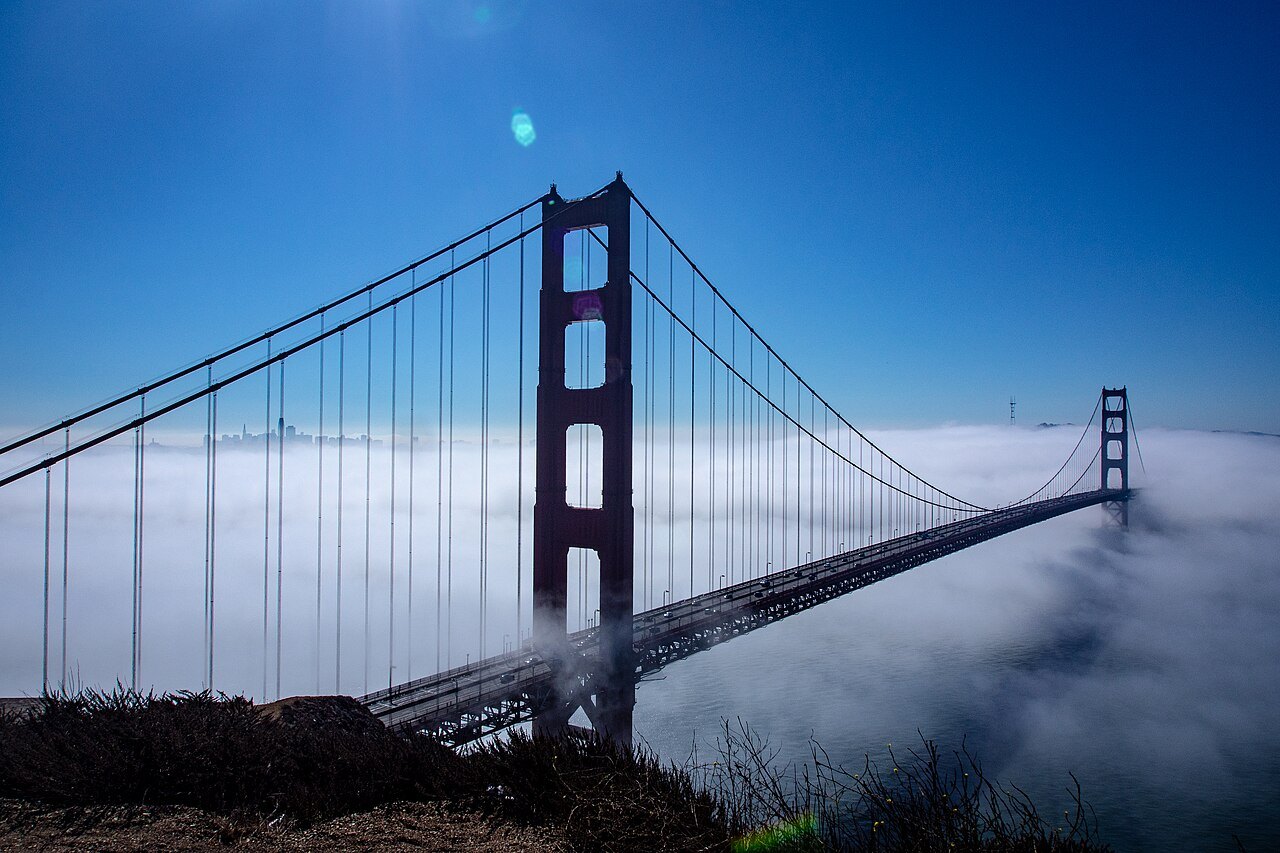
North of the ruins, the Coastal Trail runs along the cliffs through cypress and scrub, with the Golden Gate Bridge appearing and disappearing between the trees as the path bends. A spur leads down to Mile Rock Point and Mile Rock Beach, where the trail grows steeper and narrower still.
At low tide, visitors can make out the remains of some of the many ships that ran aground on this exposed shore over the decades. At the southern end of the trail, a memorial to the cruiser USS San Francisco remembers the ship and its crew, a reminder of the hazards this coastline has long posed to shipping.
The trail offers wide views north across the strait to the headlands of the far shore, and down onto the water where currents run fast between the cliffs. Many visitors combine the walk with a stop at the Lands End Lookout visitor center near the start of this route down toward the ruins below.
The Legion of Honor
In Lincoln Park, just inland from the trail, stands the Legion of Honor, one of the city's two fine arts museums along with the de Young in Golden Gate Park. Its building is a full-scale replica of the French Pavilion at the 1915 exposition, itself a three-quarter-scale version of the Palais de la Légion d'Honneur in Paris.
Alma de Bretteville Spreckels gave the museum to the city as a memorial to California soldiers killed in the First World War; it opened on Armistice Day, November 11, 1924. The land it stands on was once the city's Golden Gate Cemetery, which held some twenty-nine thousand graves before it closed.
The museum sits close enough to the Coastal Trail that many visitors fold it into the same outing, walking down to the ruins before or after a visit inside. For an overview of other museums and landmarks across the city, see sights, which covers the main attractions beyond Lands End.
How to visit
Start at the Lands End Lookout visitor center, which opened in 2012 above the site of the baths, or begin instead at the Legion of Honor. The Coastal Trail is step-free and wheelchair-accessible as far as the Mile Rock Overlook, and open to bikes as far as the Eagles Point steps.
Beyond those points, the trail and the paths down to the ruins and the beach involve steep stairs and uneven ground; see the hills for more on how the city's slopes affect walking routes. Walking from the ruins to Eagles Point and back takes about an hour, longer with a stop at the Legion.

This is the foggiest, windiest corner of the city, so bring a warm layer even in summer; see when to come for more on the city's weather patterns. Stay on the marked trails, since the cliffs are unstable and the surf is powerful; keep off the rocks at the water's edge and out of the sea itself.
Muni buses reach the Legion of Honor and the Cliff House area; check routes and schedules with Muni before setting out, as described at getting around. Golden Gate Park and Ocean Beach begin just to the south, and the Presidio lies just to the north, making it easy to combine a Lands End visit with either.
Myths and facts
The Sutro Baths did not fall into ruin slowly: they were already being demolished for an apartment project when they burned in 1966, and the developers then abandoned the site rather than rebuild on it. The ruins visitors see today are what remained after that fire and abandonment, left largely untouched since.
The Cliff House on the headland now is not the original building. In 1896, Sutro replaced the first Cliff House with a seven-story Victorian chateau nicknamed the Gingerbread Palace, which survived the 1906 earthquake only to burn to the ground in September 1907; the present building is a later, plainer replacement.
A popular story holds that the first Cliff House was built in 1858 from the lumber of a wrecked ship, but no historical evidence supports it. And the tunnels cut through the rock at Point Lobos are not natural caves; they are the channels Sutro had built to carry ocean water into the baths.
More from the journal
- The SightsWhat survives of the 1906 earthquake in San Francisco?The earthquake and fire of April 1906 destroyed most of the city. Here is what came through, what was rebuilt in its place, and where you can still see the traces, from Mission Dolores to the Portals of the Past.Read the piece
- When to ComeWhy is San Francisco so cold and foggy in summer?How the cold Pacific, the hot inland valleys and the gap of the Golden Gate make San Francisco's summer fog, why it comes and goes each day, where in the city it is thinnest, and how to plan around it.Read the piece
- The Presidio and Crissy FieldWhat can you do at the Presidio's Tunnel Tops and Crissy Field?A guide to the Presidio's bayside park and restored shoreline, from Tunnel Tops down to Crissy Field and the Wave Organ.Read the piece