What survives of the 1906 earthquake in San Francisco?
The earthquake and fire of April 1906 destroyed most of the city. Here is what came through, what was rebuilt in its place, and where you can still see the traces, from Mission Dolores to the Portals of the Past.
Read on
The short answer
Very little of the old city, but more than most visitors expect. The earthquake of April 18, 1906, and the fires that burned for days afterward destroyed more than 80 percent of San Francisco and killed more than 3,000 people, the deadliest earthquake in the history of the United States. Most of what you see in the center of the city was built after it.
What survived is mostly at the edges of the fire: the adobe chapel of Mission Dolores, the Ferry Building on the waterfront, the Victorian houses of the Haight, and a few walls and shells downtown. What came after, City Hall, the rebuilt Chinatown and the Palace of Fine Arts, is the story of the city's recovery.
What happened
The earthquake struck before dawn on Wednesday, April 18, 1906. It had a magnitude of seven point nine, and a maximum intensity rated extreme, and it shook the coast of Northern California from Eureka in the north to the Salinas Valley in the south. In San Francisco, the shaking broke water mains and started fires, and the fires, not the shaking, did most of the damage: it has been estimated that between 80 and 95 percent of the destruction came from the fires.
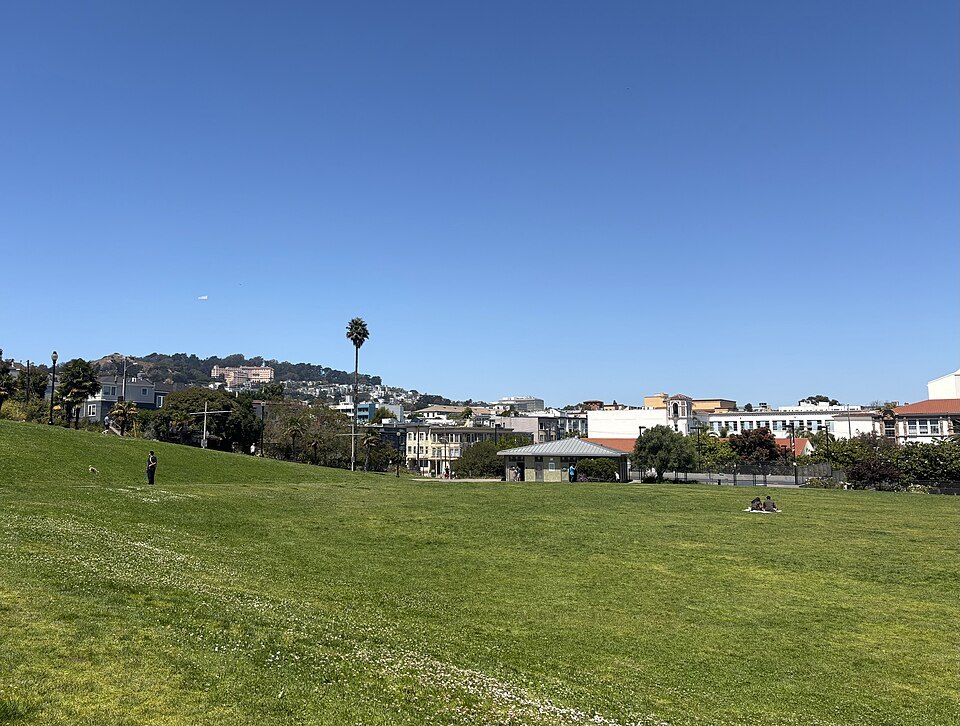
With the water mains broken, the firefighters had little to fight with. The Army, called in from the Presidio, dynamited buildings to make firebreaks, and the dynamited buildings themselves often caught fire. The Great Fire ended on April 21. Newspapers described Golden Gate Park, the Presidio, the Panhandle and the beaches covered with makeshift tents; more than forty thousand people camped in Golden Gate Park alone.
Mission Dolores
The oldest building in the city came through. The adobe chapel of Mission Dolores, completed in 1791, with walls four feet thick, survived both the earthquake and the fire. The brick parish church built beside it in 1876 did not; it was destroyed, and the basilica that stands next to the chapel today was begun in 1913 to replace it. Standing in the old chapel, you are in one of the very few rooms in San Francisco that looks as it did before 1906.
The Ferry Building and the waterfront
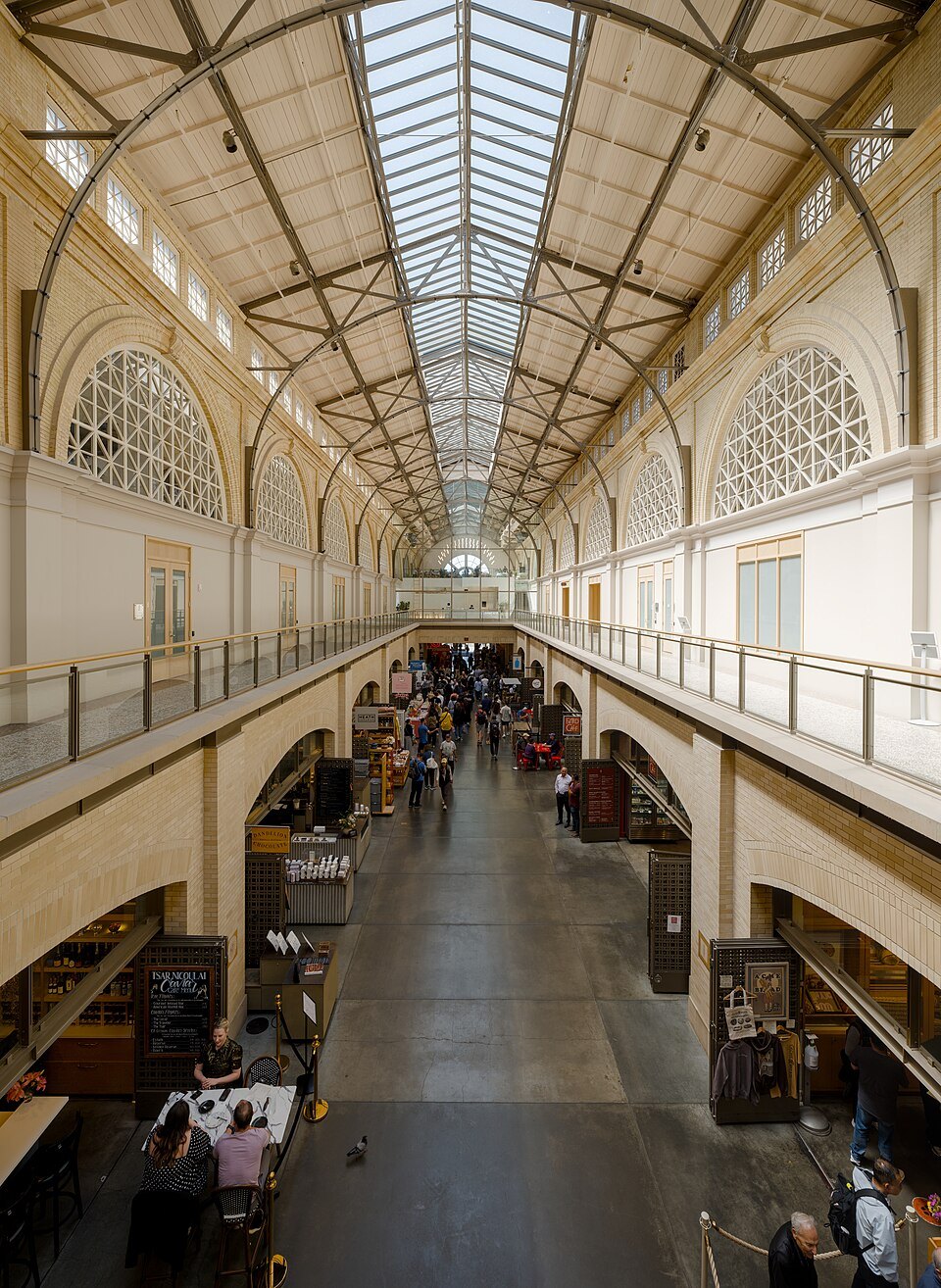
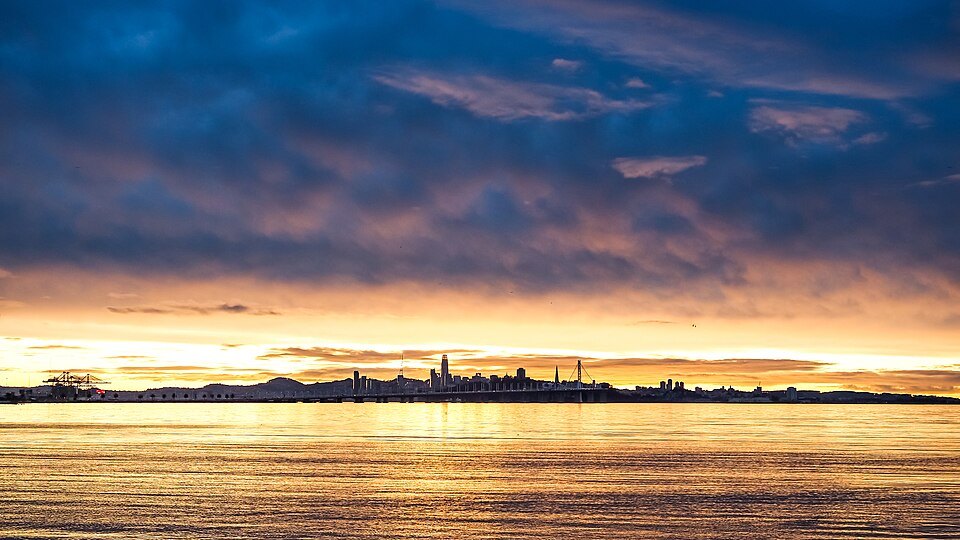
The Ferry Building, completed in 1898 at the foot of Market Street, survived the disaster, and its clock tower stayed on the skyline through the years that followed; its original clock of 1898 still keeps the time. In the weeks that followed, many of the homeless, among them most of Chinatown's residents, took refuge across the bay in Oakland.
A short walk up Market Street, Lotta's Fountain served as a meeting point where people searched for their families after the disaster. Since 1915 the city has gathered there every April 18 to remember it, for many years with the last of the survivors.
The houses that escaped
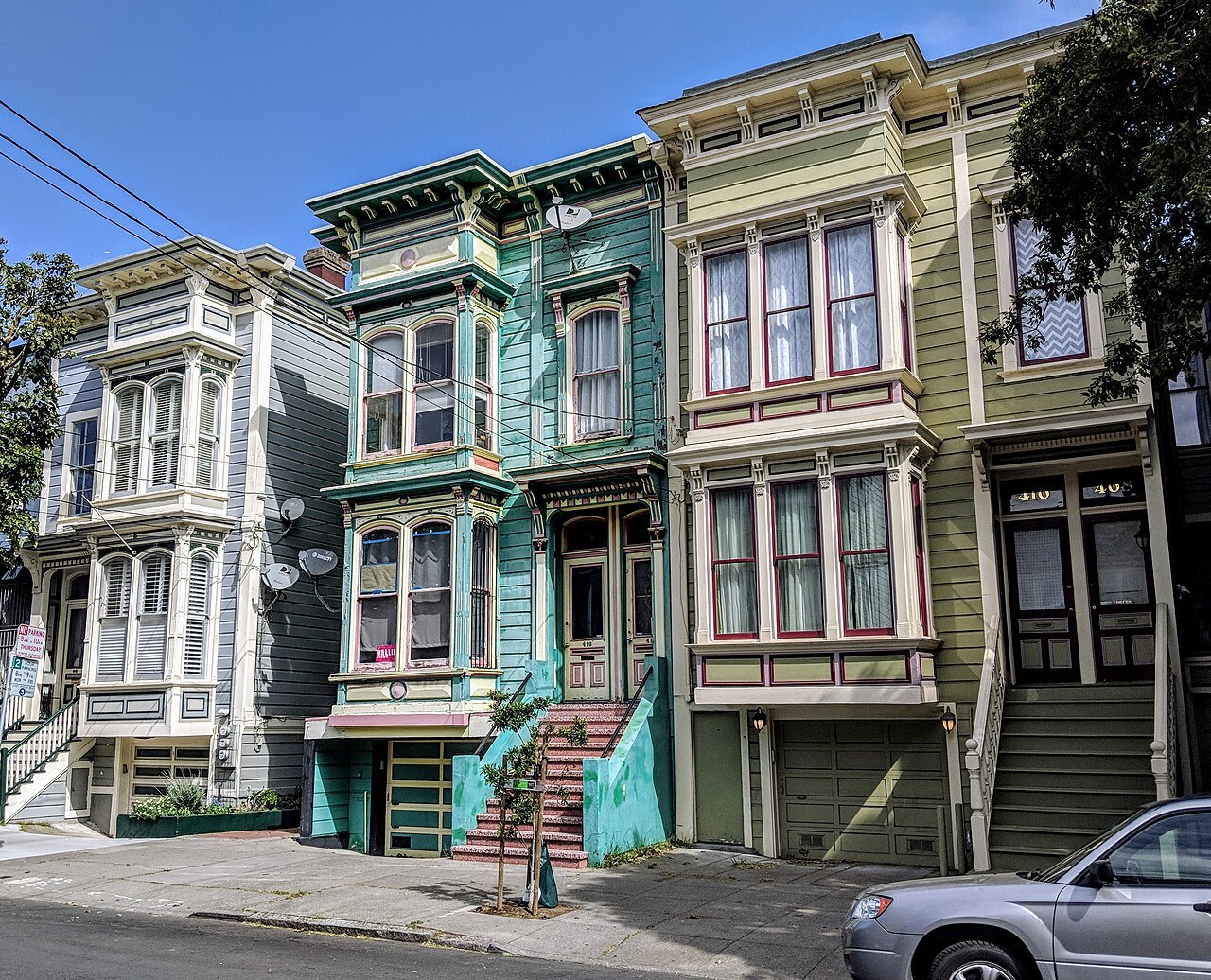
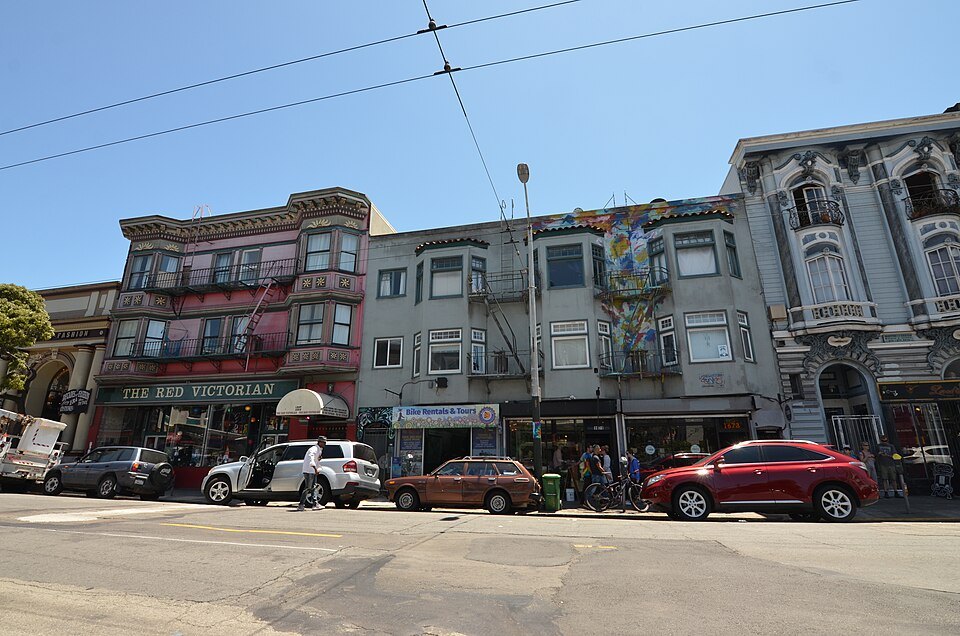
West of the fire's edge, whole streets of wooden Victorian houses survived. Haight-Ashbury was one of the few neighborhoods spared by the fires, which is why its ornate houses from the late nineteenth century are still intact, and why the Haight, rather than the old center, is where to see what a San Francisco street looked like before 1906. The same rows of painted wooden houses, with their bay windows and turned columns, also give the Painted Ladies their look.
For those left homeless, the city built small wooden cottages, designed by John McLaren, the gardener of Golden Gate Park, and grouped in eleven camps that at their peak housed more than sixteen thousand people. By 1907 most had moved out, and the last camp closed in 1908, but some families took their cottages with them as homes, and a few still survive, scattered across the western side of the city; others became garages, sheds and shops.
Downtown and Nob Hill
Downtown, almost everything burned. Old St. Mary's, the cathedral on California Street in Chinatown, survived the earthquake only to be gutted by the fire a day later; only its brick outer walls and bell tower remained, and it was rebuilt within them by 1909. On Nob Hill, the mansions of the railroad barons were destroyed, leaving only the granite walls around the Stanford, Crocker, Huntington and Hopkins houses. The Flood Mansion and the newly finished Fairmont Hotel were gutted and rebuilt; the mansion is now the Pacific-Union Club.
Among the ruins, the Towne mansion's marble portico was left standing. In 1909 its columns and lintel were moved to the shore of Lloyd Lake in Golden Gate Park, where, as the Portals of the Past, they became a monument to the city's grief and its endurance.
Chinatown rebuilt
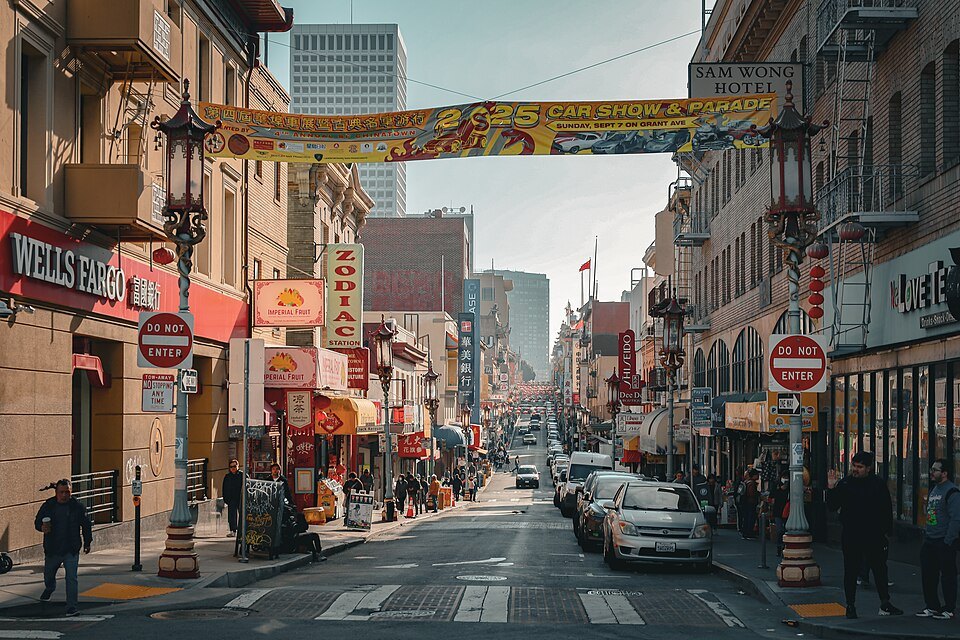
Chinatown was completely destroyed. In the weeks after the fire, city leaders set up a committee to move the Chinese community out of the old downtown altogether, and many of its residents had taken refuge across the bay. The community refused to go, and by July 1906 the committee admitted it could not drive them out. Businesses reopened within weeks, and rebuilding began that autumn. The city's plan to move Chinatown failed, but the idea of rebuilding it in an orientalized style, shaped as much by what outsiders expected as by Chinese tradition, took hold. The Chinatown you walk through today, with its ornamented roofs and facades, is that rebuilt district.
The city that rose after
The rebuilding produced some of San Francisco's grandest sights. The old City Hall, two blocks from the present one, was destroyed; the new City Hall, with its great Beaux-Arts dome, was completed in 1915. The same year the city staged the Panama–Pacific International Exposition, officially to celebrate the opening of the Panama Canal but widely seen as a showcase of its recovery. Its one survivor on its own site is the Palace of Fine Arts. Daniel Burnham's grand plan of 1905 for a new Civic Center had been shelved after the disaster, but the new City Hall and the buildings around it gave the city a civic heart all the same.
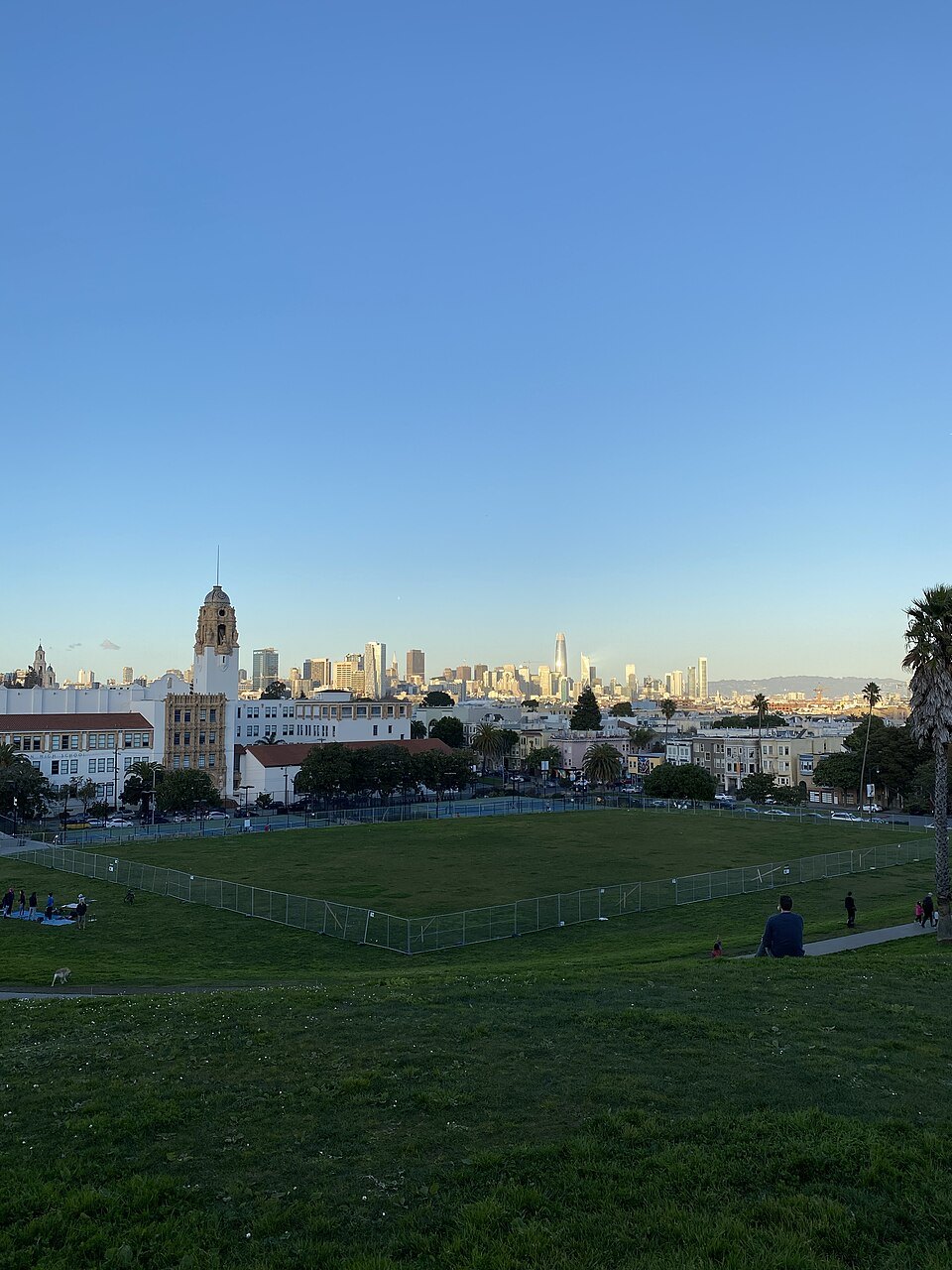
Walk the city with 1906 in mind and it reads differently: a line of old wooden houses in the west, a rebuilt center in the east, and, here and there, a chapel, a clock tower or a pair of columns that came through.
More from the journal
- The Cable CarsHow do you ride the cable cars in San Francisco?The three lines and where they go, where to board to skip the longest queue, how to pay before you ride, how to stand on the running board safely, and what to see at the Cable Car Museum.Read the piece
- The Golden Gate Bridge and Fort PointCan you walk across the Golden Gate Bridge?Yes, on the eastern walkway, which faces the city. Which walkway is for whom, how long the crossing is, where to start and finish, what to wear for the wind, and what to look for on the way.Read the piece
- Getting HereHow do you get from SFO to downtown San Francisco?BART from the terminal to Market Street, the free AirTrain that links the gates to the station, how to pay, and when a taxi, ride-hail or Caltrain makes more sense.Read the piece