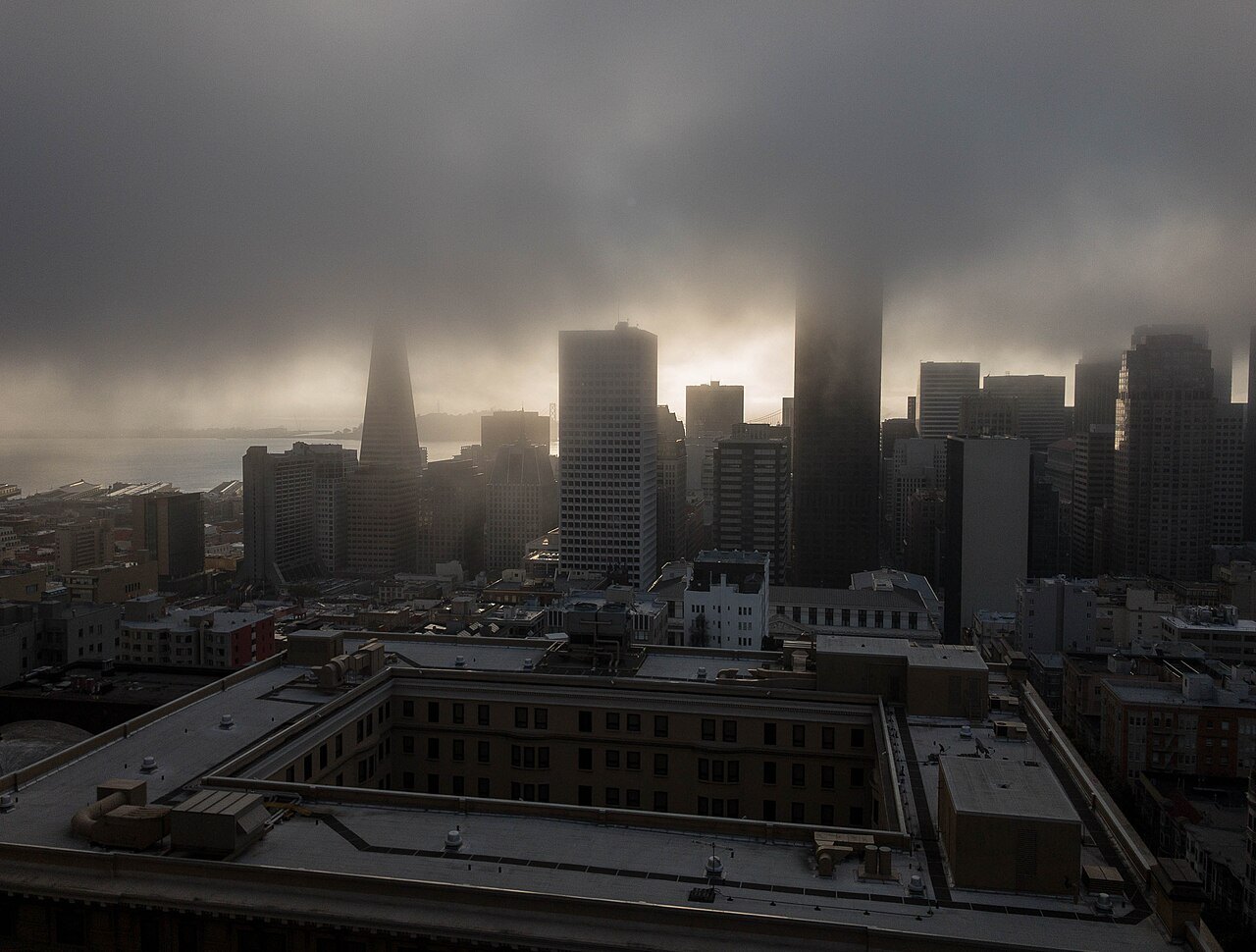
Why is San Francisco so cold and foggy in summer?
How the cold Pacific, the hot inland valleys and the gap of the Golden Gate make San Francisco's summer fog, why it comes and goes each day, where in the city it is thinnest, and how to plan around it.
Read on
The short answer
Because the ocean off San Francisco is cold, the valleys inland are hot, and the city stands beside the one wide gap in the coastal hills. In summer, heat over California's interior draws cool, damp ocean air through the Golden Gate like a draft through an open door, and that air carries the fog with it. The result is a city with the coolest summers of any major American city: among them, San Francisco has the lowest average daily temperatures for June, July and August.
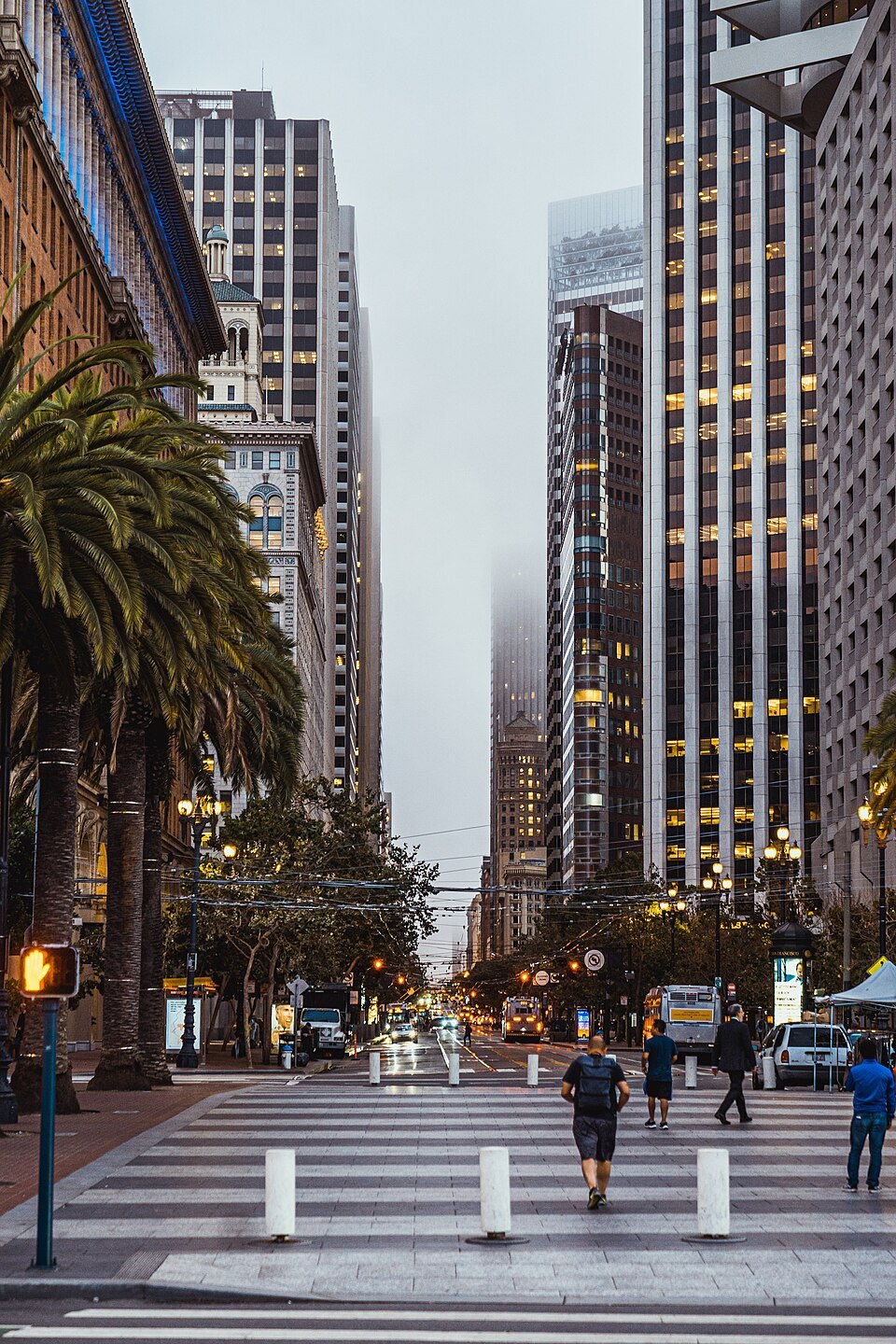
The fix for visitors is simple. Pack layers, expect the fog to come and go, and plan your views for the clear part of the day.
How the fog forms
Along the California coast the ocean current flows down from the North Pacific, and it is cold; strong upwelling of deeper water along the shore and around the headlands cools it further, so the sea stays roughly between the low fifties and the high fifties Fahrenheit all year. Moist air that has crossed hundreds or thousands of miles of open Pacific forms a marine layer near the sea surface. When that layer meets the cold coastal water it cools to its dew point, and the water vapor condenses into droplets around tiny particles, mostly salt from the surf and spray. That is the fog.
On its own, the marine layer would lie along the coast and offshore. What drives it into the city is the heat inland.
The door in the hills
In summer, temperatures in California's Central Valley can climb above a hundred degrees. The hot air rises and lowers the pressure inland, and the difference between the cool coast and the hot interior turns the usual northwest wind toward the land, pushing the marine layer and its clouds onshore through any gap in the Coast Ranges.
The largest gap is the Golden Gate, the strait at the entrance to San Francisco Bay, which opens through the bay toward the valleys beyond. San Francisco stands right beside it, and so it catches the fog and the wind that pour through. Even when there is no cloud, the cool, fast-moving air can chill the city in midsummer, which is why it has been called naturally air-conditioned.
A daily rhythm
On a normal summer day the pattern repeats. Morning sunlight warms the ground, which warms the marine layer over the land and stirs it up, so the fog evaporates and clears back toward the coast, usually by midday. By mid-afternoon the valleys inland have heated up, the pressure falls there, and the onshore wind strengthens. By late afternoon the wind has cooled the marine layer again, and the fog that waited offshore streams back in over the ocean beaches, through the Golden Gate and across the bay.
Sometimes the fog does not clear at all for several days, when a weak low above the marine layer deepens it. These gray spells have their own local nicknames: May Gray, June Gloom, No Sky July and Fogust.
Where it is thinnest
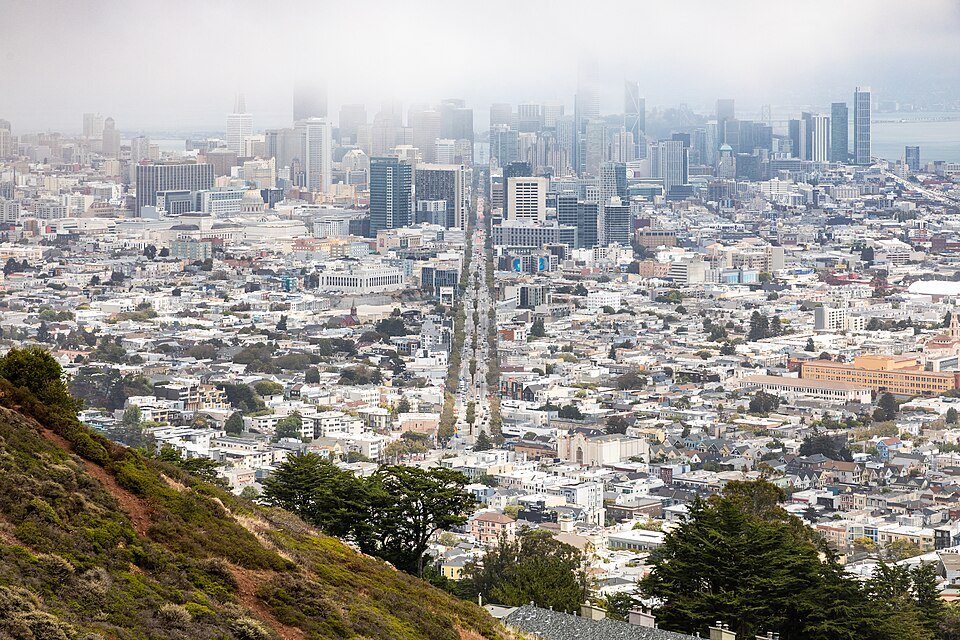
The fog does not cover the whole city equally. Twin Peaks, Mount Davidson and Mount Sutro form a ridge down the middle of San Francisco, and they act as a divide: their west-facing slopes and the neighborhoods beyond them, the Sunset and the Richmond, often get the fog and strong winds, while the eastern slopes and neighborhoods receive more sun and warmth. The Mission, in its valley east of the peaks, is often the warmest and sunniest part of the city.
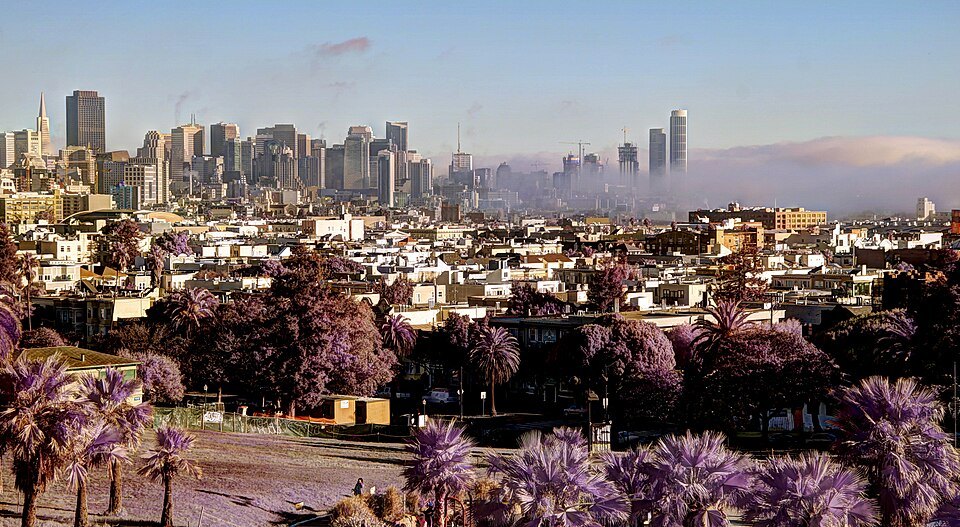
So on a foggy summer day, the waterfront, downtown and the Mission may be bright while Golden Gate Park, Lands End and the bridge are gray. Plan accordingly; see the hills.
September and October
The fog is less pronounced in the late summer and early fall, when the inland heat eases. That is why September, on average, is San Francisco's warmest month, and October is warmer than July, especially in the daytime. Heat waves come then too: when high pressure inland pushes the marine layer out to sea, the city can bake for a few days, and the highest temperature recorded downtown came on September 1, 2017. See when to come.
Is the fog disappearing?
Research published in 2010 found that summertime fog along the California coast had decreased by about a third between 1950 and 2010, and the season has shortened, running from June to September rather than May to October, with about three fewer foggy hours a day. The decline has been attributed to climate change, and it matters beyond the city: the coastal redwoods and the farms of valleys such as the Napa and the Salinas depend on the fog's moisture.
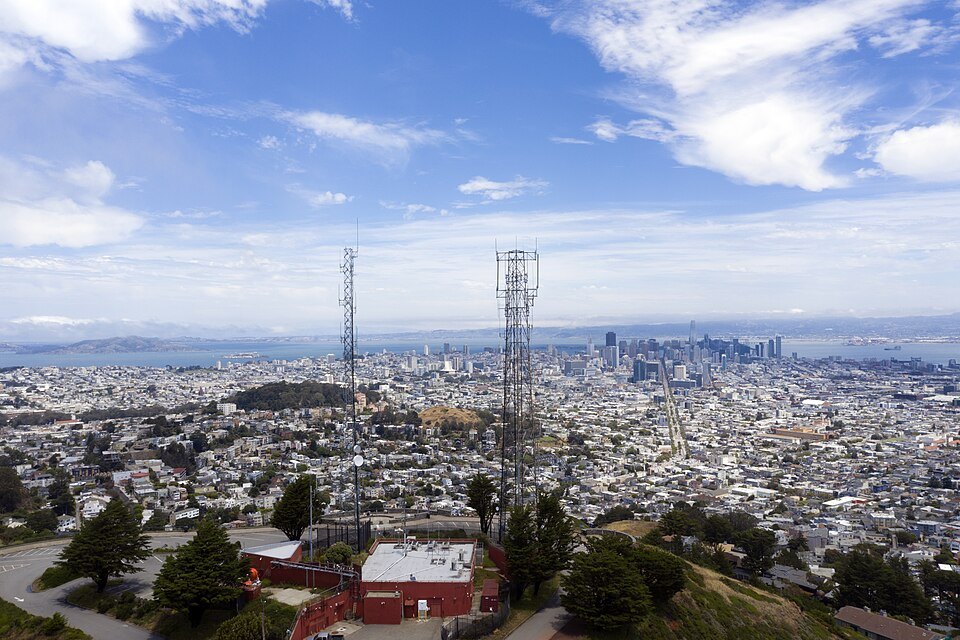
For visitors, it means that summer can be clearer than its reputation, but the rhythm of the afternoon fog still holds on most days.
Fog and the ships
For sailors the fog has always been more than a nuisance. In 1901 the steamer City of Rio de Janeiro struck a reef at the entrance to the bay in thick fog, and 128 people died. In 2007 the container ship Cosco Busan hit a tower of the Bay Bridge in fog, spilling oil that closed beaches, killed wildlife and stopped commercial fishing in the bay for a time. The foghorns that sound across the water on gray days are part of the same story, and on the bridge walkway or the ferries you will hear them before you see anything at all.
What to pack and when to look
Dress in layers every day, whatever the forecast at your hotel, and keep a warm jacket in your bag: the difference between a sheltered street and the bridge walkway on the same afternoon can feel like a change of season. Plan the great views, from Twin Peaks, Coit Tower and the Golden Gate Bridge, for the morning or the clearest day, and keep the foggy afternoons for museums and neighborhoods.
And give the fog its due. Watching it pour through the Golden Gate and over the bridge's towers is one of the great sights of the city, and writers from Jack Kerouac to Herb Caen, and film-makers from Alfred Hitchcock on, have made it part of San Francisco's image. Locals have even given it a name, Karl, though many long-time residents loathe the nickname.
More from the journal
- The Cable CarsHow do you ride the cable cars in San Francisco?The three lines and where they go, where to board to skip the longest queue, how to pay before you ride, how to stand on the running board safely, and what to see at the Cable Car Museum.Read the piece
- The Golden Gate Bridge and Fort PointCan you walk across the Golden Gate Bridge?Yes, on the eastern walkway, which faces the city. Which walkway is for whom, how long the crossing is, where to start and finish, what to wear for the wind, and what to look for on the way.Read the piece
- Getting HereHow do you get from SFO to downtown San Francisco?BART from the terminal to Market Street, the free AirTrain that links the gates to the station, how to pay, and when a taxi, ride-hail or Caltrain makes more sense.Read the piece