Home · Sights · SFMOMA and Yerba Buena
SFMOMA and Yerba Buena
Level
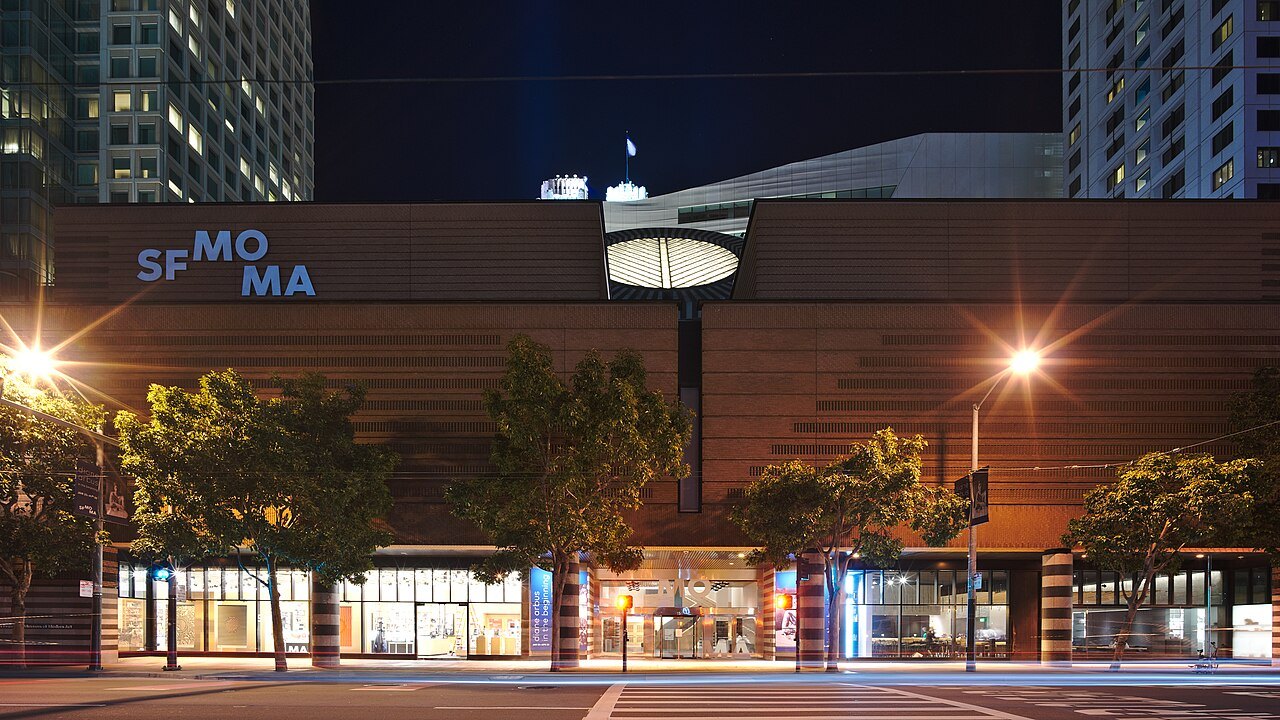
- 1The Botta buildingA near-windowless striped brick front of 1995 with a sliced, black-and-white cylinder rising from its center.
- 2The oculusThe 130-foot elliptical skylight over the central well, crossed high up by a narrow bridge.
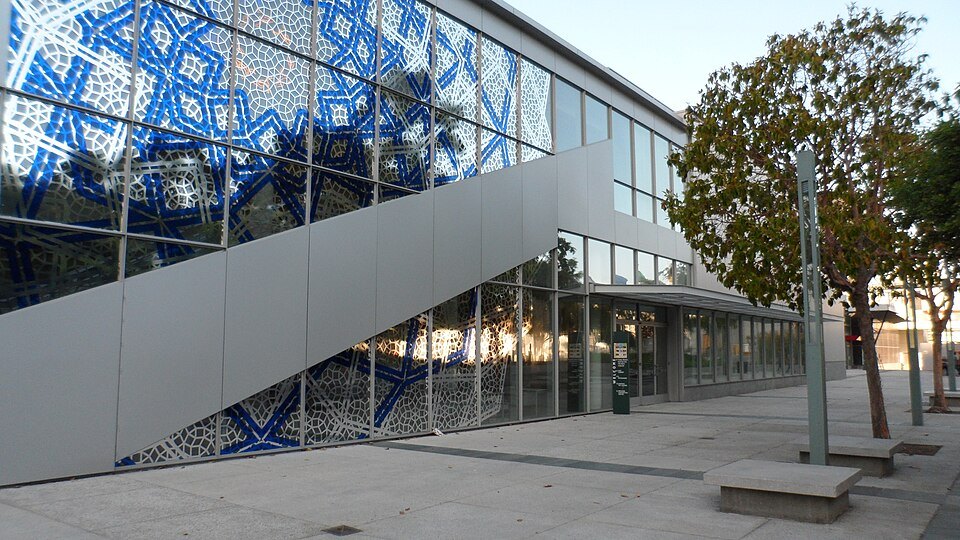
- 3The Snøhetta extensionA tall white wing of 2016 behind the old building, its facade rippling like water or fog.
- 4The living wallA large vertical garden of native plants on the third floor, said to be the biggest public living wall in San Francisco.
- 5The ground-floor galleryA large, free-access gallery facing Howard Street, open to anyone walking by.
- 6Yerba Buena GardensTwo blocks of lawns, gardens and a memorial to Martin Luther King Jr. across Third Street.
Reading the place
Why it matters
SFMOMA, the San Francisco Museum of Modern Art, was the first museum on the West Coast devoted solely to twentieth-century art, and it is now one of the largest museums of modern and contemporary art in the world, with more than 33,000 works of painting, sculpture, photography, architecture, design and media art and some 170,000 square feet of gallery space. It is also one of the city's most interesting pieces of architecture, two landmark buildings joined into one.
Around it, the Yerba Buena district, once a stretch of cheap land and warehouses south of Market Street, has become the city's arts quarter, with gardens, galleries, theaters and the Moscone convention center.
A museum with a long memory
The museum was founded in 1935, as the San Francisco Museum of Art, by its first director Grace L. McCann Morley, and for sixty years it rented the fourth floor of the Veterans Building in the Civic Center. A gift from the collector Albert M. Bender, including Diego Rivera's The Flower Carrier of 1935, founded its collection. It was among the first museums to collect photography as an art form, from 1936; it gave Jackson Pollock his first solo museum exhibition in 1945; and it added the word Modern to its name in 1975.
In 1995 it moved to its own building in SoMa, designed by the Swiss architect Mario Botta. In 2009 it took into its care the contemporary art collection of Doris and Donald Fisher, the founders of Gap, some 1,100 works lent to the museum for a hundred years, and to show them it closed in 2013 for a great expansion by the architects Snøhetta, reopening on May 14, 2016, with more than twice the gallery space.
The buildings
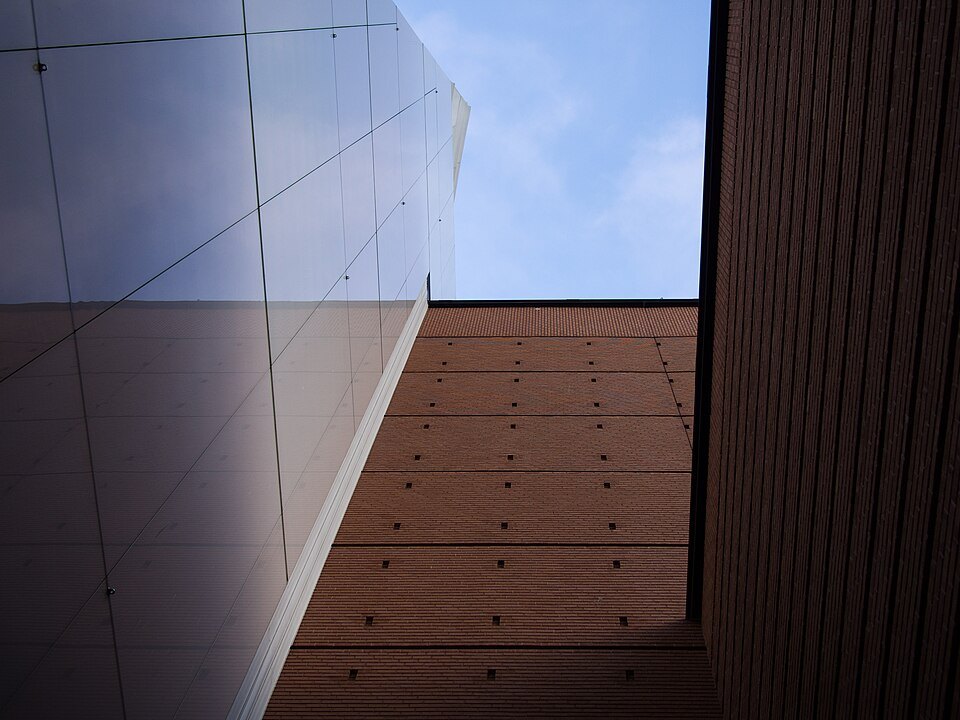
From Third Street you see Botta's building first: a nearly windowless front of striped red brick, stepped back in tiers, with a great cylinder of black-and-white striped stone rising from its center, sliced at an angle. At its top is the museum's trademark, a 130-foot-high elliptical skylight, the oculus, that floods the central atrium with light. High inside the well, a narrow bridge crosses under the skylight.
Behind it rises Snøhetta's extension, taller and white, clad in panels of fiber-reinforced plastic that ripple across its surface; when it opened it was the largest use of composite materials in American architecture. Inside, the old and new buildings join into one sequence of galleries, terraces and sculpture gardens, with a living wall of native plants on the third floor and views over the rooftops of SoMa.
What you see
The collection ranges across the whole of modern art. Among the names on its walls are Henri Matisse, whose work filled the museum's second-year exhibition, Diego Rivera and Frida Kahlo, Piet Mondrian, René Magritte and Marcel Duchamp, whose Fountain the museum acquired in the version of 1964. The American Pop art gift of Harry and Mary Margaret Anderson brought Andy Warhol, Roy Lichtenstein and Robert Rauschenberg, and the Fisher Collection added Alexander Calder, Gerhard Richter, Agnes Martin, Ellsworth Kelly and Richard Serra, among many others. Photography is one of its great strengths.
On the ground floor, a large gallery facing Howard Street is free to enter, so you can see some of the collection without a ticket.
Yerba Buena Gardens
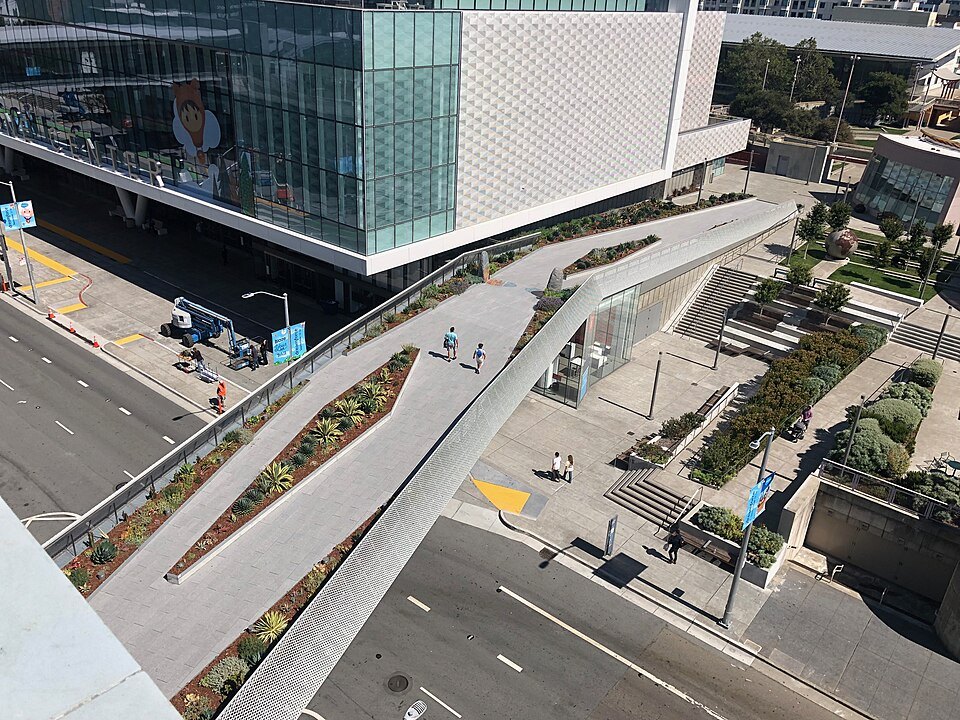
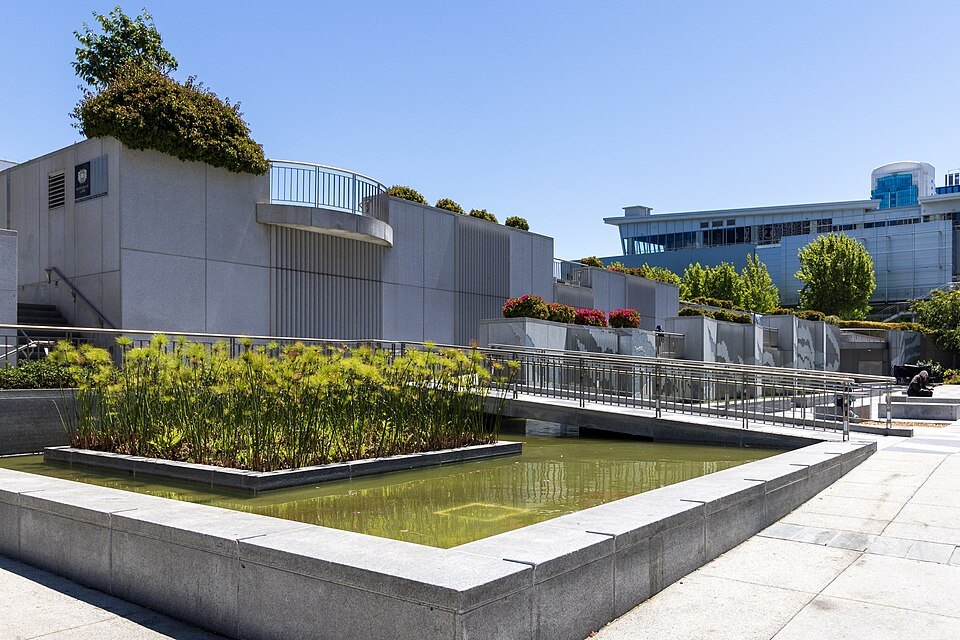
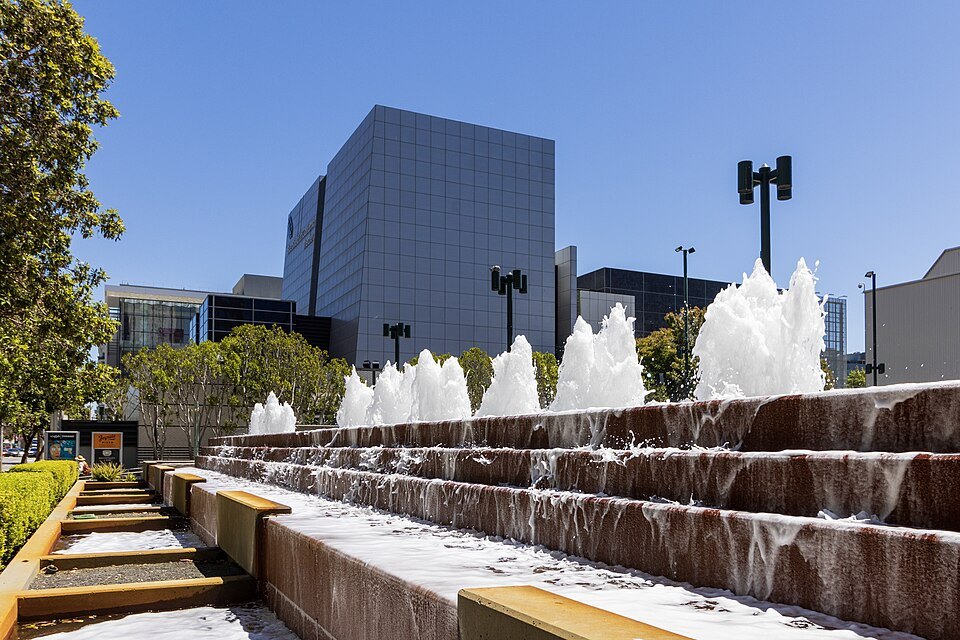
Across Third Street, Yerba Buena Gardens covers two blocks between Mission and Folsom streets. The first block opened in 1993 and the second, dedicated to Martin Luther King Jr., in 1998; a pedestrian bridge over Howard Street joins them, running over part of the Moscone Center convention hall below. The gardens came out of a redevelopment deal struck under Mayor George Moscone to set aside land for cultural institutions, and they are a green, open break among the office towers.
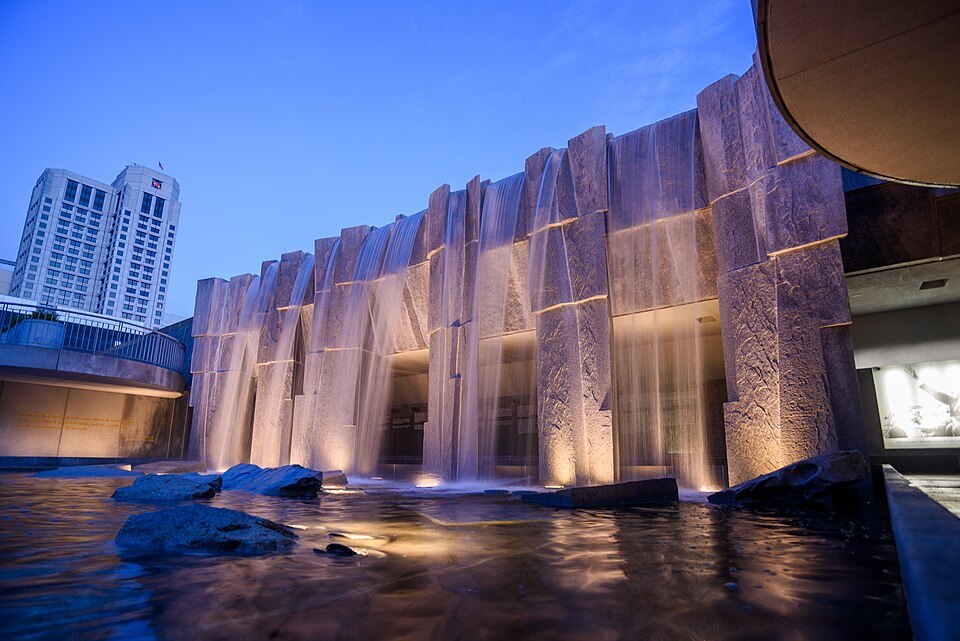
One cornerstone of the gardens is the Martin Luther King Jr. Memorial, a waterfall with a walkway behind it, where large panels of etched glass carry excerpts of King's speeches in the languages of San Francisco's sister cities. On the terrace above the waterfall, the Sister Cities Garden grows plants representing each of those cities and looks out over the downtown skyline. The Yerba Buena Center for the Arts, a contemporary arts center, stands in the north block, and the Children's Creativity Museum in the south block.
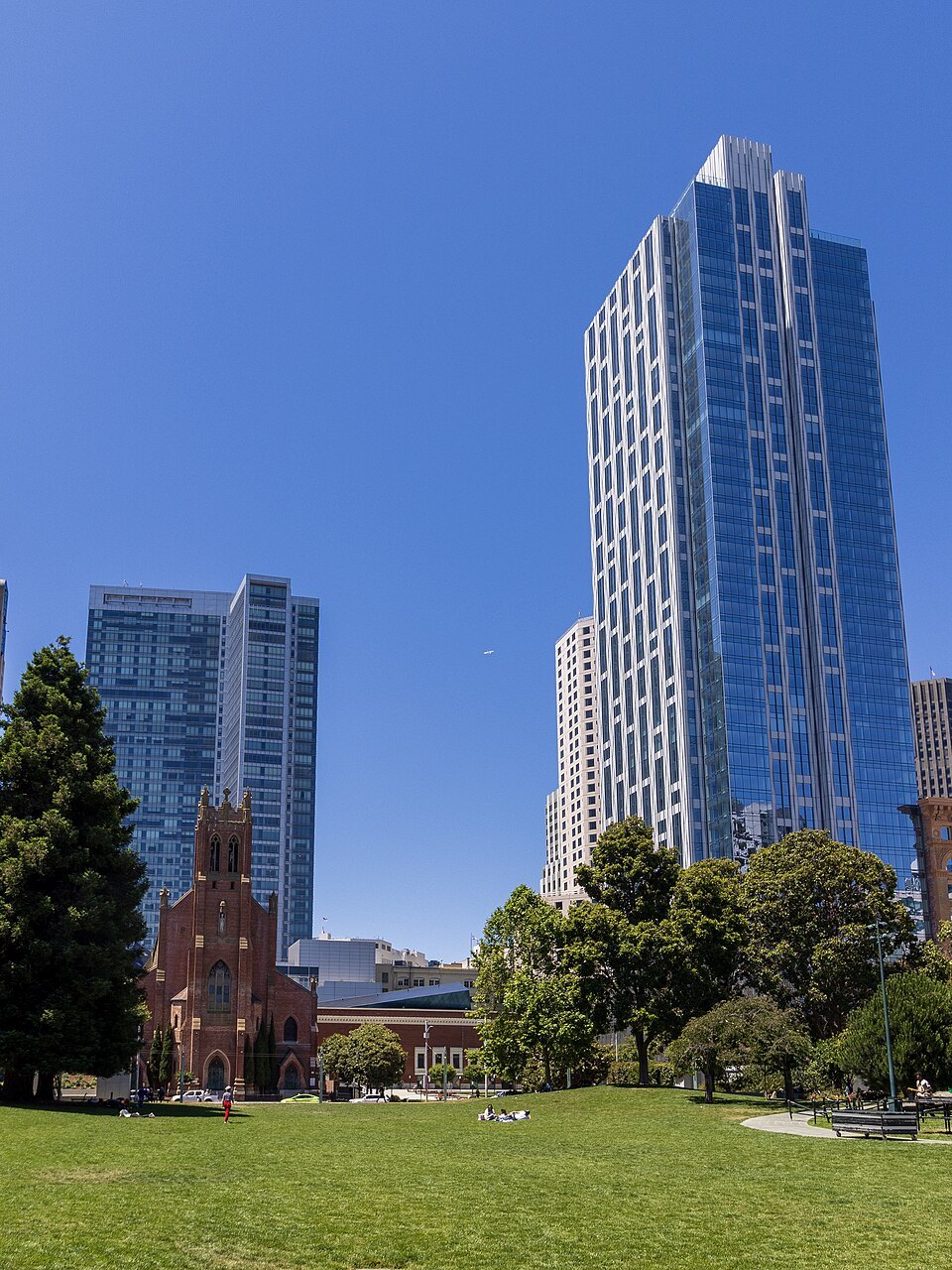
The name recalls the town of Yerba Buena, the settlement that became San Francisco, itself named for a sweet-smelling herb, Clinopodium douglasii, that once grew abundantly here.
How to visit
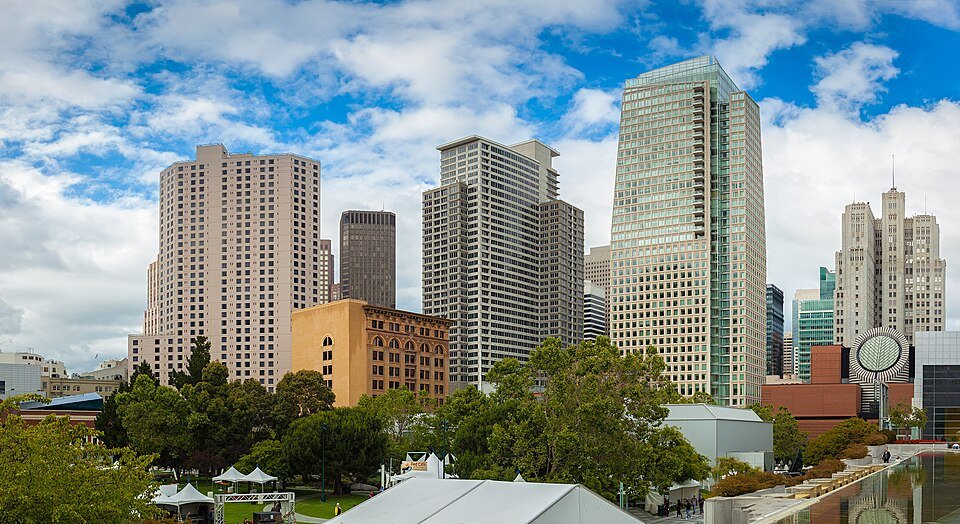
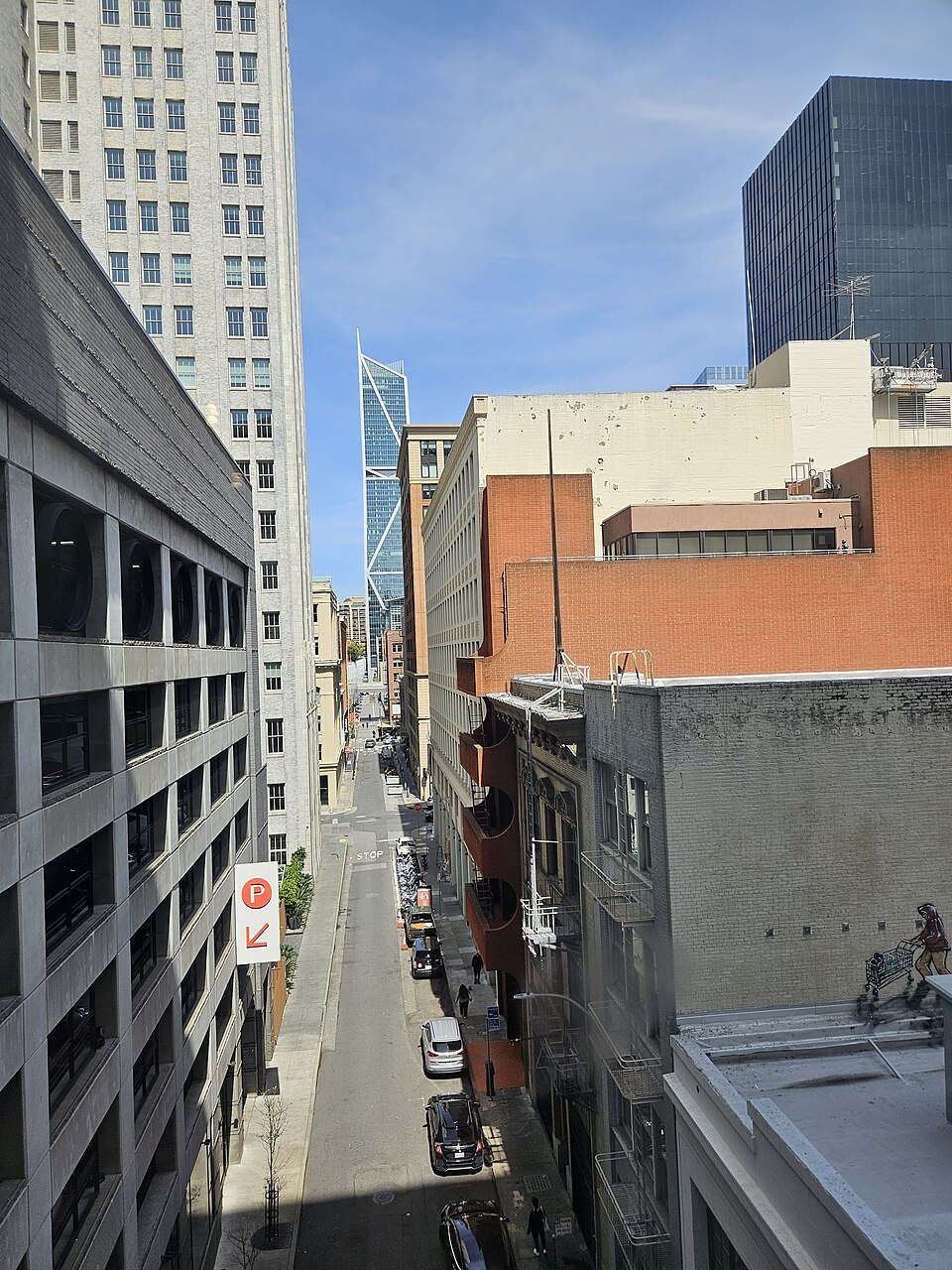
SFMOMA is on Third Street between Mission and Howard, a short walk from the Montgomery Street and Powell Street stations of BART and Muni Metro; see getting around. Tickets are sold by the museum itself, and large exhibitions are the thing most worth arranging in advance; see booking ahead. Allow two to three hours for the collection, more for special exhibitions. It stands in the flat blocks of SoMa, which makes it one of the easiest major sights in the city to reach for anyone who finds the hills hard.
Combine it with Yerba Buena Gardens across the street and a walk to the Ferry Building down Market Street, or with Chinatown north of Market.
Myths and facts
SFMOMA did not open in its striped building; for its first sixty years it was a tenant in the Veterans Building at the Civic Center, where the United Nations Charter was signed in 1945, and it had to move out briefly to make room for that conference. And the museum is not only painting: its photography collection, begun in 1936, was one of the first in any American art museum.
Nearby
- NearbyThe Ferry Building and the EmbarcaderoThe city's old front door to the Bay: a terminal of 1898 with a 245-foot clock tower, freed from a freeway after 1989 and reopened in 2003 as a working ferry terminal with a food hall under its glass roof.Read the page
- NearbyChinatownTwenty-four blocks between Kearny, Broadway, Powell and Bush, settled from the 1850s, burned in 1906 and rebuilt by its own merchants, with Grant Avenue for visitors and Stockton Street for the neighborhood.Read the page
- NearbyCity Hall and the Civic CenterArthur Brown Jr.'s domed City Hall of 1915, taller than the dome of the US Capitol, at the center of a Civic Center of classical buildings raised after the 1906 fire, where the United Nations Charter was signed.Read the page