What is there to see in Golden Gate Park in a single day?
A practical plan for spending a single day among Golden Gate Park's museums, gardens, lakes and windmills.
Read on
A park the size of a neighborhood
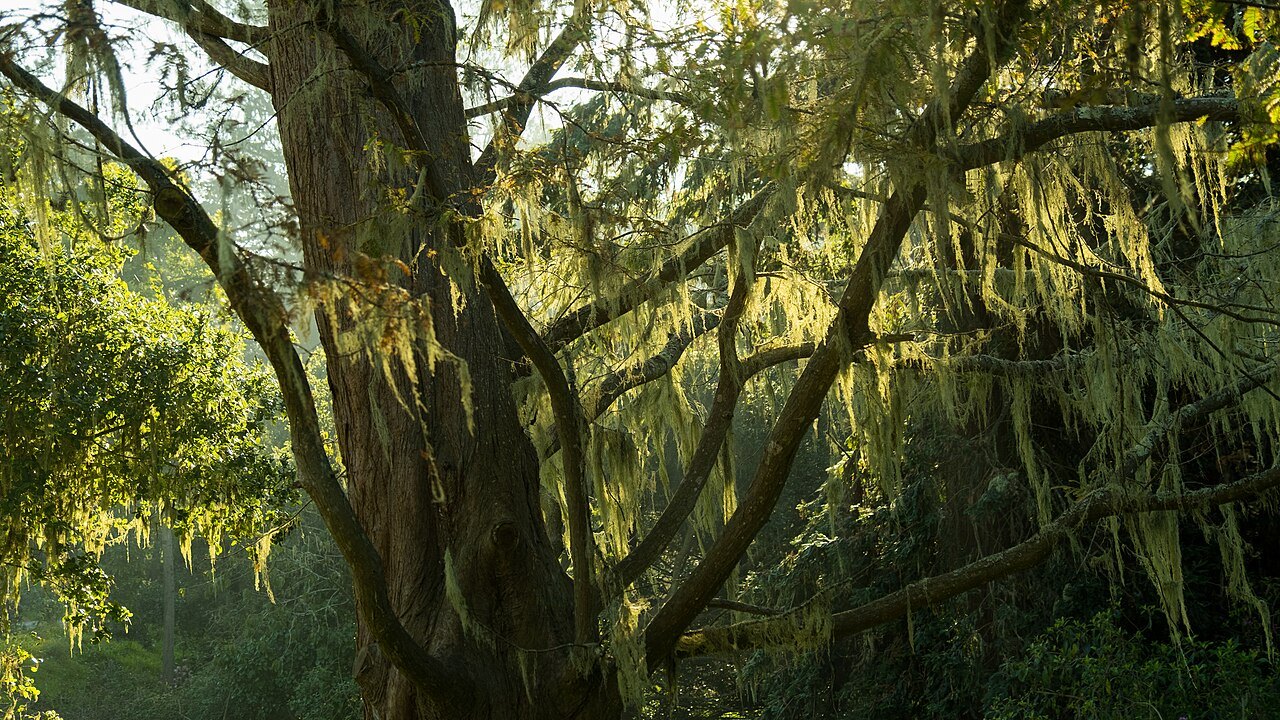
Golden Gate Park runs more than three miles from the edge of the Haight to Ocean Beach and about half a mile wide, one thousand seventeen acres in all. It is the third most visited city park in the United States, drawing an estimated twenty-four million visits a year. Almost none of it is natural ground: it was grown, tree by tree, on shifting sand dunes, and it became a National Historic Landmark in 2004.
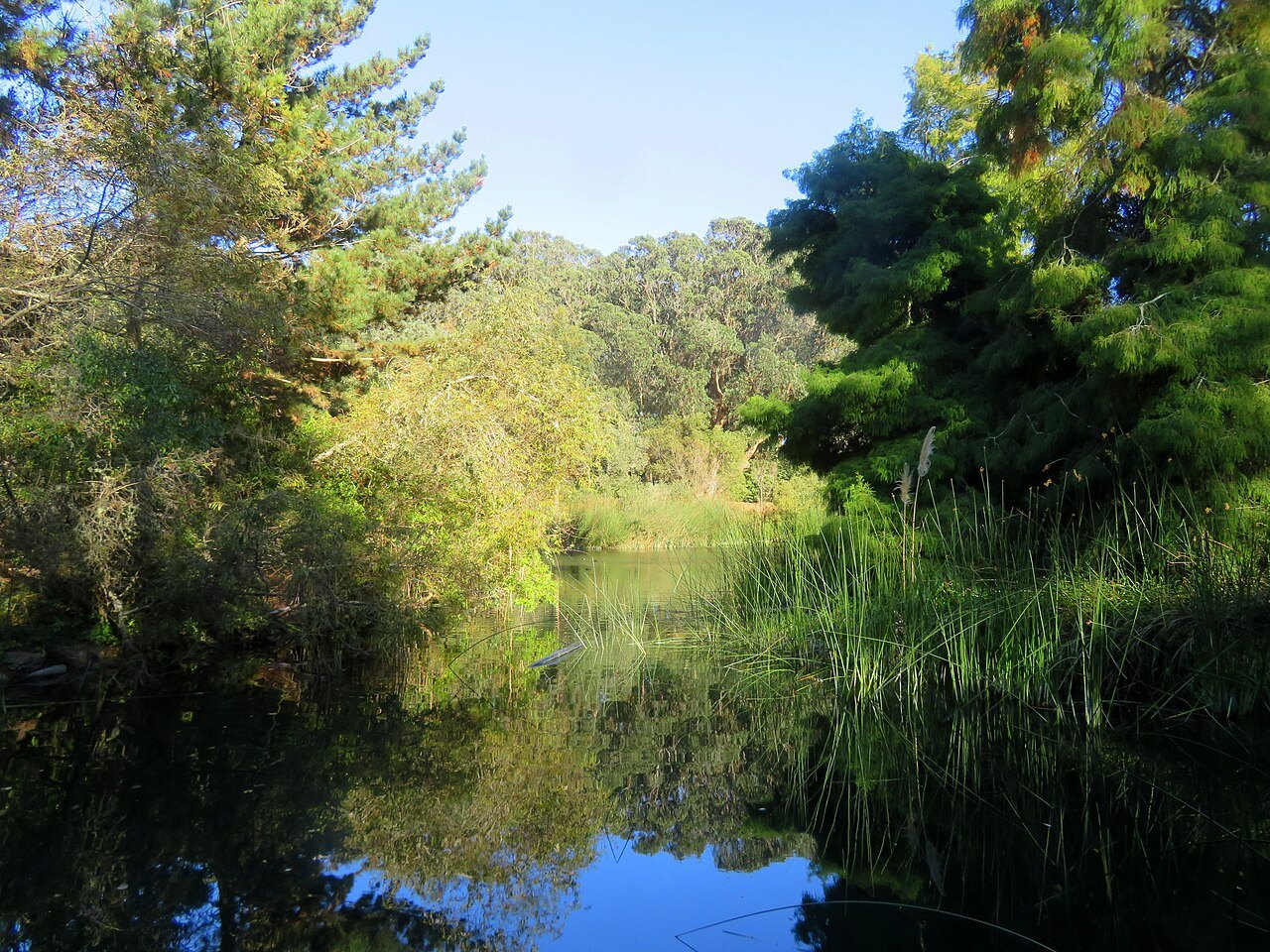
Seeing all of it in a single day is possible only if you accept a trade-off between breadth and depth. The park holds two major museums, the oldest public Japanese garden in the country, a Victorian greenhouse, several lakes and a herd of bison, spread across a strip of land too long to walk end to end comfortably. Most visitors do best by choosing one cluster of sights and treating the rest as a bonus.
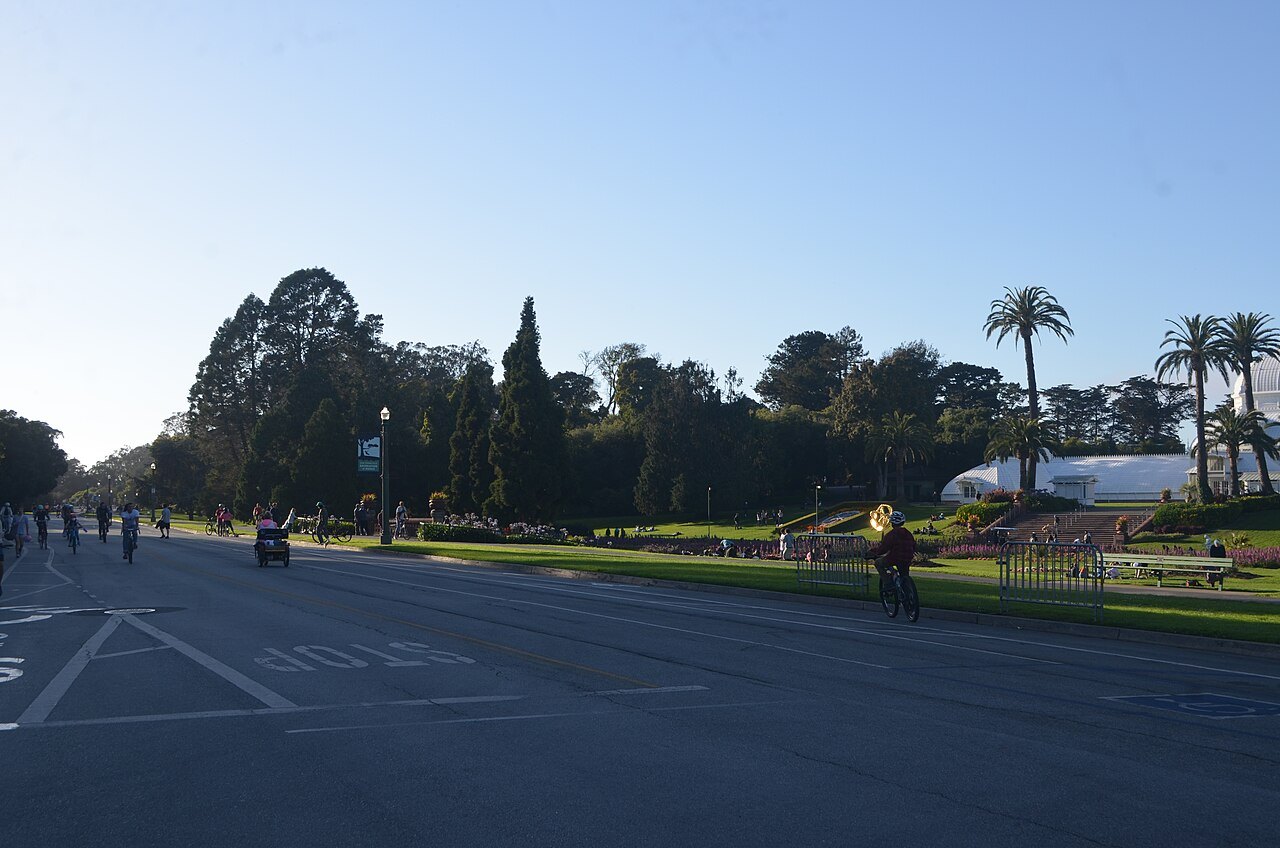
The natural anchor is the Music Concourse, where the de Young Museum, the California Academy of Sciences and the Japanese Tea Garden stand within a few minutes' walk of one another. From there the eastern stretch of John F. Kennedy Drive, closed to cars since 2022, gives an easy, flat route on foot or by bicycle toward the gardens and lakes further west.
The Music Concourse and its museums
The Music Concourse is a sunken oval plaza dug for the California Midwinter International Exposition of 1894, with the bandshell of the Spreckels Temple of Music at one end. It remains the park's social center, ringed by paths, benches and the two museums that face each other across the lawn, making it the logical place to start a day in the park.
On the north side stands the de Young Museum, the city's fine arts museum since 1921, rebuilt by the architects Herzog & de Meuron and reopened in 2005. Its long, low building is clad in copper that is slowly weathering to green, and its Hamon Observation Tower rises one hundred forty-four feet, the highest point in the park, with views over the park, the city and the ocean.
Facing it is the California Academy of Sciences, founded in 1853 and the oldest scientific institution in the West. The rebuilt building combines an aquarium, a planetarium and a rainforest under a glass dome under one roof, topped by a living roof of two and a half acres planted with native California plants, visible from the Hamon Tower across the concourse.
Both museums charge admission and set their own ticketing, which can change, so check current arrangements directly with each museum before visiting. On a single-day visit it is worth deciding in advance which one merits the time, since seeing both in full along with the gardens can be difficult to fit into one day; see booking ahead.
The Japanese Tea Garden and the Conservatory of Flowers
Next to the de Young, the Japanese Tea Garden began as a Japanese Village exhibit for the 1894 exposition. The gardener Makoto Hagiwara took it over and made it permanent, and his family lived there until 1942, when they were evicted and sent to internment camps under Executive Order 9066. During the war it was renamed the Oriental Tea Garden before its original name was restored.
Its stepping-stone paths, stone lanterns, pagoda, arched drum bridge, dwarf trees, bamboo and azaleas make it one of the quietest corners of the park, a contrast to the open lawns of the concourse nearby. Like the museums, it charges its own admission and is worth checking in advance on a busy day.
At the park's eastern end, the Conservatory of Flowers, opened in 1879, is the park's oldest building and one of the largest Victorian greenhouses in the United States. The white wood-and-glass palace holds some one thousand seven hundred species of tropical, rare and aquatic plants, and has survived a boiler explosion, fires and a 1995 storm that shattered forty percent of its glass.
The San Francisco Botanical Garden, the Rose Garden and the Shakespeare Garden are all within a short walk of the Conservatory, and together with the Tea Garden they make a natural loop for visitors who want gardens rather than galleries as the focus of their day inside the park.
West to the lakes, the bison and the windmills
West of the concourse, Blue Heron Lake circles Strawberry Hill, now an island reached by a pumped waterfall, with rowboats and pedal boats for hire. It was renamed in 2024 from Stow Lake, after the donor William Stow's outspoken antisemitism, and remains a quiet place to walk the shoreline path around the hill.
Further west lie the Bison Paddock, where bison have been kept since 1891, and the Polo Field alongside it. Both sit well beyond the museum cluster, so reaching them on foot from the Music Concourse takes real time and is best planned only if the rest of the day allows for it.
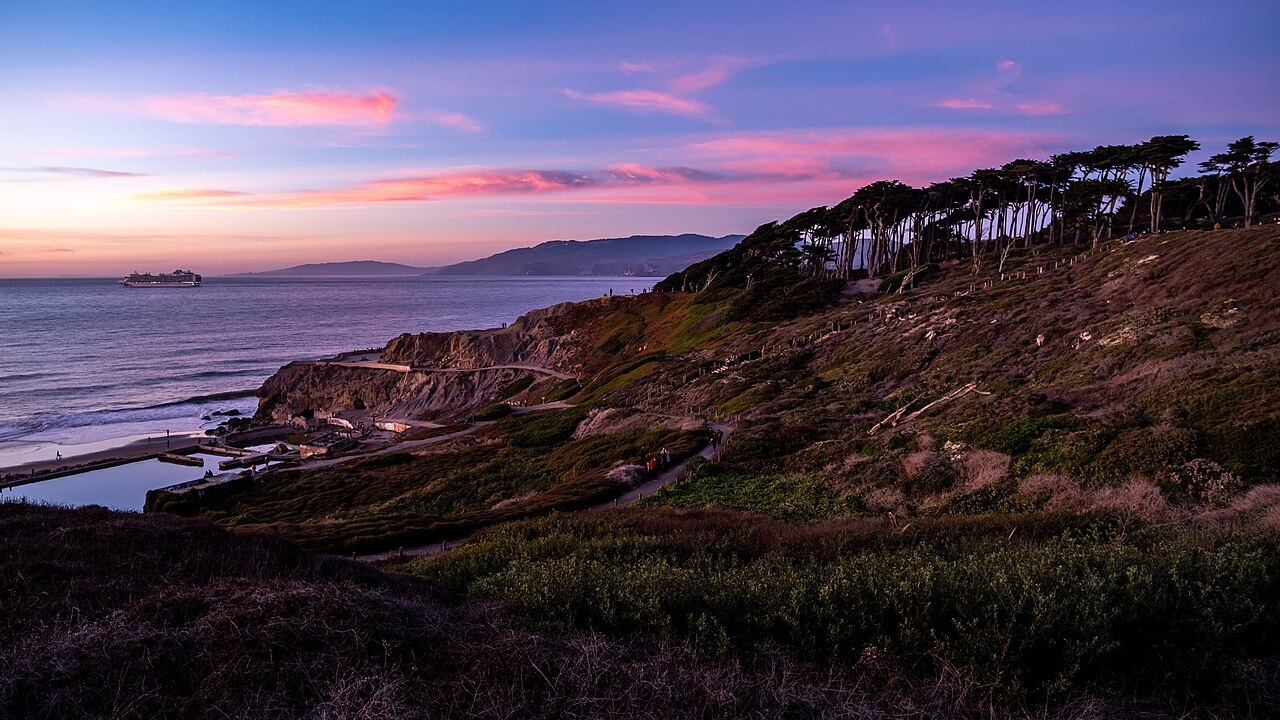
Near Ocean Beach, at the park's far western edge, the North or Dutch Windmill and the Murphy Windmill stand among the cypresses that John McLaren planted over the dunes. These two windmills, built from 1902 to pump groundwater for the park's irrigation, mark the point where the park gives way to the coast, with Lands End and Ocean Beach just beyond.
In the Haight end of the park, Hippie Hill recalls Golden Gate Park's part in the Summer of Love of 1967, when the counterculture gathered on its slopes; it remains a short, pleasant detour for anyone approaching the park from Haight-Ashbury rather than arriving from downtown or the Music Concourse.
Getting around
The park is mostly level and easy walking, but it is genuinely large, so allow a whole day to see the museums and gardens properly, or settle on one area and treat the rest as a possible return visit. Walking the full length from the Haight to Ocean Beach in a single day, on top of visiting sights, is a long undertaking.
The N Judah line of Muni Metro runs along the park's southern edge, and several bus lines cross the park or run along its sides; see getting around for routes and how fares work. These are generally a simpler way to reach the western end than walking the entire park.
Since 2022 the eastern stretch of John F. Kennedy Drive has been permanently closed to cars, making it a flat, wide promenade for walking and cycling that links the Music Concourse to the gardens and lakes further west, and is the easiest and flattest route to follow if time is short on a single visit.
When to come and what to check
The western end of the park, nearer the ocean, is often foggy and cool, while the eastern end near the Haight is sunnier; the park is generally at its best on a clear morning. See when to come for how San Francisco's weather patterns typically run through the different seasons of the year.
Because the museums and the Tea Garden each set their own admission and ticketing, and these can change, check current prices, hours and any reservation requirements directly with each institution before the day of your visit, particularly if a specific exhibition or special event is the reason for the trip.
The eastern edge of the park is close to Haight-Ashbury, making it easy to combine a morning in the park with an afternoon exploring the neighborhood, and Ocean Beach and Lands End lie just beyond the windmills at the park's western end for those with extra time to continue on afterward.
More from the journal
- The SightsWhat survives of the 1906 earthquake in San Francisco?The earthquake and fire of April 1906 destroyed most of the city. Here is what came through, what was rebuilt in its place, and where you can still see the traces, from Mission Dolores to the Portals of the Past.Read the piece
- When to ComeWhy is San Francisco so cold and foggy in summer?How the cold Pacific, the hot inland valleys and the gap of the Golden Gate make San Francisco's summer fog, why it comes and goes each day, where in the city it is thinnest, and how to plan around it.Read the piece
- The Golden Gate Bridge and Fort PointCan you walk across the Golden Gate Bridge?Yes, on the eastern walkway, which faces the city. Which walkway is for whom, how long the crossing is, where to start and finish, what to wear for the wind, and what to look for on the way.Read the piece