What was the 1915 Panama–Pacific Exposition, and what survives of it?
How a fairground relic designed to look ancient was demolished and rebuilt in concrete to last.
Read on
A fair meant to celebrate rebirth
San Francisco staged the Panama-Pacific International Exposition in 1915, nine years after the 1906 earthquake and fire, to mark the opening of the Panama Canal and to show the world that the city had risen again. The fairgrounds covered six hundred thirty-six acres along the northern shore between the Presidio and Fort Mason, land now called the Marina District, and held ten great exhibition palaces, almost all built of temporary materials and torn down once the fair closed.
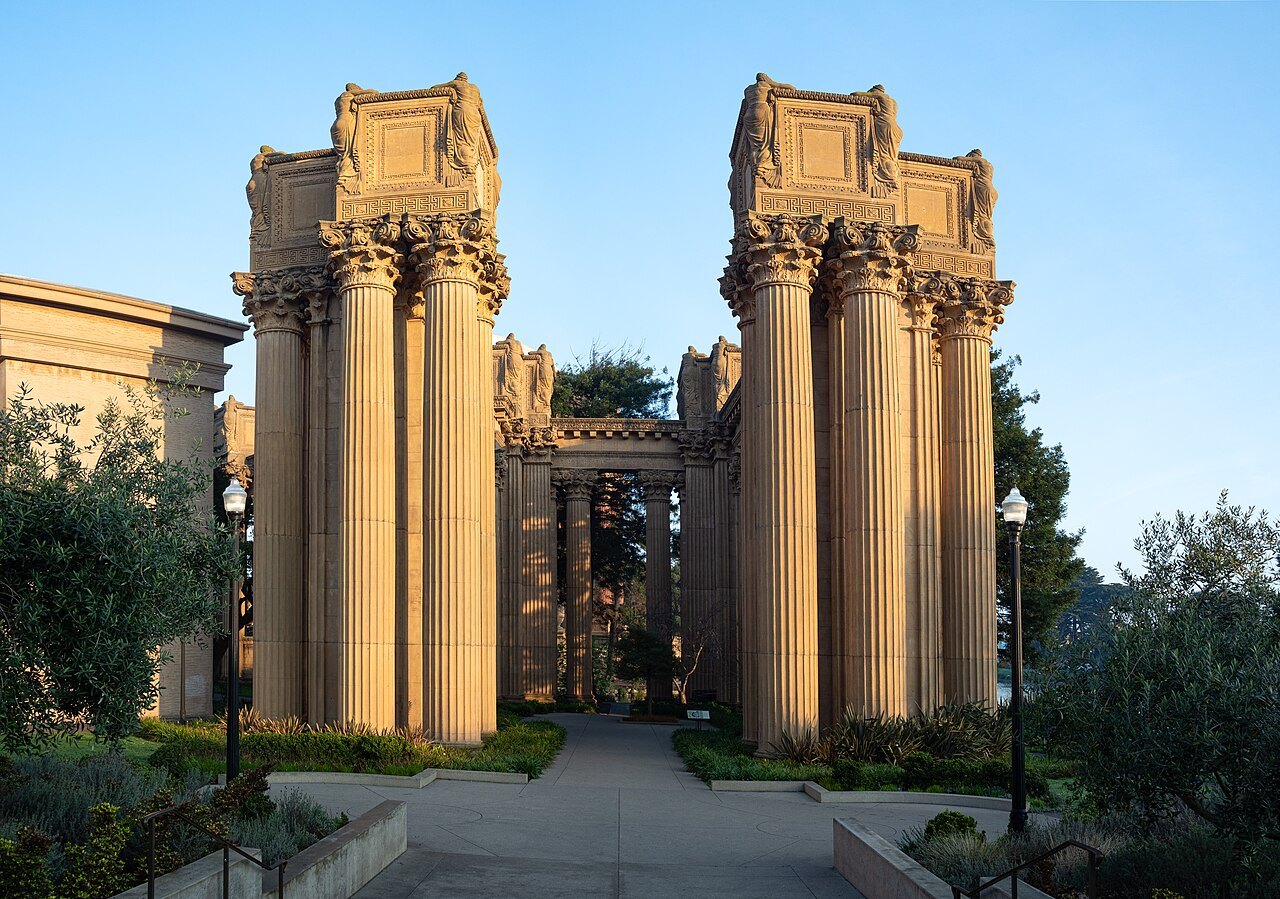
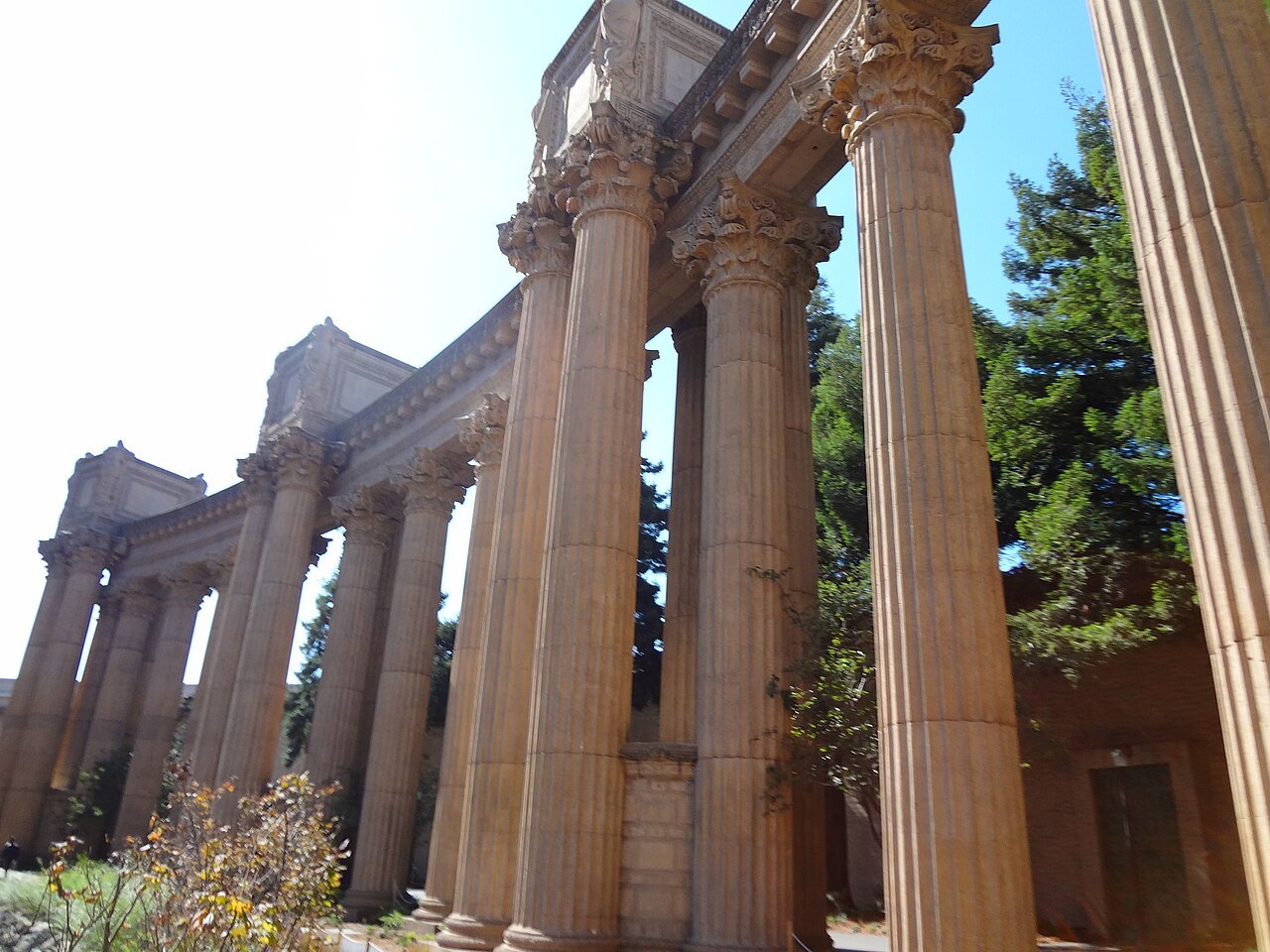
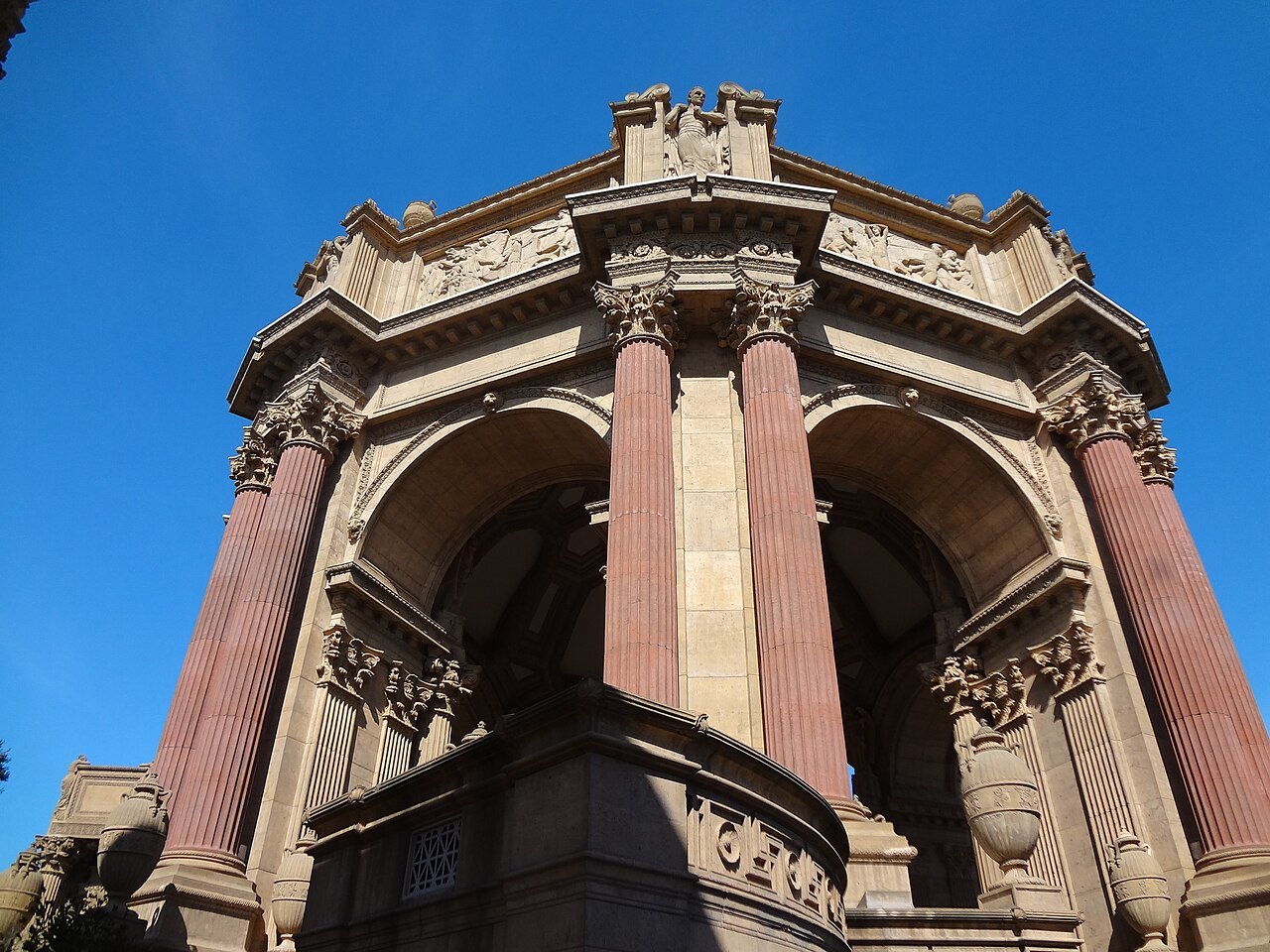
Of all those palaces, only one survives on its site: the Palace of Fine Arts, a pale, domed rotunda and a sweeping colonnade reflected in a lagoon at the eastern edge of the Presidio. It was designed by the architect Bernard Maybeck, who was asked for a building that would be a calm pause between the crowded fairgrounds and the galleries of paintings and sculpture behind it.
Maybeck answered with what amounted to a fictional ruin, drawing on Roman and Greek architecture, Piranesi's etching of the remains of the so-called Temple of Minerva Medica in Rome, and Arnold Böcklin's Symbolist painting Isle of the Dead. The result has become one of the city's most recognizable landmarks, a favorite for wedding photographs and for film: it appears in Hitchcock's Vertigo of 1958, in The Rock, and in Bicentennial Man, and the nearby Lucasfilm headquarters in the Presidio has been noted for echoing it.
Saved while the fair was still running
The Palace was so loved that a preservation league, founded by Phoebe Apperson Hearst, formed while the exposition was still open, and the building was kept standing when the rest of the fairgrounds were cleared away. Every other palace of 1915 vanished within months of the fair's close, leaving this one building as the sole survivor of the whole exposition.
But the Palace had been built, like its neighbors, to last only a single year. Its colonnade and rotunda were wood frames covered in staff, a mixture of plaster and burlap fiber, light and cheap and never meant to survive a San Francisco winter, let alone decades of fog and salt air off the bay.
For a time it housed an art exhibition; in the Depression, WPA artists replaced the decayed murals inside its dome; between 1934 and 1942 its long exhibition hall held eighteen lighted tennis courts; during the war the army stored trucks and jeeps inside it. Decade by decade, the imitation ruin Maybeck had designed began to become a real one.
Demolished and rebuilt in concrete
By the 1950s the staff and wood had decayed so far that the city faced a choice between losing the Palace entirely or rebuilding it properly. In 1964, everything was demolished except the steel frame of the exhibit hall, and reconstruction began in lightweight poured concrete with a steel-framed dome.
The rebuilding, finished in 1974, recast the decorations and sculptures anew in a permanent material, so that the Palace seen today is not fragile staff but solid concrete, built to outlast its temporary original by centuries rather than months. Only the dome murals and two end pylons of the colonnade were not replaced in the process.
A further restoration and seismic retrofit of the dome, rotunda, colonnades and lagoon was completed around 2010, bringing the structure up to current safety standards while keeping Maybeck's original design intact. The Palace that stands today is, in effect, a faithful twentieth-century copy of a building that was meant, from the start, to look ancient.
What you see
The rotunda is an open dome on columns standing at the water's edge, one hundred sixty-two feet high. Around its upper band run Bruno Zimm's relief panels, "The Struggle for the Beautiful," a tribute to Greek culture. On either side the colonnade sweeps away in a curve some eleven hundred feet long, a pergola of Corinthian columns.
On top of the colonnade stand Ulric Ellerhusen's weeping women, figures that face inward toward the planter boxes with their faces hidden, as if in mourning. With the lagoon and the overgrown planting around it, they give the whole site its particular melancholy, quite unlike any other landmark in the city.
Across the lagoon, the rotunda is reflected whole, which was the point from the start: the water was meant to work as the still mirror of a classical European garden, letting visitors take in the building from a distance. Look up inside the dome and you see eight large recessed panels, which once held murals by Robert Reid.
Those murals showed the birth of Art and the four "golds" of California: poppies, citrus fruit, metallic gold and wheat; they were not replaced in the rebuilding. Behind the colonnade stands the long, curved exhibition hall, one of the largest single-story buildings in the city, which housed the Exploratorium science museum from 1969 until 2013 and hosted a presidential debate between Gerald Ford and Jimmy Carter in 1976.
How to visit
The Palace sits at the eastern edge of the Presidio, close to the Marina District and Crissy Field, and the whole site is level and easy to walk, with no steps to manage around the lagoon or colonnade. There is nothing to book and no ticket required for the rotunda and lagoon themselves.
Allow half an hour for a slow circuit of the lagoon, longer if stopping for photographs. The site is at its finest on a clear, still morning, when the reflection in the water is sharpest and the crowds have not yet built up; check when to come for a sense of the city's seasons.
Several Muni bus lines run along the edge of the Marina close by; see getting around for routes and how to pay. Weddings and events often use the site, especially on weekends, so part of the lagoon edge or colonnade may be in use for a ceremony or a photography session.
The Palace makes a natural pairing with a walk out to Crissy Field and the Golden Gate Bridge, and with a stroll through the Presidio on the far side of the road. Visitors planning a longer day in this part of the city should check current conditions with the park service before setting out.
Myths and facts
The single most useful thing to know is that the Palace standing today is not the one built for the 1915 fair. It is a faithful reconstruction completed in the 1960s and 1970s, built in concrete rather than the temporary staff and wood of the original, which is why it has outlasted the exposition around it by more than a century.
Its ruinous, melancholy look is not the work of time or decay, despite how it reads at first glance. Maybeck designed it from the outset to resemble a ruin from another age, reportedly on the belief that every great city needs one; the weeping women and the overgrown lagoon planting were part of that plan, not an accident of neglect.
Visitors comparing the Palace with the exposition's other buildings should remember that none of the rest survive on their original site; what stands here today is an outlier, kept alive first by public affection and later by careful, deliberate reconstruction rather than by any part of the fair's original planning.
More from the journal
- The SightsWhat survives of the 1906 earthquake in San Francisco?The earthquake and fire of April 1906 destroyed most of the city. Here is what came through, what was rebuilt in its place, and where you can still see the traces, from Mission Dolores to the Portals of the Past.Read the piece
- The Presidio and Crissy FieldWhat can you do at the Presidio's Tunnel Tops and Crissy Field?A guide to the Presidio's bayside park and restored shoreline, from Tunnel Tops down to Crissy Field and the Wave Organ.Read the piece
- Lands End and the Sutro BathsWhat were the Sutro Baths, and what is left of them?The story of San Francisco's grandest Victorian bathhouse, its fiery end, and the ruins left at Lands End.Read the piece