Home · Street Sense
Eight notices worth reading
- Nothing in the carLeave nothing in a parked car, not even a bag in the trunk that someone might have watched you put there. The police slogan is if you love it, don't leave it.
- Luggage at the hotelCheck out, leave your bags with the hotel desk, and collect them on the way to the airport, rather than touring with a loaded car.
- Load the trunk before you arriveIf something must stay in the car, put it in the trunk before you reach the place you are parking, not after.
- Know the hot spotsThe city's own Park Smart campaign named Fisherman's Wharf, Alamo Square, the Palace of Fine Arts and Dolores Park among its car break-in hot spots.
- After a break-inReport it to the police, online, by the non-emergency line or at a district station, where you can ask for the car to be fingerprinted; cancel stolen cards at once.
- Use 311The city's 311 service takes nonemergency questions and reports around the clock, by phone, web or app, in many languages.
- Stay back from the edgeAt Lands End and along the coast, stay on the trails and keep your distance from the cliffs; the bluffs are loose and eroding.
- Respect the surfOn the ocean beaches, rough surf, sneaker waves, rip currents and cold water mean wading is not safe; never turn your back on the sea.
Street Sense
Why this page exists
Visitors to San Francisco ask two questions again and again: will something happen to the rental car, and what are some of the downtown streets like? Both have practical answers. This page gives the mechanics and the checks, drawn from the San Francisco Police Department, the city's transportation agency and the National Park Service, and it leaves verdicts on neighborhoods out, because they are rarely accurate and never useful.
Most of what you will do here, riding the cable cars, walking the waterfront, eating in the Mission, never touches any of it. But a little preparation saves a lost afternoon.
Car break-ins
Car break-ins are the problem visitors are most likely to meet, and they happen most where visitors park. The Park Smart campaign, launched in 2018 by the city, the police and the transportation agency with the travel industry, distributed its warnings at a list of break-in hot spots that reads like a sightseeing itinerary: Fisherman's Wharf, Alamo Square, the Palace of Fine Arts, Dolores Park, and Fifth and Mission streets downtown. The crooked block of Lombard Street has been described as another, helped by its heavy traffic and constant visitors.
The reason is simple: a rental car at a viewpoint is likely to hold luggage, cameras and passports, and, in the police department's words, thieves need only seconds to break in. A locked door is no obstacle; a car with nothing in it is not worth the trouble.
What to do with a car
The police advice is short. Do not leave phones, sunglasses, luggage, passports or any other valuables in the car, and do not leave even insignificant-looking loose items visible. If something must stay, put it in the trunk before you arrive at your destination, so that no one sees you hiding it. If you are traveling from out of town, check your luggage at the hotel rather than keeping it in the car, even on the last day.
Better still, do without a car in the city. Nearly every sight in this guide can be reached by transit, taxi or on foot; see getting around. Keep the car for the day trips, and pick it up on the morning you leave the city.
If it happens
If a break-in is happening in front of you, call 911 with the location and a description. If it has already happened, report it: online, by the police non-emergency line, or in person at any of the city's district police stations, where you can also have the car fingerprinted. Make a list of what was taken, with serial numbers for any electronics, cancel stolen credit cards at once and check them for unauthorized use, and add that to the report. A police report may be needed for an insurance claim.
If a passport was stolen, the police department directs you to the nearest police station; you will also need to arrange a replacement travel document through your own government before you fly.
Downtown streets
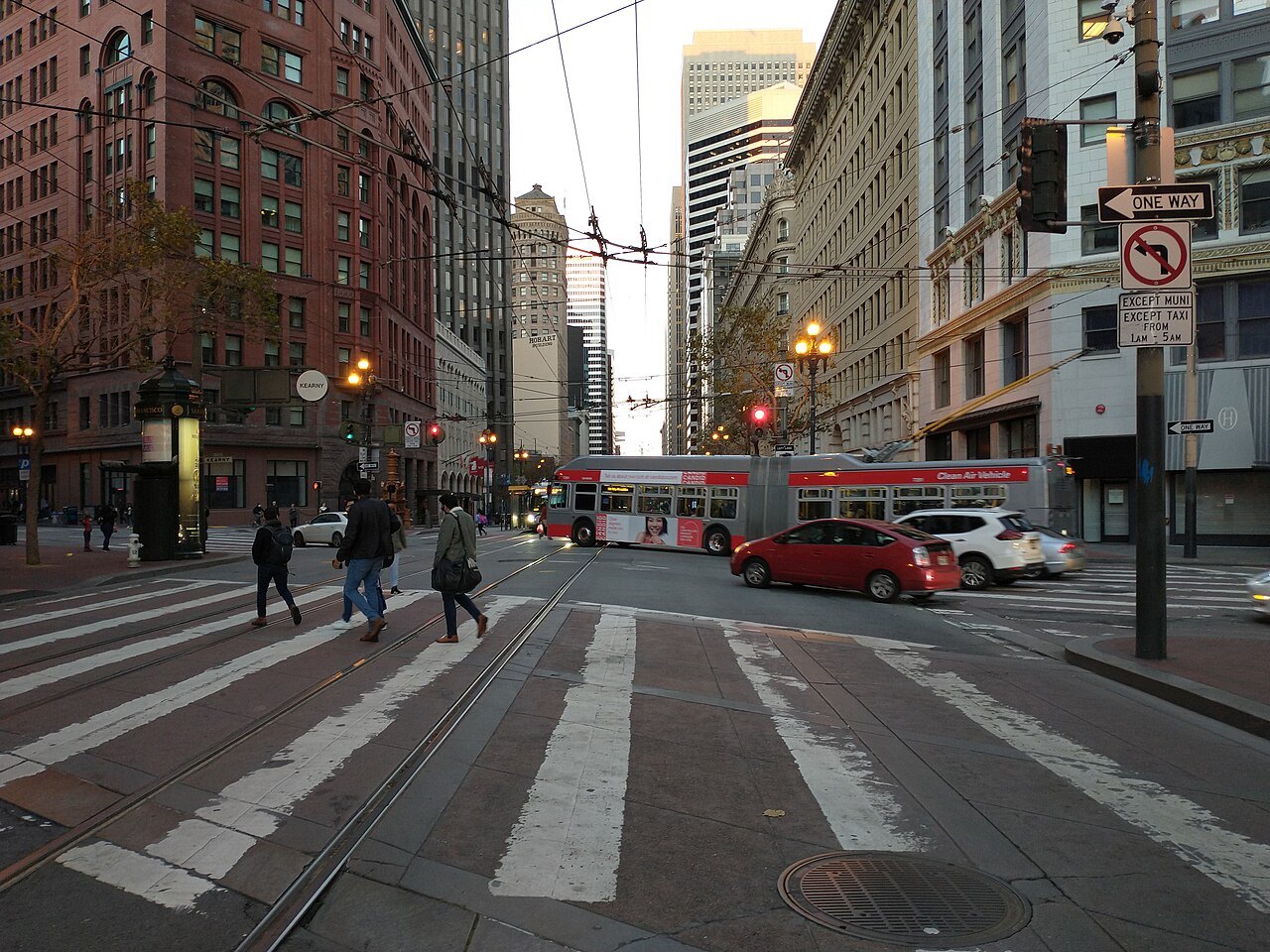
Homelessness has been a chronic problem in San Francisco since the early 1970s, and it is visible in the city center. Since the pandemic, the downtown core has lost many of its office workers and shops, and some streets around the Tenderloin and Mid-Market, between Union Square and the Civic Center, have been described as having high levels of homelessness, drug use and crime. Visitors walking from Union Square to City Hall or SoMa often pass through them.
The practical response is the one that works in any large city. Plan your route before you set out rather than following a map app block by block, keep your phone and bag close on crowded sidewalks and transit, and use the Market Street subway or a taxi if a route does not feel right. Tents, needles, broken sidewalks and other street problems can be reported to 311.
The city's helpline, 311
San Francisco's 311 service answers nonemergency questions and takes reports around the clock, by phone, on the web and through its app. The phone service offers help in more than 160 languages. It handles everything from potholes and fallen trees to abandoned cars and tents on the sidewalk, and it can tell you which city office deals with anything else. From a phone outside the city, the city's site gives the full number to dial. For emergencies, as anywhere in the United States, call 911.
The coast asks for care
Two of the city's great walks run along the ocean, and both have rules. At Lands End, the National Park Service asks walkers to stay on the trails and keep their distance from the cliffs: the bluffs are loose and eroding, and people have fallen from them. Obey the railings and warning signs, even when a better view seems to be just beyond them.
On the ocean beaches, rough surf, sneaker waves, rip currents and cold water make the water unsuitable for swimming; the Park Service keeps a single lifeguarded swimming beach, staffed part of the year, and says its other beaches are not for swimming. The Park Service warns that you can be pulled into the ocean standing in water only knee-deep, and that non-swimmers should never go past their ankles. Sneaker waves can sweep across the sand without warning and roll logs over anyone in their path. Never turn your back on the sea.
Cold, fog and the hills
San Francisco is sometimes described as naturally air-conditioned. In summer, cool air and fog from the ocean are drawn in through the Golden Gate: on a typical day the fog clears back toward the coast by midday and rolls in again later in the afternoon, when the wind rises. The fog is thinner in the eastern neighborhoods and in late summer and early fall.
The last hazards are the ones visitors underestimate. Summer fog and wind make the waterfront, the bridge and the summits cold even when the sun is out downtown; carry a warm layer everywhere. And the hills are steep enough to be tiring and, when wet, slippery; wear shoes with grip, ride up, and walk down with care. See the hills and when to come.
More photographs
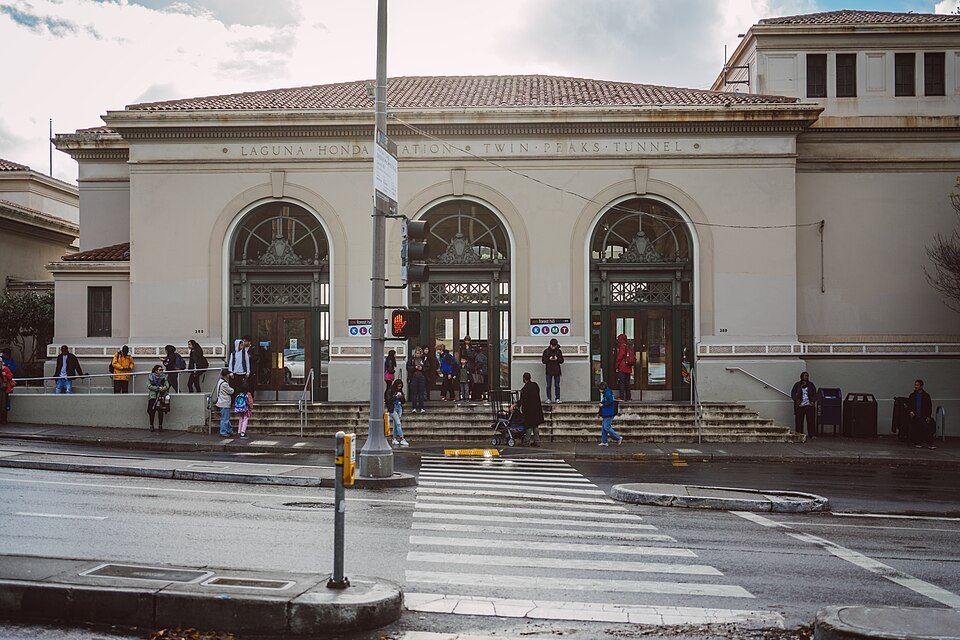
The old station building at Forest Hill, its crosswalk in frontMarcin Wichary from San Francisco, Calif., Wikimedia Commons, CC BY 2.0