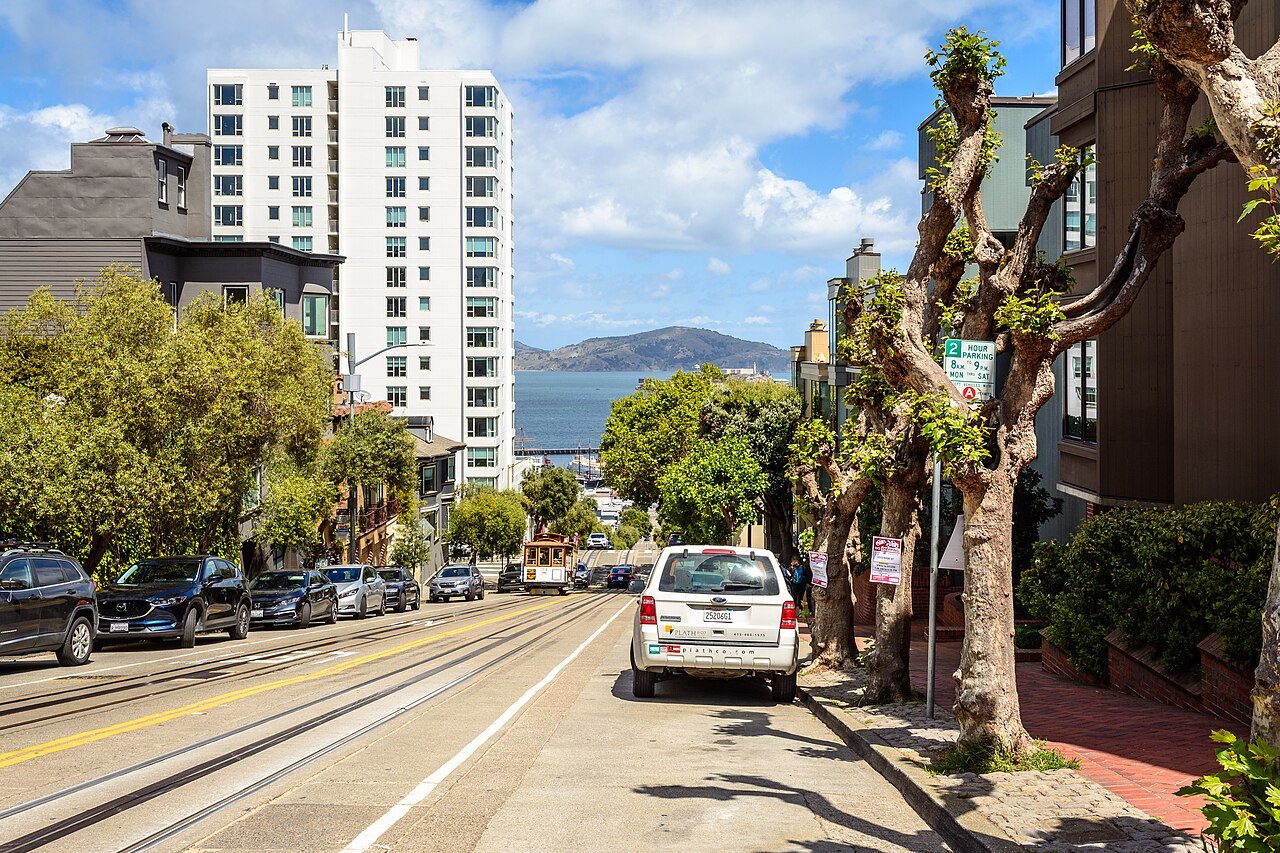
How do you see Lombard Street's crooked block without driving it?
How to see Lombard Street's famous switchbacks on foot, by cable car, or by car, without joining the driving queue.
Read on
The one crooked block
For most of its length Lombard Street is an ordinary through street, a busy route across Cow Hollow and the Marina carrying traffic toward the Golden Gate Bridge. Only one block is famous: on Russian Hill, between Hyde and Leavenworth streets, the road becomes eight sharp switchbacks down a slope once almost impossible for cars to climb straight on.
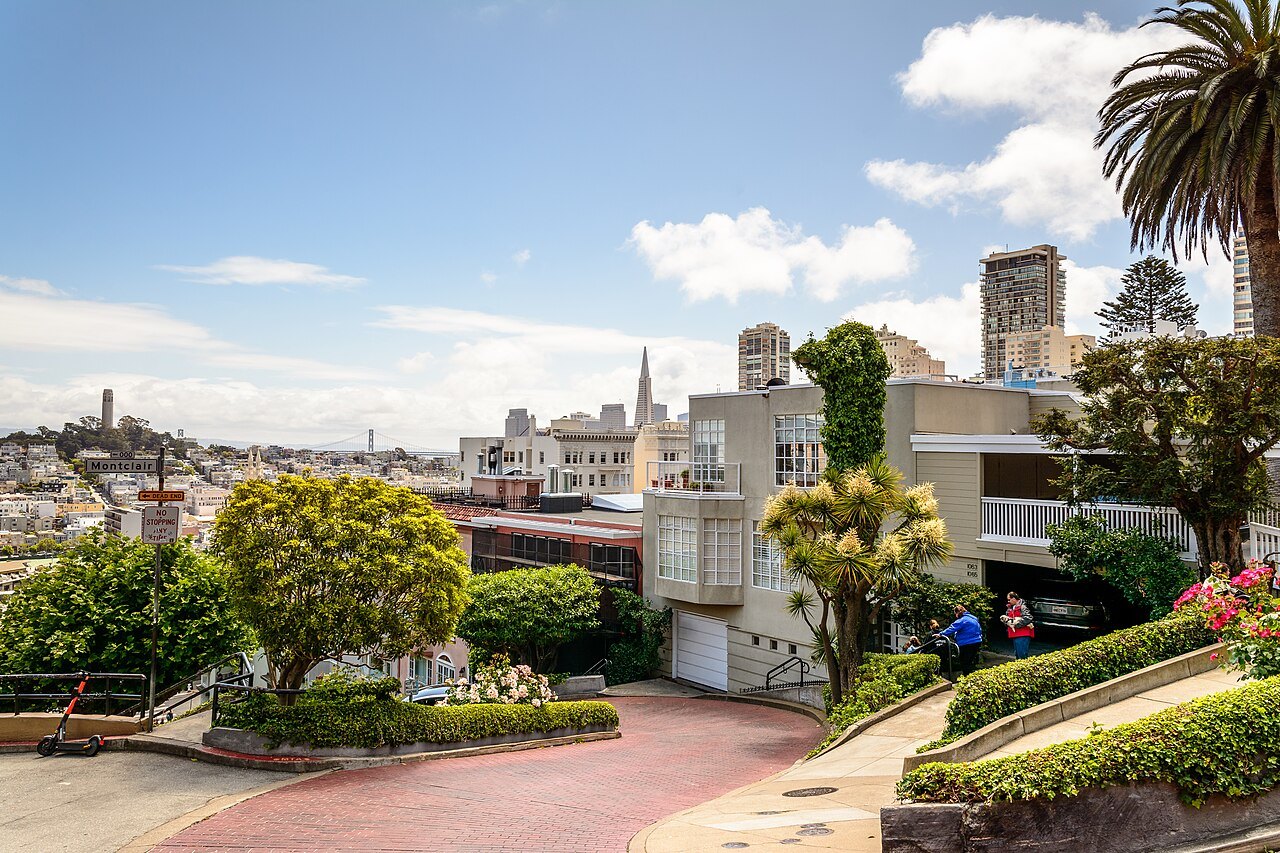
Billed for decades as "the crookedest street in the world," the block draws around two million visitors a year, with as many as seventeen thousand arriving on a single busy summer weekend day. Most never drive it; walking the stairways on either side is how the block is actually seen up close.
Seeing it on foot also means stepping into Russian Hill itself, one of the city's original residential hilltops, with views in every direction and streets so steep that some of them are staircases rather than roads.
How the curves came to be
The natural grade of this block is twenty-seven percent, far too steep for most vehicles to climb directly. In 1922, at the suggestion of a property owner named Carl Henry, the city rebuilt the block as a series of switchbacks so cars could descend it safely, solving a practical problem long before it became an attraction.
Measured along its curves the crooked section runs about six hundred feet, though the straight-line distance between Hyde and Leavenworth is only about four hundred twelve feet. It is paved in red brick, one-way, downhill only, and marked at the top with a sign recommending a speed of five miles per hour.
The name has nothing to do with the hill or the curves: the city's first surveyor, Jasper O'Farrell, named the street after Lombard Street in Philadelphia. Nor is the block unique — Vermont Street, on Potrero Hill, also claims the title of most crooked, with seven turns but a steeper grade.
Seeing it without a car
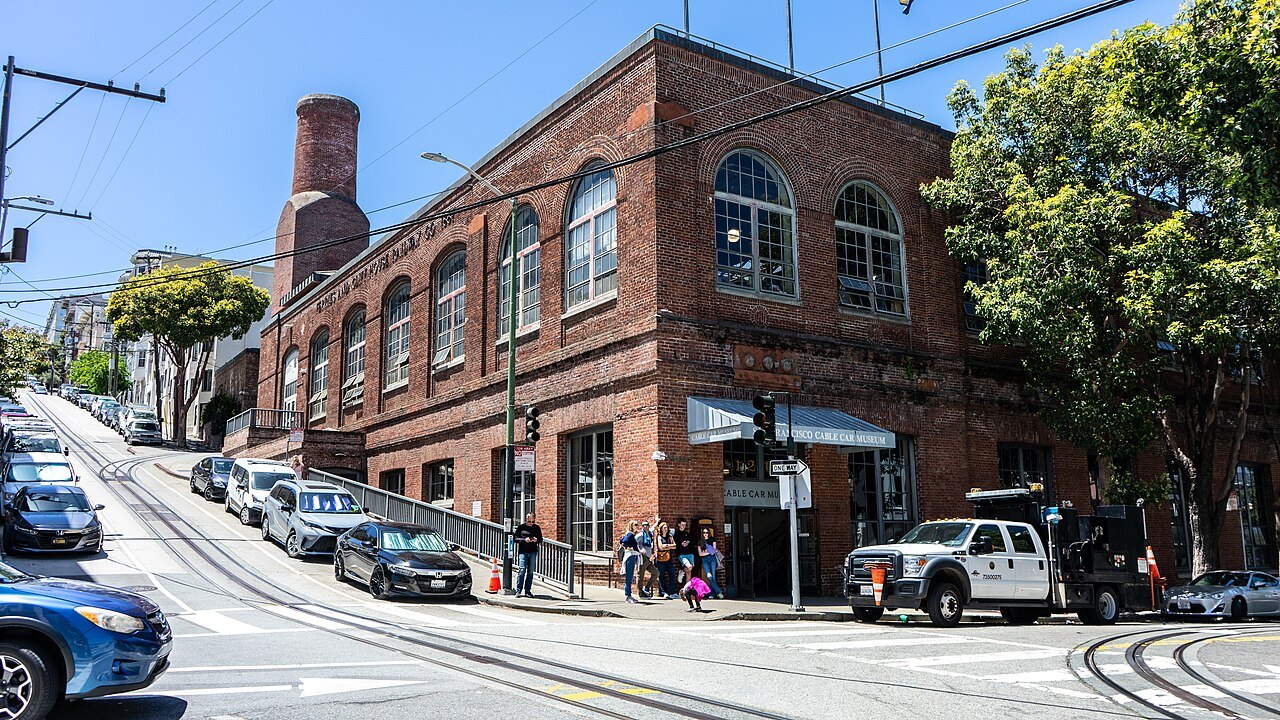
Most visitors reach the top on the Powell–Hyde cable car, which stops at the corner of Hyde and Lombard. Riding it is part of the experience, since the line climbs and drops past this same corner on its way between downtown and the waterfront; check the current route with the operator before planning around it. See the cable cars.
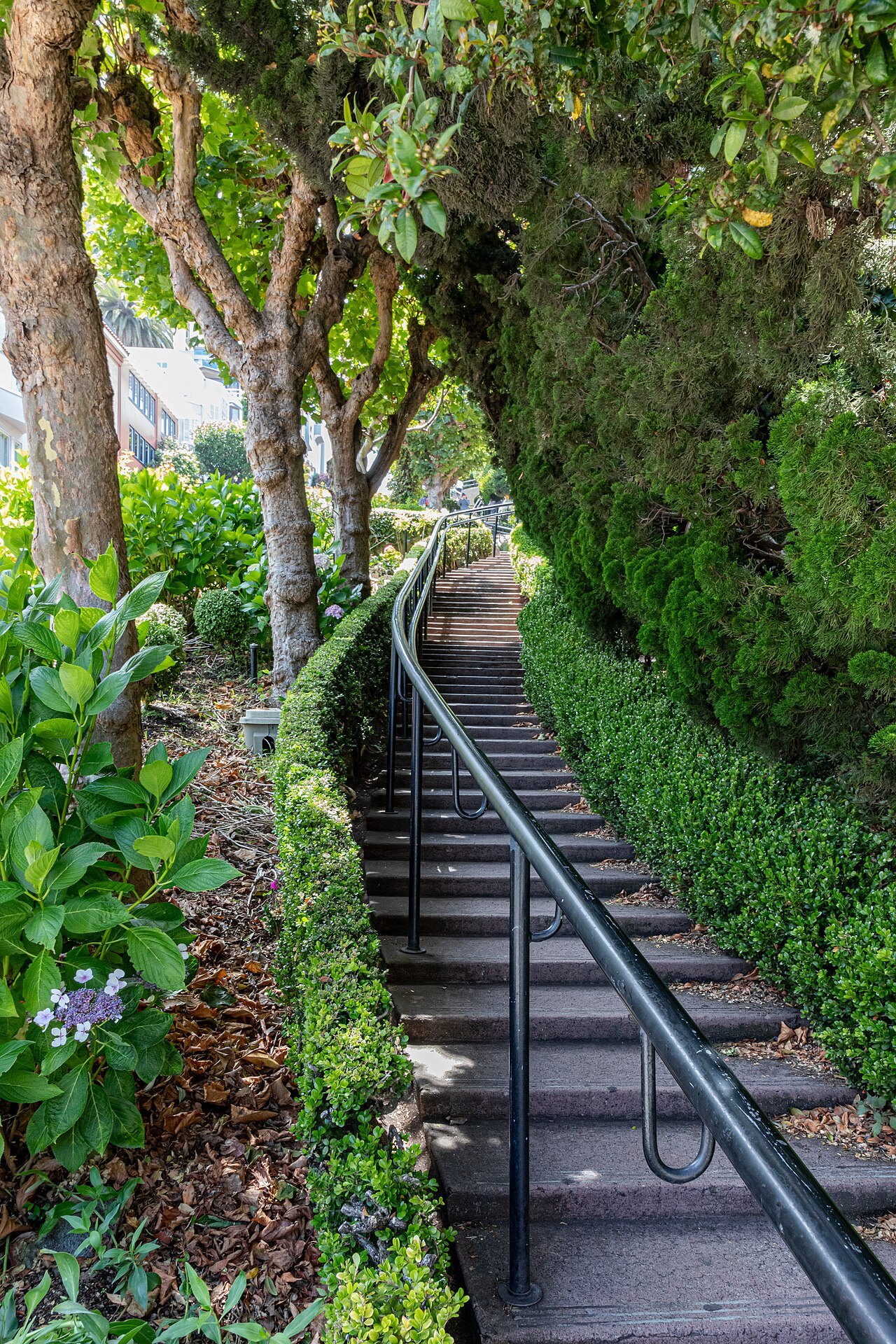
From the top, the way to see the switchbacks without driving is to walk down one of the stairways running along both sides of the block. The brick curves, hedges, and hydrangeas pass close by on the way down to Leavenworth Street at the bottom.
Walking up from the bottom instead is a hard climb on this grade, one of the steeper stretches on a hill full of them. Comfortable shoes matter here more than in most parts of the city.
Twenty minutes is enough to see the block itself. Allow closer to an hour or two if the plan includes wandering Russian Hill's lanes and small parks beyond the switchbacks.
Russian Hill around the block
The hill's name goes back to the Gold Rush years, when settlers found a small Russian cemetery at its top, the graves of sailors from Russian naval and merchant ships that had visited San Francisco since 1806. The cemetery is gone, but the name stuck, and a small park at the top of Vallejo Street holds a memorial placed by the Russian government.
On the southeastern side, the Vallejo Street Crest keeps some of the city's oldest houses behind a retaining wall and a natural bluff, among them the Atkinson House of 1853, one of the oldest houses still standing in the city. The Paris Block Architectural District on Green Street is known for its houses, including the eight-sided Feusier Octagon House.
Another small park on Vallejo Street is named for Ina Coolbrith, California's first poet laureate and the first poet laureate of any American state, looking straight out over downtown. Macondray Lane, on the northern slope, is a pedestrian-only lane of historic houses among trees, and parts of Vallejo and Green streets climb the hill as flights of steps.
What you see, and where it's been filmed
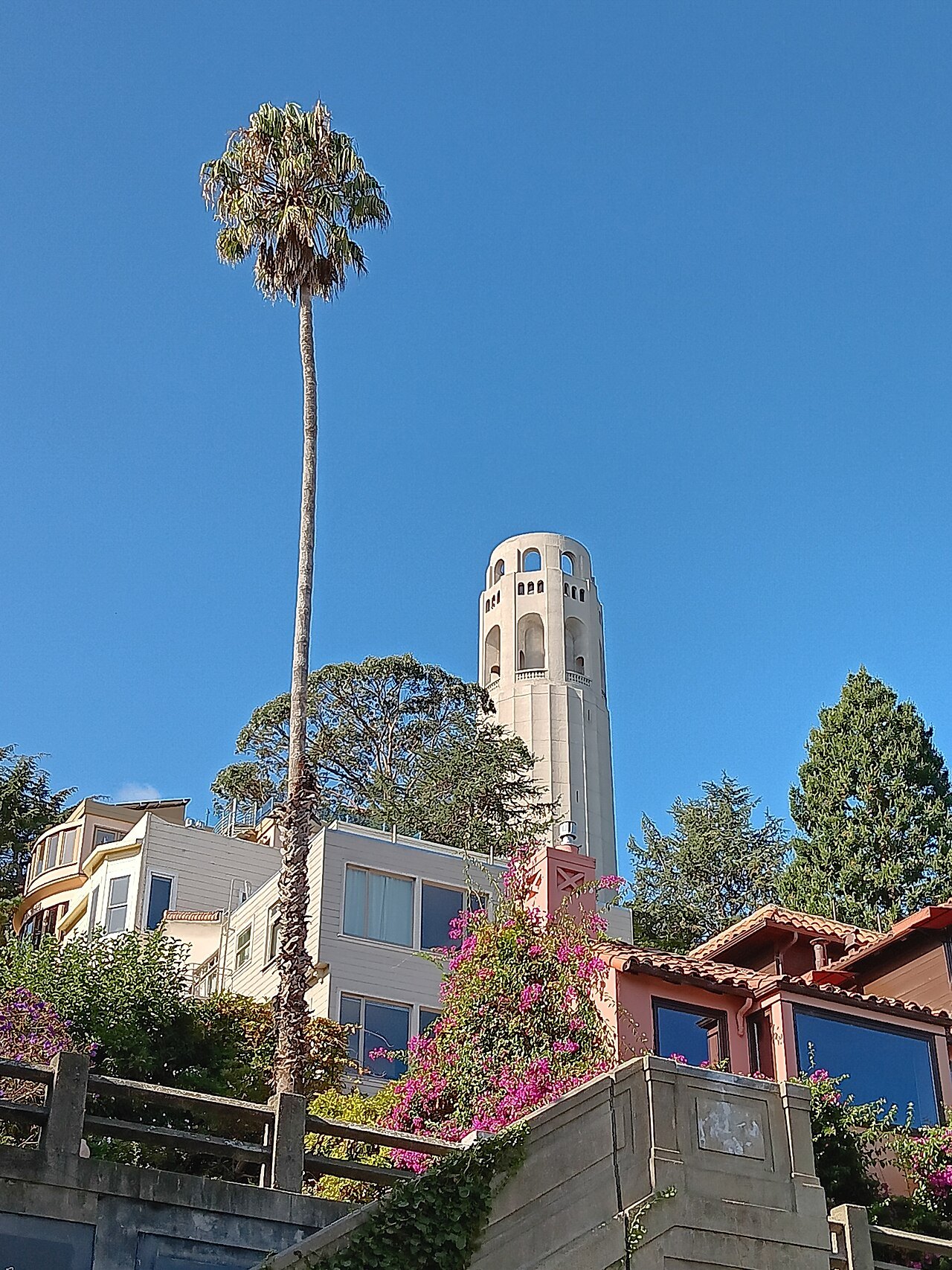
Standing at the top, on Hyde Street, the view runs down over the brick switchbacks and their hedges and hydrangeas toward North Beach, with Coit Tower on Telegraph Hill straight ahead. Cars descend one at a time, watched by the houses along the block, many with bay windows and small gardens.
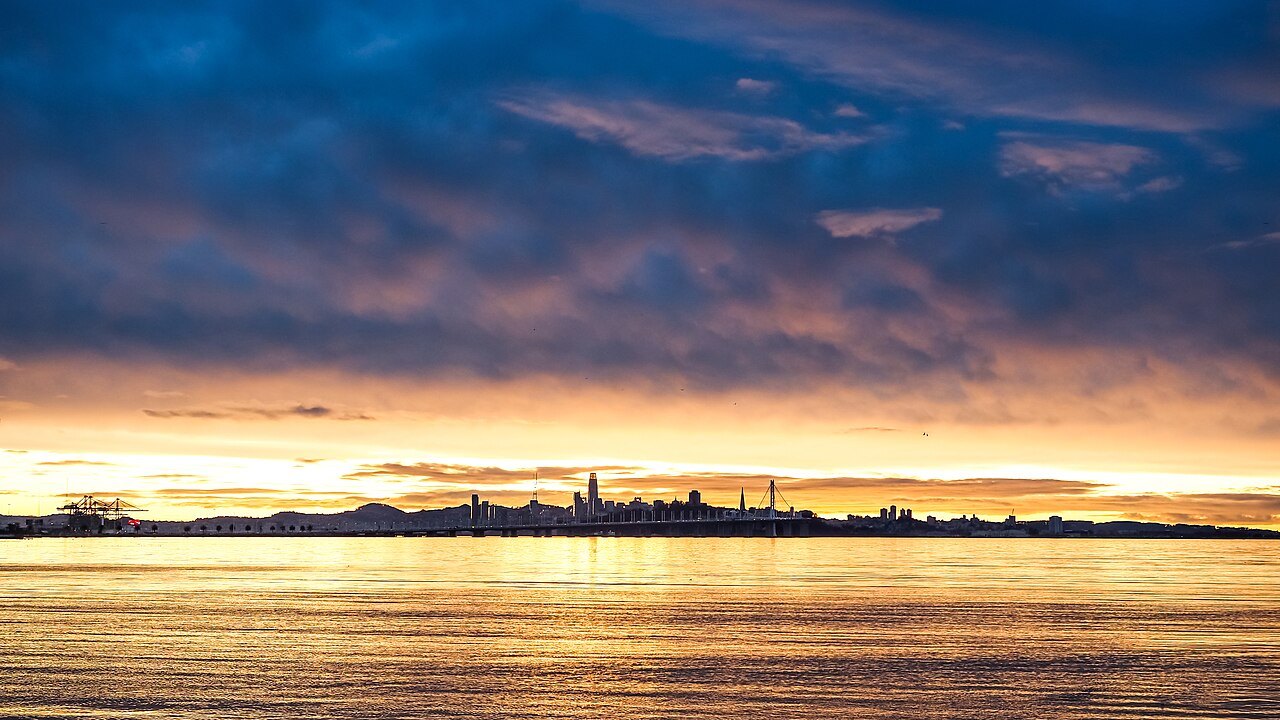
From the bottom, on Leavenworth Street, the view reverses: the whole block climbs away above, curve after curve, like a staircase built of gardens. Hyde Street itself adds to the show, with cable cars climbing and dropping past and Alcatraz visible in the bay beyond.
The block has drawn filmmakers for more than half a century. Chase and race scenes have been shot on its curves in films from Good Neighbor Sam and The Love Bug to What's Up, Doc? and Ant-Man and the Wasp, and the switchbacks appear in Pixar's Inside Out, released in 2015.
Many visitors already know the view from the top of Hyde Street before arriving, simply from having seen it on screen, which is part of why the corner draws so many cameras alongside the visitor numbers the block already attracts.
Driving, safety, and the myths
Driving the curves is possible but slow. At busy times a queue forms at the top that can back up for several blocks, adding a wait of up to about twenty minutes before a car even starts down. Walking the stairways instead takes only a few minutes.
The block has also been a hot spot for car break-ins, helped by heavy traffic and visitors distracted by the view. Leave nothing visible in a parked car, not even for a few minutes, and see street sense for more on handling a car in the city generally.
People live on this block, in the houses lining the curves, so visitors are asked to keep off the steps of private houses and keep noise down, given how many cars and pedestrians already pass by every day.
Lombard Street is not certainly the crookedest street even in San Francisco, since Vermont Street has its own claim, and the curves were never built for show — they answered a grade ordinary cars could not climb. The crooked block is a tiny stretch of a street that runs from the Presidio to the Embarcadero.
More from the journal
- The Cable CarsHow do you ride the cable cars in San Francisco?The three lines and where they go, where to board to skip the longest queue, how to pay before you ride, how to stand on the running board safely, and what to see at the Cable Car Museum.Read the piece
- Coit Tower and Telegraph HillWhat do the murals inside Coit Tower show, and who painted them?A guide to the Coit Tower lobby murals: their painters, subjects, the 1934 controversy, and how to see them today.Read the piece
- The SightsWhat survives of the 1906 earthquake in San Francisco?The earthquake and fire of April 1906 destroyed most of the city. Here is what came through, what was rebuilt in its place, and where you can still see the traces, from Mission Dolores to the Portals of the Past.Read the piece