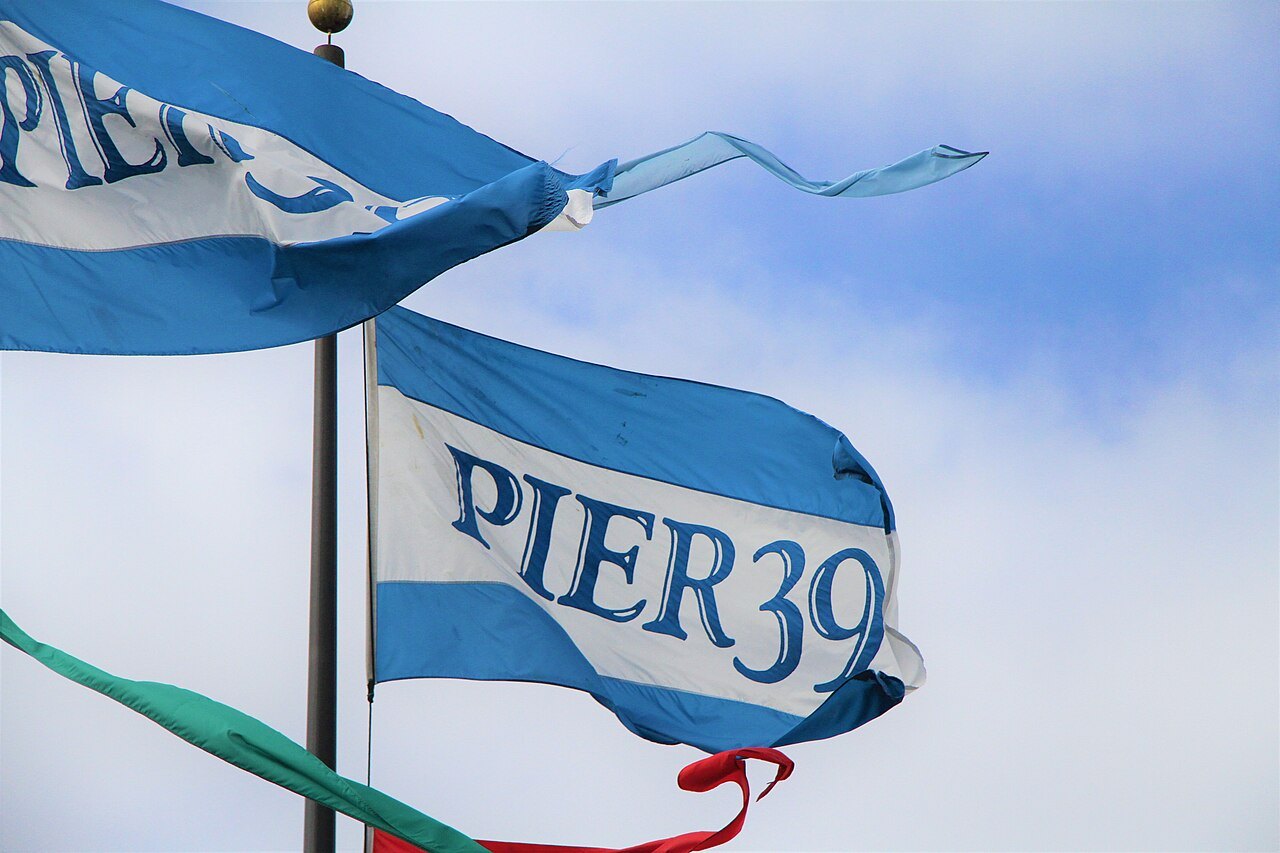
Why do sea lions gather at Pier 39?
How an earthquake and an empty dock turned Pier 39 into one of San Francisco's most-watched waterfront attractions.
Read on
A pier built for boats, not wildlife
Pier 39 opened on October 4, 1978, as a pier of shops, restaurants, a two-story carousel and an aquarium, at the eastern end of Fisherman's Wharf, the stretch of waterfront between the Embarcadero and Aquatic Park. It was designed, like much of the Wharf's redevelopment from the 1970s onward, for visitors rather than for the working harbor around it.
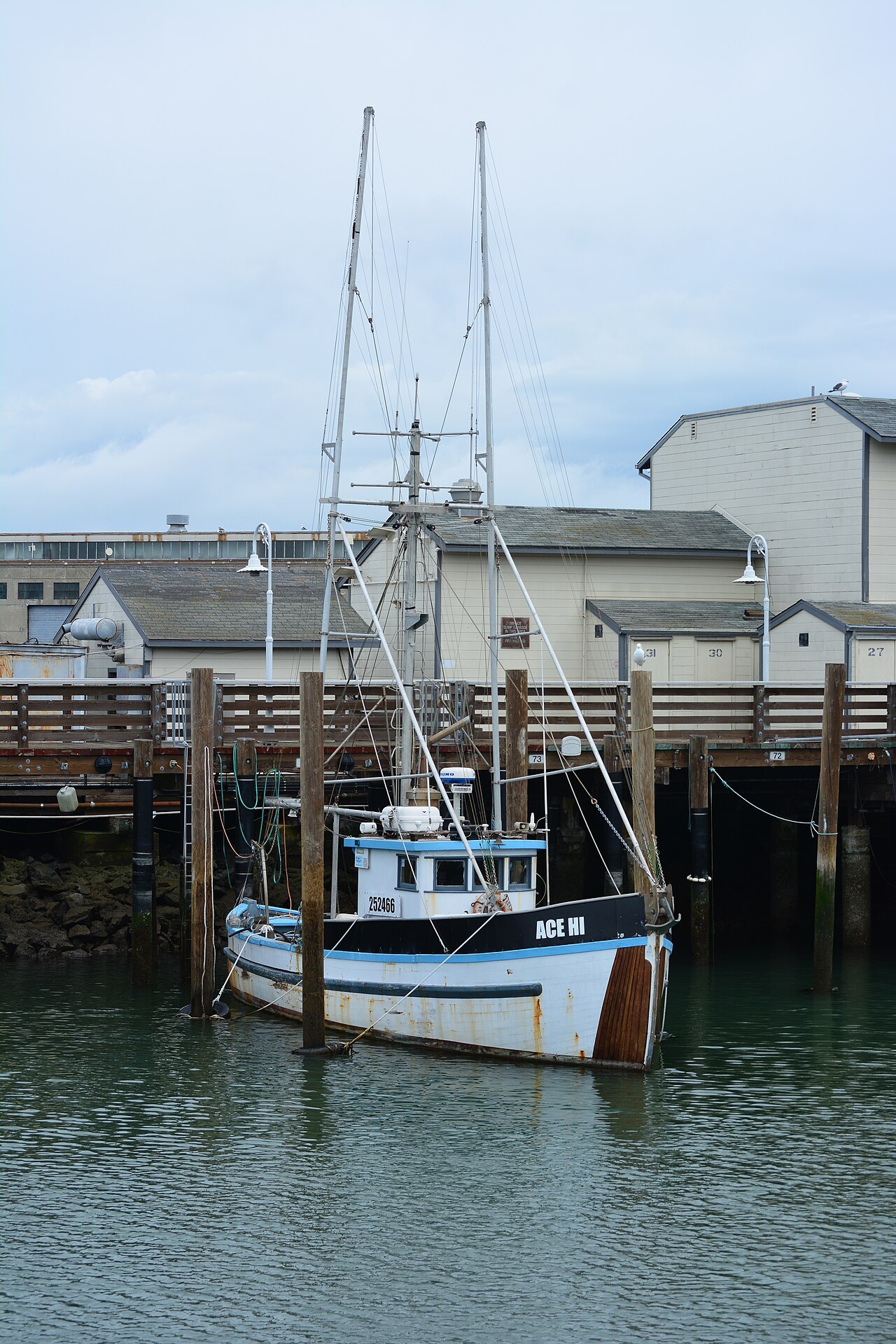
Alongside the shops, the pier kept a set of floating wooden docks, built in the ordinary way to moor pleasure boats rather than to host any particular spectacle. For more than a decade they did just that, tied up with small craft and barely noticed by visitors heading for the carousel and the aquarium above.
What eventually drew the largest crowds on the whole waterfront was never part of that plan. It arrived by chance, more than ten years after the pier opened, uninvited and unannounced, and the marina running the docks chose simply to make room for it rather than move it along to somewhere else entirely.
The night the colony arrived
In September 1989, weeks after the Loma Prieta earthquake shook the Bay Area, California sea lions began hauling out on Pier 39's floating docks in unusual numbers. Nobody at the marina had invited them, and nobody had designed the docks with sea lions in mind; they simply started climbing out of the water onto wood meant for boats.
The animals have used the docks ever since. What began as a handful of visitors became a fixture of the pier within months, and the marina, finding itself host to an unplanned attraction, left the docks largely to them rather than reclaiming the space for the small boats that once tied up there.
The numbers seen on any given day rise and fall with the seasons, so a dock crowded with dozens of animals at one visit can look almost empty a few months later. That seasonal rhythm is the main reason to check conditions before planning a special trip to see them.
Why they have stayed
Exactly why the sea lions chose this particular stretch of harbor over any other dock on the bay has never been settled, and a guidebook should not pretend to know more than that. The timing, within weeks of the Loma Prieta earthquake disrupting the harbor and its usual boat traffic, is often mentioned, but no single explanation has been proven, and the animals themselves have left no record of their reasoning.
What is certain is that the docks have continued to suit the colony well enough to keep drawing it back, season after season, for more than three decades. Visitors curious about the science behind their habits are better served reading the displays near the pier or asking staff on site than relying on guesswork offered secondhand.
For a practical visit, the useful fact is simpler than any theory: the sea lions are wild animals following their own patterns rather than performers on a schedule, and the pier and its marina have adapted around them instead of trying to move them along to somewhere more convenient for the boats.
Watching the sea lions today
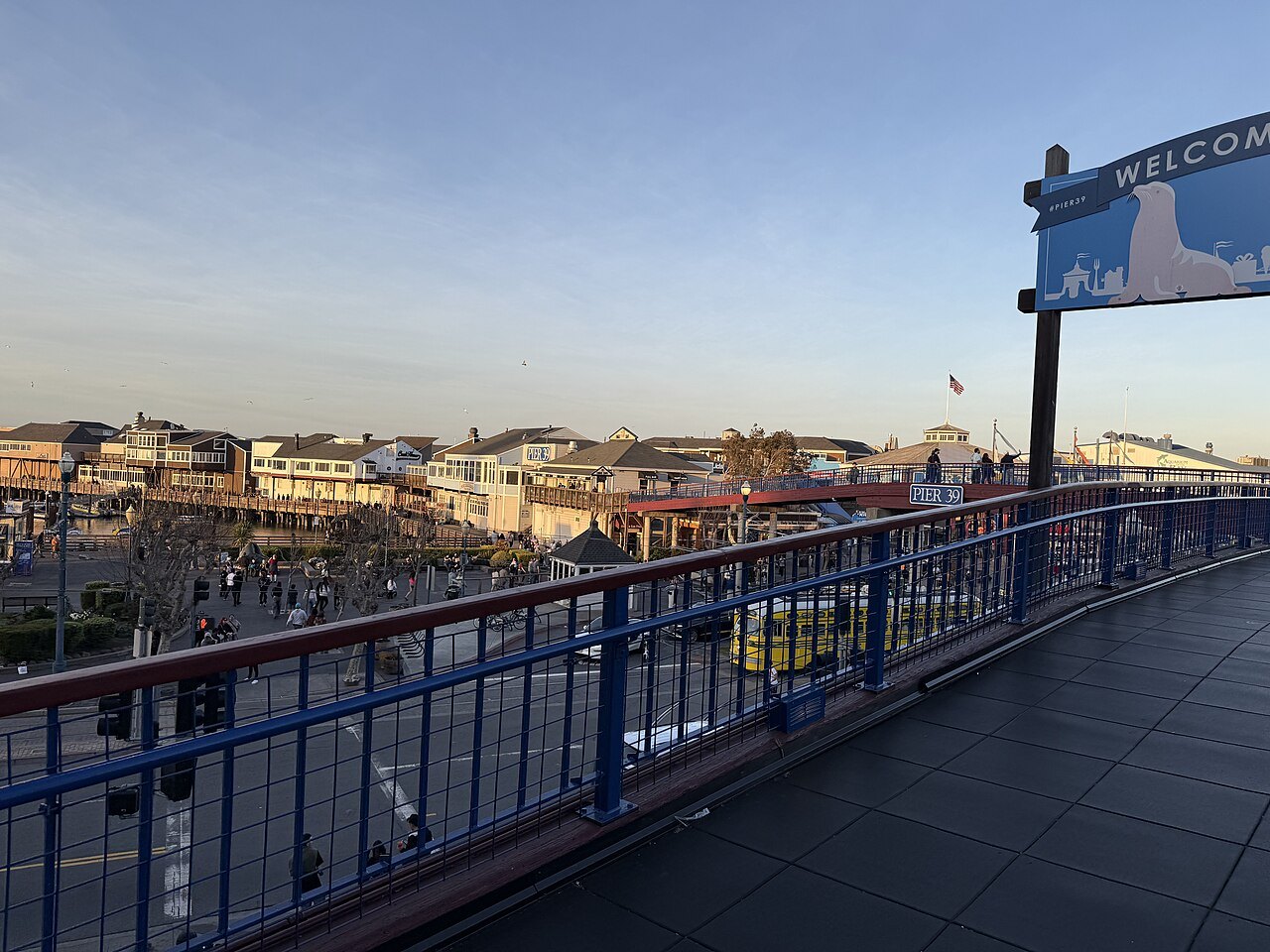
The docks sit just off the pier, close enough that the barking and the crowding of bodies on the wood are obvious without binoculars, and railings along the edge let visitors look down without climbing onto the structure itself. Photographs are easy from here, and the smell and noise are part of the experience as much as the sight.
Like the rest of Fisherman's Wharf, Pier 39 is busiest in the middle of the day and on weekends, when the rail can be several people deep. Early morning is quieter across the whole waterfront, and the same is generally true here, before the crowds that build up over the course of the day arrive.
From the same stretch of pier, the view reaches across the bay to Alcatraz, the Golden Gate Bridge and the Bay Bridge, and several of the bay's cruise boats leave from docks nearby, so a stop for the sea lions easily combines with time simply looking at the water and the skyline beyond it.
Beyond the sea lions: the rest of the wharf
West of Pier 39, Jefferson Street and the small harbor around it make up the older, working side of the Wharf: fishing boats moored in the basin, seafood stands on the sidewalk, and family-run restaurants that go back generations. For details on eating well in this stretch, see eating and drinking.
At Pier 45, a small chapel remembers fishermen from San Francisco and Northern California lost at sea, and beside it the USS Pampanito, a decommissioned submarine from the Second World War, is moored as a museum ship open to visitors. Nearby, the Musée Mécanique keeps a long room of antique coin-operated machines and mechanical music boxes, many still working.
At the western end of the Wharf, the San Francisco Maritime National Historical Park keeps a fleet of historic sailing ships, ferries and tugs at the Hyde Street Pier, and its visitor center occupies a brick warehouse from 1909. Past the pier, the lawns of Aquatic Park and the Maritime Museum's Streamline Moderne building make the quietest corner of the whole waterfront.
Getting there and timing a visit
The Powell–Hyde cable car ends at Hyde and Beach, near Aquatic Park and Ghirardelli Square, and the Powell–Mason line ends a few blocks from Pier 39; for how the lines work and where to board, see cable cars. The F-line streetcar also runs along the Embarcadero to the Wharf, though visitors should check current service with Muni before relying on it.
The whole stretch from Pier 39 to Aquatic Park is flat and easily walkable, taking a relaxed hour on its own or half a day once the ships and museums are added in. Pier 33, where ferries to Alcatraz leave, is a short walk east along the Embarcadero, and worth checking in advance with the ferry operator for timing.
Because the sea lions are wild and seasonal, anyone planning a visit chiefly to see them should check current numbers with the pier or its marina beforehand rather than assume a crowded dock on any particular day. The rest of the Wharf rewards a visit regardless of how many animals happen to be on the docks that morning.
Myths and facts
The sea lions were never a planned attraction. They chose the floating docks themselves in September 1989, in the weeks after the Loma Prieta earthquake, and the marina running Pier 39 has simply left them the space ever since, rather than redesigning the pier around them from the start, as some visitors assume.
Fisherman's Wharf is also not only souvenir shops and chain restaurants, as some San Franciscans dismiss it. The historic ships at Hyde Street Pier, the Musée Mécanique and the Maritime Museum are among the most rewarding sights on the entire waterfront, and worth the walk past the busier blocks nearer Pier 39.
And the numbers on the docks are not constant: a pier crowded with sea lions on one visit can look very different a season later, since the colony's size genuinely rises and falls through the year rather than holding steady for visitors who arrive expecting a fixed show on command.
More from the journal
- Fisherman's Wharf and the Hyde Street PierWhat historic ships can you board at the Hyde Street Pier?A guide to the historic sailing ships, ferries and tugs moored at the Hyde Street Pier in San Francisco.Read the piece
- AlcatrazHow do you plan a visit to Alcatraz?Who sells the only tickets, how to reach Pier 33, day or evening visit, how long to allow, the climb to the cellhouse and the accessible tram, what to bring, and what to see once you land.Read the piece
- The Cable CarsHow do you ride the cable cars in San Francisco?The three lines and where they go, where to board to skip the longest queue, how to pay before you ride, how to stand on the running board safely, and what to see at the Cable Car Museum.Read the piece